Obsessive-Compulsive Disorder (OCD) is more than a preference for order or cleanliness. It is a chronic mental health condition characterized by persistent, unwanted thoughts (obsessions) and repetitive behaviors or mental rituals (compulsions) performed to reduce anxiety. While therapy is a cornerstone of treatment, OCD medication management plays a vital role for many individuals, particularly when symptoms significantly affect work, relationships, school, or daily life.
Medication management involves much more than writing a prescription. It is an ongoing process of selecting the most appropriate medication, monitoring effectiveness, managing side effects, and adjusting treatment based on an individual’s symptoms and response. When combined with evidence-based psychotherapy, many people experience meaningful symptom improvement and a better quality of life.
In this guide, you’ll learn how OCD medications work, which treatment approaches are commonly recommended, what to expect during medication management, potential side effects, and how healthcare providers personalize treatment plans for long-term success.
What Is OCD Medication Management?
OCD medication management is the continuous medical supervision of prescription medications used to reduce obsessive thoughts and compulsive behaviors. Rather than simply prescribing medication, healthcare providers regularly evaluate whether the treatment is effective, safe, and appropriate for the patient’s changing needs.
Medication management typically includes:
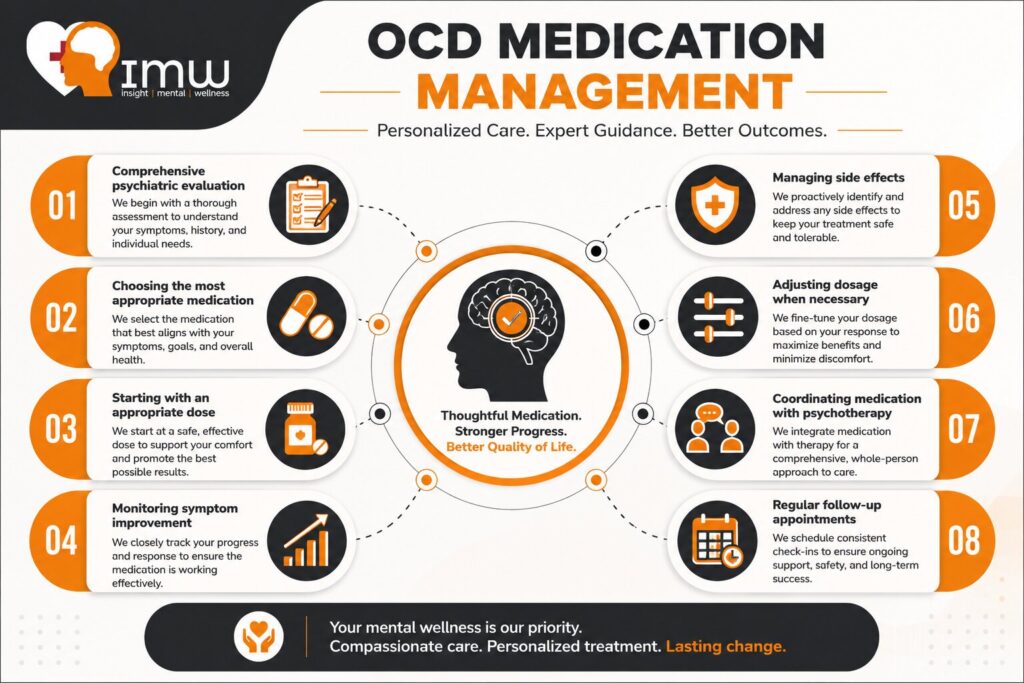
- Comprehensive psychiatric evaluation
- Choosing the most appropriate medication
- Starting with an appropriate dose
- Monitoring symptom improvement
- Managing side effects
- Adjusting dosage when necessary
- Coordinating medication with psychotherapy
- Regular follow-up appointments
This individualized approach helps maximize benefits while minimizing risks.
When Is Medication Recommended for OCD?
Medication may be recommended when:
- OCD symptoms interfere with daily functioning
- Exposure and Response Prevention (ERP) therapy alone isn’t sufficient
- Anxiety or depression occurs alongside OCD
- Symptoms are moderate to severe
- Previous treatment attempts have been unsuccessful
- The individual struggles to participate in therapy because symptoms are overwhelming
For many patients, combining medication with Cognitive Behavioral Therapy (CBT), particularly ERP, produces better outcomes than either treatment alone.
Common Medications Used to Treat OCD
Several medications have been extensively studied and are considered first-line treatments for OCD.
| Medication Class | Examples | Primary Purpose |
|---|---|---|
| Selective Serotonin Reuptake Inhibitors (SSRIs) | Fluoxetine, Sertraline, Fluvoxamine, Paroxetine, Escitalopram | Reduce obsessive thoughts and compulsive behaviors |
| Tricyclic Antidepressants (TCAs) | Clomipramine | Alternative when SSRIs are ineffective |
| Augmentation Medications | Certain atypical antipsychotics | Used alongside SSRIs in treatment-resistant OCD |
Unlike medications used for depression, OCD often requires higher therapeutic doses and longer treatment durations before significant improvement becomes noticeable.
How SSRIs Help OCD
Selective Serotonin Reuptake Inhibitors are considered the first-choice medication for most individuals with OCD.
They work by increasing serotonin availability in the brain, helping regulate circuits involved in repetitive thoughts and compulsive behaviors.
Common SSRIs include:
- Fluoxetine
- Sertraline
- Fluvoxamine
- Paroxetine
- Escitalopram
Benefits include:
- Reduced obsessive thinking
- Less frequent compulsive behaviors
- Improved emotional regulation
- Better participation in therapy
- Lower anxiety levels
Most individuals begin noticing improvements after 8–12 weeks, although some require additional time.
When Clomipramine May Be Considered
Clomipramine was one of the earliest medications proven effective for OCD.
While highly effective, it generally has more side effects than SSRIs, including:
- Dry mouth
- Constipation
- Drowsiness
- Weight gain
- Dizziness
Because of these considerations, healthcare providers often recommend SSRIs before trying clomipramine.
What Happens During OCD Medication Management?
Medication management is an ongoing partnership between the patient and psychiatric provider.
Typical follow-up appointments involve evaluating:
Symptom Improvement
Providers assess whether:
- Obsessions are occurring less frequently
- Compulsions are easier to resist
- Anxiety has decreased
- Daily functioning has improved
Side Effects
Medication may be adjusted if side effects outweigh benefits.
Common concerns include:
- Nausea
- Headaches
- Sleep disturbances
- Fatigue
- Sexual side effects
- Appetite changes
Medication Adherence
Many patients unintentionally miss doses.
Your provider may discuss:
- Daily routines
- Reminder strategies
- Missed-dose guidance
- Barriers to consistency
Key Point
Successful OCD treatment often depends on consistent follow-up appointments, not simply taking medication.
How Long Do OCD Medications Take to Work?
One of the most common misconceptions is expecting immediate improvement.
Typical timeline:
| Time After Starting Medication | What to Expect |
|---|---|
| 2–4 weeks | Mild improvement or side effects |
| 6–8 weeks | Gradual reduction in symptoms |
| 8–12 weeks | Noticeable improvement for many individuals |
| 12–16 weeks | Full therapeutic response may become evident |
Stopping medication too early is one of the most common reasons treatment appears unsuccessful.
Why Personalized Medication Management Matters
No two individuals experience OCD the same way.
Healthcare providers consider many factors before selecting medication:
- Age
- Medical history
- Previous medication response
- Other mental health conditions
- Pregnancy considerations
- Current medications
- Lifestyle factors
- Family history
This personalized approach improves treatment success while reducing unnecessary medication changes.
Combining Medication with Therapy
Research consistently shows that medication works best when combined with therapy.
The gold standard psychotherapy for OCD is:
- Cognitive Behavioral Therapy (CBT)
- Exposure and Response Prevention (ERP)
Medication often reduces anxiety enough to help patients participate more effectively in ERP exercises.
Managing Side Effects During Treatment
Most medication side effects improve over time.
Providers may recommend:
- Gradual dose adjustments
- Taking medication with food
- Switching medications if necessary
- Changing dosing schedules
- Lifestyle modifications to improve sleep and energy
Patients should never stop medication abruptly without medical supervision.
For additional guidance on recognizing and addressing medication-related issues, read our guide on Medication Management Side Effects.
What If the First Medication Doesn’t Work?
Finding the right medication sometimes requires patience.
Healthcare providers may:
- Increase the dose gradually
- Allow additional time for response
- Switch to another SSRI
- Consider clomipramine
- Add another medication (augmentation therapy)
- Reassess the diagnosis
- Strengthen psychotherapy involvement
Treatment-resistant OCD still has evidence-based options, making ongoing follow-up essential.
Lifestyle Habits That Support OCD Treatment
Medication works best alongside healthy daily habits.
Helpful strategies include:
- Maintaining regular sleep
- Exercising consistently
- Limiting alcohol and recreational drugs
- Managing stress
- Practicing mindfulness
- Following therapy homework
- Taking medications consistently
These habits support overall emotional well-being and may enhance treatment outcomes.
OCD vs. Other Mental Health Conditions
Many mental health disorders involve medication management, but treatment approaches differ.
| Condition | Common Medication Focus |
|---|---|
| OCD | SSRIs, Clomipramine, augmentation therapy |
| Depression | SSRIs, SNRIs, atypical antidepressants |
| Bipolar Disorder | Mood stabilizers, atypical antipsychotics |
| PTSD | SSRIs, trauma-focused therapy, individualized medication strategies |
Because symptoms can overlap, an accurate psychiatric evaluation is essential before beginning treatment. Although some medications for PTSD, including certain SSRIs, may also be prescribed for OCD, treatment plans are tailored to the specific diagnosis and individual needs.
Common Medication Mistakes to Avoid
Patients often unintentionally reduce treatment effectiveness by:
- Skipping doses
- Stopping medication when feeling better
- Expecting immediate results
- Adjusting dosage without medical advice
- Missing follow-up appointments
- Not reporting side effects
Learning about these challenges can help improve long-term success. Our article on Common Medication Mistakes explains practical ways to stay on track.
Benefits of Ongoing Medication Management
Consistent medication management offers several advantages:
- Improved symptom control
- Better medication safety
- Early identification of side effects
- Personalized dosage adjustments
- Better adherence
- Reduced relapse risk
- Stronger collaboration with healthcare providers
- Better quality of life
For a broader overview, explore our article on the Benefits of Medication Management.
Related Mental Health Medication Resources
If you’re exploring medication management for other conditions, these resources may also be helpful:
These guides explain how medication management differs across conditions while emphasizing the importance of individualized care.
When Should You Seek Professional Help?
Consider scheduling a psychiatric evaluation if:
- OCD symptoms interfere with daily activities
- Rituals consume more than an hour each day
- Anxiety feels overwhelming
- Previous medications haven’t worked
- Symptoms continue despite therapy
- Side effects are difficult to manage
Working with an experienced psychiatric provider allows treatment to evolve as your symptoms and needs change. If you’re looking for comprehensive care, our Medication Management services are designed to provide ongoing evaluation, medication monitoring, and personalized treatment planning. Individuals seeking Medication Management in Dallas can also access local psychiatric care tailored to their needs.
Key Takeaways
- OCD medication management is an ongoing process, not a one-time prescription.
- SSRIs are typically the first-line medications for OCD.
- Clomipramine may be considered when SSRIs are not effective or appropriate.
- Medication often works best when combined with CBT and Exposure and Response Prevention.
- Improvement usually takes several weeks, making consistency and follow-up essential.
- Personalized treatment plans help balance symptom relief with medication safety.
FAQs
What is the best medication for OCD?
There isn’t one medication that works best for everyone. SSRIs such as sertraline, fluoxetine, fluvoxamine, and escitalopram are commonly recommended as first-line treatments, but the best choice depends on your symptoms, medical history, and response to treatment.
How long should I take OCD medication?
Many people continue medication for at least one year after symptoms improve. The exact duration varies based on symptom severity, relapse risk, and your healthcare provider’s recommendations.
Can OCD medication cure the disorder?
No. Medication helps reduce symptoms but does not cure OCD. Many people achieve the best long-term results by combining medication with Cognitive Behavioral Therapy, especially Exposure and Response Prevention (ERP).
What happens if my first OCD medication doesn’t work?
Your provider may adjust the dosage, allow more time for improvement, switch medications, or consider augmentation strategies. It’s important not to stop treatment without consulting your healthcare provider.
Is therapy still necessary if medication helps?
For many individuals, yes. Therapy teaches practical skills to manage obsessive thoughts and compulsive behaviors, while medication can make it easier to engage in those therapeutic techniques.
Are OCD medications safe for long-term use?
Many OCD medications have been studied for long-term use when monitored by a qualified healthcare provider. Regular follow-up appointments help ensure the medication remains effective and that any side effects are addressed promptly.
Conclusion
OCD can significantly affect daily life, but effective treatment is available. Medication management is more than choosing a prescription—it involves ongoing evaluation, thoughtful adjustments, and close collaboration between you and your psychiatric provider. When paired with evidence-based therapy and healthy lifestyle habits, many people experience meaningful symptom improvement and greater confidence in managing OCD over the long term.
Take the Next Step Toward Better Mental Health
Managing OCD doesn’t have to be overwhelming. The right medication, combined with expert guidance and ongoing support, can make a meaningful difference in reducing symptoms and improving your quality of life.
At Insight Mental Wellness, we provide compassionate, personalized Medication Management in Dallas to help individuals with OCD and other mental health conditions find the treatment approach that works best for them. Our experienced psychiatric providers carefully evaluate your symptoms, monitor your progress, adjust medications when needed, and work closely with you to create a treatment plan tailored to your unique needs.
If you’re ready to explore a personalized approach to mental health care, schedule an appointment with Insight Mental Wellness today and learn how our Medication Management in Dallas services can support your journey toward lasting wellness.