Yes, some antibiotics can cause insomnia, though it’s not a common side effect. Fluoroquinolones (ciprofloxacin, levofloxacin, moxifloxacin) are the class most often linked to sleep disturbances, including insomnia, restlessness, and anxiety. Macrolides such as clarithromycin, azithromycin, and erythromycin, along with high-dose beta-lactams, have also been associated with sleep problems in some patients.
Why Do Antibiotics Cause Insomnia?

-
Central Nervous System (CNS) Effects
Fluoroquinolones and, in some cases, macrolides and high-dose beta-lactams can cross the blood-brain barrier and interfere with GABA, a neurotransmitter that calms brain activity. This can cause insomnia, restlessness, nervousness, vivid dreams, or anxiety. Older adults and people with kidney or liver impairment are more likely to experience these effects, since reduced clearance lets the drug build up in the body.
As a result, some individuals may experience symptoms such as insomnia, restlessness, nervousness, vivid dreams, anxiety, or increased alertness. While these side effects are not common for everyone, they can significantly impact sleep quality during treatment.
-
Gut Microbiome Disruption:
Antibiotics alter gut bacteria, which affects the production of serotonin and melatonin, both involved in sleep regulation. This disruption can make it harder to fall asleep or lead to fragmented sleep. Eating well and asking your provider about probiotics may help support gut health during treatment.
-
Medication Interactions:
Sleep disturbances may also result from interactions between antibiotics and other medications or substances. For example, combining certain antibiotics with corticosteroids can increase the risk of nervous system side effects such as agitation, anxiety, and insomnia.
Additionally, consuming caffeine while taking some antibiotics may prolong caffeine’s effects in the body, leading to increased wakefulness and difficulty sleeping. Patients should always inform their healthcare provider about all prescription medications, over-the-counter drugs, supplements, and stimulants they are using to minimize potential interactions.
-
Infection-Related Stress and Discomfort:
In some cases, the sleep problems may not be caused directly by the antibiotic itself but by the underlying infection being treated. Symptoms such as fever, coughing, congestion, pain, inflammation, frequent urination, or breathing difficulties can make it difficult to fall asleep or stay asleep throughout the night.
Furthermore, being ill often increases stress and anxiety levels, which can further disrupt normal sleep patterns. As the infection improves and symptoms subside, sleep quality typically returns to normal.
How to Manage Insomnia While Taking Antibiotics
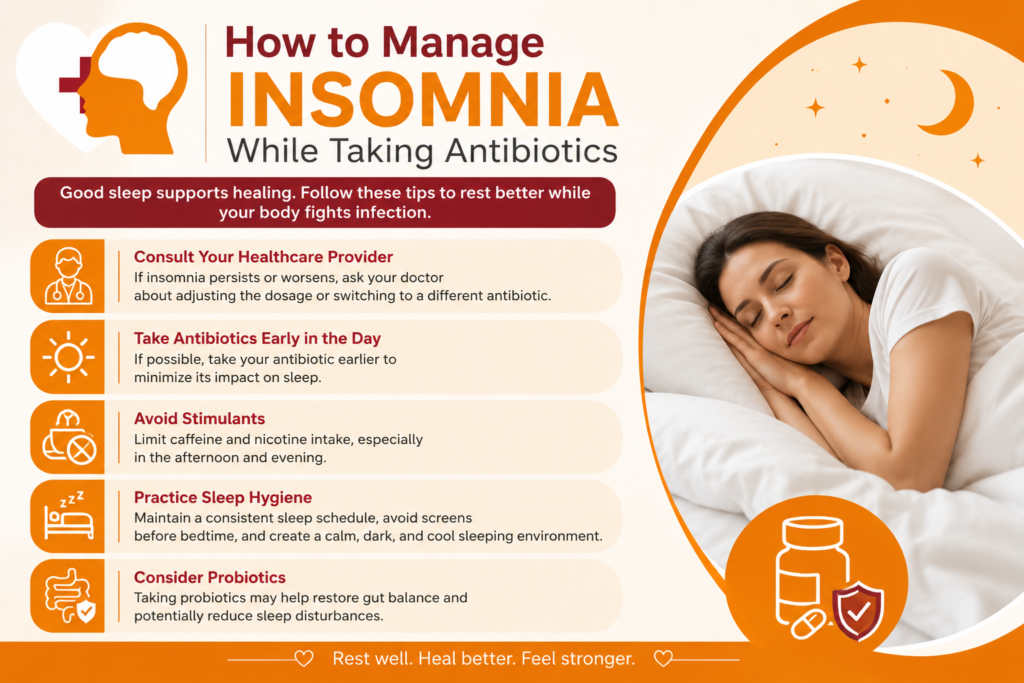
- Consult Your Healthcare Provider: If insomnia persists or worsens, ask your doctor about adjusting the dosage or switching to a different antibiotic.
- Take Antibiotics Early in the Day: If possible, take your antibiotic earlier to minimize its impact on sleep.
- Avoid Stimulants: Limit caffeine and nicotine intake, especially in the afternoon and evening.
- Practice Sleep Hygiene: Maintain a consistent sleep schedule, avoid screens before bedtime, and create a calm, dark, and cool sleeping environment.
- Consider Probiotics: Taking probiotics may help restore gut balance and potentially reduce sleep disturbances.
When to Seek Medical Attention
If insomnia becomes severe, or if you experience additional symptoms such as dizziness, anxiety, or hallucinations, contact your healthcare provider immediately. These could indicate a rare but serious adverse reaction to the antibiotic.
Key Takeaway:
Insomnia is commonly caused by factors such as ongoing stress, irregular sleep routines, excessive screen time, poor sleep hygiene, or underlying medical and mental health conditions like anxiety, depression, or chronic pain. In many cases, it develops gradually when the body’s natural sleep cycle becomes disrupted over time.
Take the Next Step Toward Better Sleep and Mental Wellness
If you are struggling with insomnia or ongoing sleep difficulties, you don’t have to manage it alone. At Insight Mental Wellness, we provide compassionate, evidence-based treatment for sleep disorders and related mental health concerns across Texas.
Our team focuses on identifying the root causes of insomnia and creating personalized treatment plans that may include therapy, behavioral strategies, and lifestyle guidance to help restore healthy sleep patterns.
If sleep problems are sticking around, whether they started with a medication or not, Insight Mental Wellness treats sleep disorders and related concerns across Texas. We look for the actual cause before building a plan, using therapy, behavioral strategies, and lifestyle changes as needed. Schedule a confidential consultation
FAQs:
What is the main cause of insomnia?
The main cause of insomnia is stress, followed by poor sleep habits, anxiety, and medical conditions that disrupt sleep.
Does Bactrim cause insomnia?
Yes, Bactrim can cause insomnia as a side effect in some people, along with restlessness or trouble sleeping.
Causes of insomnia in females?
Common causes include hormonal changes, stress, anxiety, depression, and health conditions like thyroid disorders.
Causes of insomnia in males?
Insomnia in males is often linked to stress, lifestyle habits, sleep apnea, and mental health issues like anxiety or depression.
Do antibiotics have a sleeping effect?
Antibiotics don’t usually cause sleepiness directly, but they can lead to fatigue, drowsiness, or even insomnia. This is often due to the body fighting infection or changes in gut bacteria that affect energy levels.
Which antibiotics are most likely to cause insomnia?
Fluoroquinolones (ciprofloxacin, levofloxacin, moxifloxacin) are most often linked to insomnia. Macrolides like clarithromycin and azithromycin, and high-dose beta-lactams, have also been reported to cause sleep disturbance in some patients.