Post-traumatic stress disorder (PTSD) affects far more than memories of a traumatic event. It can disrupt sleep, relationships, work performance, emotional well-being, and everyday routines. While therapy is often the foundation of PTSD treatment, medication can play a valuable role in helping many people manage symptoms and improve their quality of life.
If you’ve been wondering whether medication is right for you, what options are available, or what to expect during treatment, this guide provides clear, evidence-based answers. You’ll learn how medication management for PTSD works, the different medications for PTSD, potential benefits and risks, and why ongoing follow-up with a qualified mental health provider is essential for achieving the best outcomes.
Quick Answer: Medication management for PTSD is the ongoing process of selecting, monitoring, and adjusting medications to help reduce PTSD symptoms while minimizing side effects. It combines regular psychiatric evaluations, personalized treatment planning, and continuous monitoring to ensure medications remain safe and effective.
Understanding PTSD
Post-traumatic stress disorder is a mental health condition that may develop after experiencing or witnessing a traumatic event, such as:
- Military combat
- Physical or sexual assault
- Serious accidents
- Natural disasters
- Domestic violence
- Childhood abuse
- Medical trauma
PTSD affects everyone differently. Some people develop symptoms within weeks of the trauma, while others may not notice symptoms for months or even years.
Common PTSD symptoms include:
- Intrusive memories or flashbacks
- Nightmares
- Avoiding reminders of the trauma
- Feeling emotionally numb
- Hypervigilance
- Irritability or anger
- Difficulty concentrating
- Sleep disturbances
- Anxiety and panic
- Depression
Because PTSD symptoms vary widely, treatment plans—including medications—must be individualized.
What Is Medication Management for PTSD?
Medication management is much more than simply prescribing a pill. It is an ongoing partnership between you and your psychiatric provider to ensure your medications continue working safely and effectively.
A comprehensive medication management plan typically includes:
- A detailed psychiatric evaluation
- Reviewing your medical history
- Discussing current symptoms
- Selecting the most appropriate medication
- Monitoring effectiveness
- Managing side effects
- Adjusting dosage when needed
- Coordinating medication with psychotherapy and lifestyle changes
Rather than taking a “one-size-fits-all” approach, medication management focuses on your unique symptoms, medical history, treatment goals, and response over time.
If you’re new to psychiatric care, learning the signs you may need professional medication management can help you understand when expert support may be beneficial.
Does Everyone with PTSD Need Medication?
No.
Many people improve with trauma-focused psychotherapy alone, while others benefit from combining therapy with medication.
Medication may be recommended when PTSD symptoms:
- Significantly interfere with daily life
- Cause persistent anxiety or panic
- Prevent restful sleep
- Lead to severe depression
- Make therapy difficult because symptoms are overwhelming
- Continue despite ongoing counseling
A psychiatric provider will consider several factors before recommending medication, including symptom severity, medical history, previous treatments, and personal preferences.
How Medication Helps PTSD
PTSD involves changes in several brain chemicals, including serotonin and norepinephrine, which influence mood, fear responses, sleep, and emotional regulation.
Medication does not erase traumatic memories. Instead, it can help reduce symptom intensity, allowing patients to function better and participate more effectively in therapy.
Potential benefits include:
- Fewer intrusive thoughts
- Reduced anxiety
- Improved sleep quality
- Better emotional regulation
- Less hypervigilance
- Fewer panic symptoms
- Improved concentration
- Greater ability to engage in therapy
Medication is most effective when combined with evidence-based psychotherapy and healthy lifestyle habits.
Taking medication correctly is only one part of successful PTSD treatment. Regular follow-up appointments help ensure your medication continues to work as intended. Insight Mental Wellness provides ongoing medication management services to monitor effectiveness, address side effects, and support your long-term mental wellness journey.
Common Medications for PTSD
There is no single medication that works for everyone. Choosing among the available medications for PTSD treatment depends on your symptoms, health history, other medications, and treatment goals.
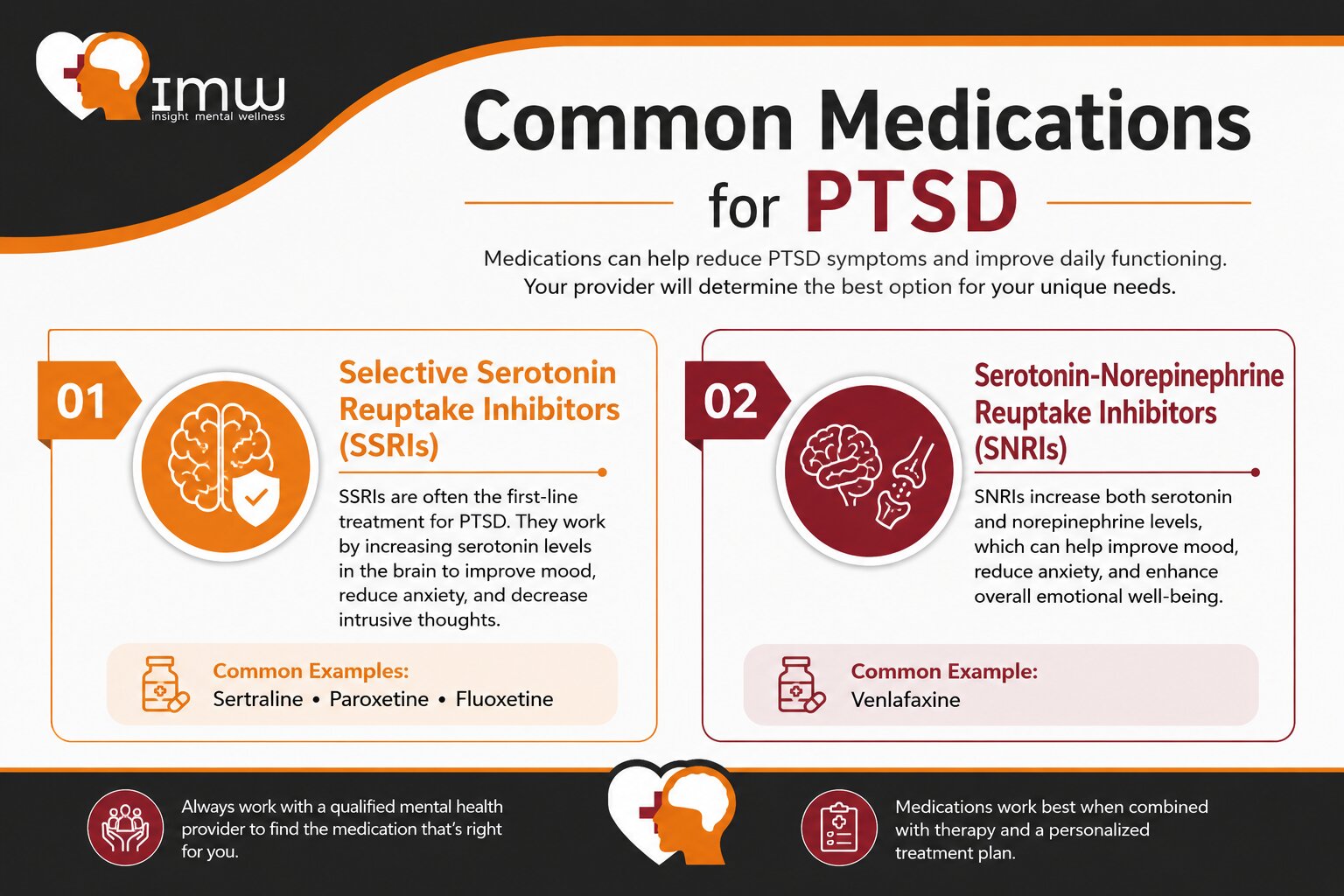
Selective Serotonin Reuptake Inhibitors (SSRIs)
SSRIs are generally considered the first-line prescription medications for PTSD.
Examples include:
- Sertraline
- Paroxetine
- Fluoxetine (used off-label in some cases)
These medications may help reduce:
- Anxiety
- Depression
- Irritability
- Intrusive memories
- Emotional distress
Because SSRIs often take several weeks to become fully effective, patience and consistent follow-up are important.
Serotonin-Norepinephrine Reuptake Inhibitors (SNRIs)
Some individuals respond better to SNRIs, particularly when depression and anxiety occur together.
Common examples include:
- Venlafaxine
These medications work by increasing serotonin and norepinephrine levels, helping regulate mood and stress responses.
Medications for Nightmares
Nightmares are among the most distressing PTSD symptoms.
For some patients, providers may prescribe medications such as prazosin to reduce trauma-related nightmares and improve sleep quality.
Not everyone benefits from nightmare medications, so treatment decisions should be individualized.
Sleep Medications
When insomnia becomes severe, short-term sleep medications may sometimes be considered.
These are generally used cautiously because long-term dependence can develop with certain medications.
Anti-Anxiety Medications
Although anti-anxiety medications may provide temporary symptom relief, many are not recommended as long-term PTSD treatment because of risks such as dependence and reduced effectiveness over time.
Your provider will determine whether these medications are appropriate based on your specific situation.
What Are the Best Medications for PTSD?
Many patients ask about the best medications for PTSD, but there isn’t one universal answer.
The most effective medication depends on:
| Factor | Why It Matters |
|---|---|
| Symptom pattern | Different medications target different symptoms. |
| Other mental health conditions | Depression, anxiety, or bipolar disorder may influence treatment choices. |
| Medical history | Existing health conditions affect medication safety. |
| Current medications | Prevents harmful drug interactions. |
| Previous medication response | Past experiences guide future decisions. |
| Side effect tolerance | Every patient responds differently. |
Finding the right medication often requires careful monitoring and occasional adjustments rather than expecting immediate results.
Medication Management vs. Medication Prescription
Many people assume receiving a prescription is the entire treatment process. In reality, prescribing medication is only the beginning.
| Medication Prescription | Medication Management |
|---|---|
| One-time prescription | Ongoing care |
| Initial medication selection | Regular follow-up appointments |
| Basic instructions | Dose adjustments |
| Limited monitoring | Side effect monitoring |
| Minimal reassessment | Continuous treatment optimization |
This ongoing process helps ensure medications remain effective as symptoms evolve.
How Long Do PTSD Medications Take to Work?
Many PTSD medications require time before noticeable improvements occur.
General timeline:
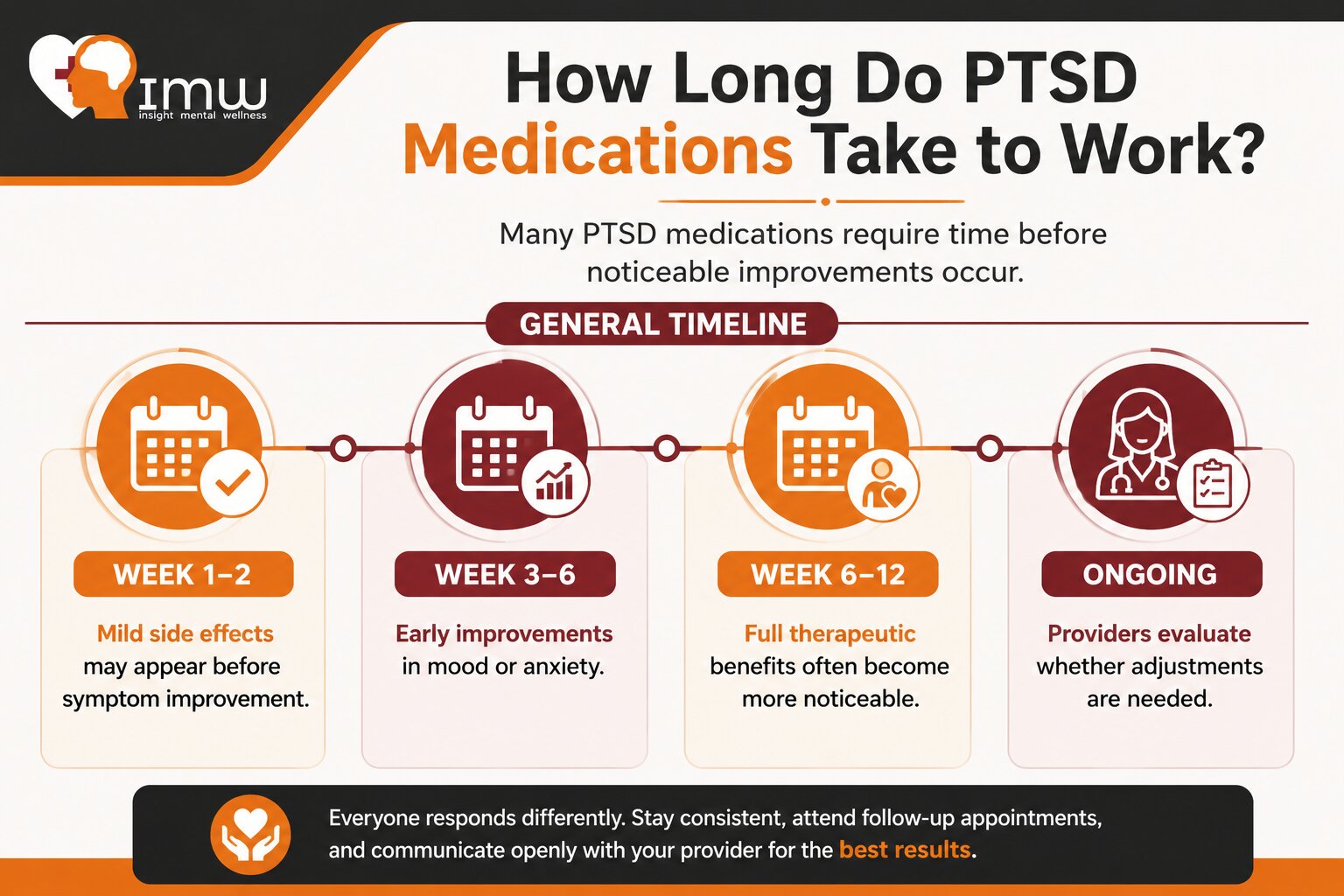
- Week 1–2: Mild side effects may appear before symptom improvement.
- Week 3–6: Early improvements in mood or anxiety.
- Week 6–12: Full therapeutic benefits often become more noticeable.
- Ongoing: Providers evaluate whether adjustments are needed.
Stopping medication too early is one of the most common reasons treatment appears unsuccessful.
What Happens During Medication Management Appointments?
Regular follow-up appointments help your provider evaluate whether treatment continues to meet your needs.
During these visits, your provider may discuss:
- Changes in symptoms
- Sleep quality
- Mood changes
- Medication adherence
- Side effects
- New stressors
- Overall functioning
- Therapy progress
- Physical health changes
Medication adjustments are based on these conversations rather than a fixed schedule.
Managing PTSD takes more than medication alone. Insight Mental Wellness is providing personalized medication management through comprehensive evaluations, medication monitoring, and ongoing follow-up care to help adults find the right treatment plan. Learn more about our Medication Management services or Medication Management in Dallas to get started.
Possible Side Effects of PTSD Medications
Like all prescription medications, PTSD medications can cause side effects. Fortunately, many improve as the body adjusts, and your provider can often modify treatment if problems persist.
Common side effects may include:
- Nausea or upset stomach
- Headache
- Drowsiness or fatigue
- Insomnia
- Dry mouth
- Increased sweating
- Dizziness
- Changes in appetite
- Sexual side effects
The goal of medication management is not only to improve PTSD symptoms but also to identify and address side effects early before they interfere with treatment.
Understanding how psychiatric medications are monitored can help you recognize when adjustments may be needed rather than stopping treatment on your own.
Medication Safety Tips for PTSD Patients
Taking medication consistently and as prescribed gives you the best chance of seeing improvement. Small changes—such as skipping doses or stopping medication without medical guidance—can affect how well treatment works.
Use these practical tips to stay on track:
- Take your medication at the same time each day.
- Do not stop or change your dosage without consulting your provider.
- Keep a list of all prescription medications, over-the-counter drugs, and supplements you take.
- Report new or worsening symptoms promptly.
- Attend scheduled follow-up appointments, even if you’re feeling better.
- Limit alcohol and ask your provider before using recreational substances, as they can interact with certain medications.
Many treatment setbacks occur because medications are not taken as directed. Learning about common medication mistakes can help you avoid preventable issues and get the most from your treatment.
Can Medical Cannabis Help Treat PTSD?
Interest in medical cannabis for PTSD has grown in recent years, but the evidence remains mixed.
Some individuals report temporary relief from symptoms such as anxiety or sleep disturbances. However, current clinical guidelines do not recommend cannabis as a first-line treatment for PTSD because research has not consistently shown long-term benefits, and there are potential risks, including:
- Impaired concentration and memory
- Increased anxiety in some individuals
- Dependence or cannabis use disorder
- Interactions with prescribed psychiatric medications
If you’re considering medical cannabis, discuss it openly with your psychiatric provider. They can explain the potential benefits, limitations, and safety considerations based on your medical history and current treatment plan.
Medication Management for PTSD and Co-Occurring Mental Health Conditions
PTSD often occurs alongside other mental health conditions. Treating these conditions together can improve overall outcomes and help create a more effective care plan.
Common co-occurring conditions include:
Depression
Persistent sadness, loss of interest, and low energy frequently accompany PTSD. Your provider may choose medications that address symptoms of both conditions while monitoring your response over time.
To learn more about how medications support depression treatment, read our guide on Depression Medication Management.
Anxiety Disorders
Many people with PTSD also experience generalized anxiety, panic attacks, or social anxiety. Because symptoms can overlap, medication selection should be tailored to address your specific concerns.
Our article on Medication Management for Anxiety Disorders offers additional insight into how treatment plans are developed:
Bipolar Disorder
Treating PTSD in someone with bipolar disorder requires special consideration. Certain antidepressants may not be appropriate without mood-stabilizing medications, making careful psychiatric evaluation essential.
Learn more in our guide to Bipolar Disorder Medication Management.
When to Contact Your Healthcare Provider
While many side effects are mild and temporary, some situations require prompt medical attention.
Contact your provider if you experience:
- Side effects that interfere with daily life
- New or worsening depression or anxiety
- Increased suicidal thoughts or behaviors
- Severe dizziness or fainting
- Allergic reactions such as swelling, rash, or difficulty breathing
- No improvement after several weeks of taking medication as directed
Regular communication allows your provider to adjust your treatment plan before problems become more serious.
Is Medication Alone Enough?
Medication can reduce symptoms, but it is rarely the only component of effective PTSD care.
Many people benefit from combining medication with:
- Trauma-focused psychotherapy
- Cognitive Behavioral Therapy (CBT)
- Eye Movement Desensitization and Reprocessing (EMDR)
- Stress management techniques
- Regular physical activity
- Healthy sleep habits
- Mindfulness or relaxation practices
- Strong social support
This comprehensive approach addresses both the biological and psychological aspects of PTSD.
How Medication Management Supports Long-Term Recovery
PTSD recovery is rarely a straight line. Symptoms may improve, fluctuate during stressful periods, or change over time. Ongoing medication management helps ensure your treatment evolves with your needs.
Regular follow-up appointments allow your provider to:
- Evaluate your progress
- Adjust medications if necessary
- Reduce unnecessary medications when appropriate
- Monitor for long-term side effects
- Support your overall mental health goals
Whether you’re beginning treatment or reviewing an existing plan, personalized care helps ensure your medications continue to support your recovery.
If you’re looking for personalized psychiatric care, our Medication Management services provide comprehensive evaluations, ongoing monitoring, and individualized treatment planning. Learn more here.
Patients seeking Medication Management in Dallas can receive individualized psychiatric care designed to support PTSD, anxiety, depression, and other mental health conditions while ensuring medications remain safe and effective.
Key Takeaways
- PTSD medications can help reduce symptoms but are most effective when combined with therapy and healthy lifestyle habits.
- There is no single medication that works for everyone; treatment should always be personalized.
- Medication management involves ongoing monitoring, dose adjustments, and regular follow-up—not just writing a prescription.
- Never stop psychiatric medication without speaking to your healthcare provider.
- Open communication with your treatment team helps improve safety, effectiveness, and long-term recovery.
FAQs
What are the most common medications for PTSD?
The most commonly prescribed medications for PTSD patients are selective serotonin reuptake inhibitors (SSRIs), such as sertraline and paroxetine. Depending on your symptoms, your provider may also recommend other medications to address sleep disturbances, nightmares, or co-occurring anxiety or depression.
How long do PTSD medications take to start working?
Many medications begin showing noticeable improvements within four to six weeks, although some people respond sooner or require additional time. Regular follow-up appointments help determine whether treatment is working as expected.
Can PTSD medication cure the condition?
No. Medication does not cure PTSD, but it can reduce symptom severity, making it easier to participate in therapy and manage daily life. For many people, medication is one part of a comprehensive treatment plan.
Is it safe to stop taking PTSD medication once I feel better?
You should never stop psychiatric medication abruptly without medical guidance. Suddenly discontinuing treatment may cause withdrawal symptoms or increase the risk of symptom recurrence. Your provider can help you safely reduce medication if appropriate.
Can PTSD medications be used with therapy?
Yes. Research consistently shows that combining medication with evidence-based psychotherapy often leads to better outcomes than using either treatment alone.
Conclusion
Living with PTSD can feel overwhelming, but effective treatment is available. Medication management isn’t simply about prescribing medication; it’s about creating a personalized treatment plan, monitoring your progress, and making thoughtful adjustments as your needs change.
When combined with evidence-based therapy, healthy coping strategies, and regular follow-up, medication can help reduce symptoms, improve daily functioning, and support long-term recovery.
Take the Next Step Toward Managing PTSD with Confidence
You don’t have to navigate PTSD treatment on your own. Whether you’re considering medication for the first time or need support optimizing your current treatment plan, Insight Mental Wellness is providing compassionate, personalized medication management tailored to your unique needs. Our experienced psychiatric providers work closely with you to monitor your progress, address concerns, and help you move toward lasting mental wellness.
Schedule an appointment today to learn how personalized medication management can support your PTSD recovery and overall well-being.