Finding the right medication for a mental health condition is rarely a one-size-fits-all process. Two people with the same diagnosis can respond very differently to the same medication due to differences in genetics, medical history, lifestyle, and overall health. That’s why personalized medication management has become an essential part of modern psychiatric care.
Rather than simply prescribing medication and hoping for the best, personalized medication management involves ongoing evaluation, regular follow-up appointments, symptom monitoring, and medication adjustments based on an individual’s unique needs. This patient-centered approach helps maximize treatment effectiveness while reducing unwanted side effects and improving overall quality of life.
Whether you’re living with depression, anxiety, bipolar disorder, ADHD, or another mental health condition, understanding how personalized medication management works can help you make informed decisions about your care. In this guide, we’ll explore its benefits, explain what makes it different from standard medication prescribing, and discuss why ongoing monitoring plays such an important role in long-term mental wellness.
What Is Personalized Medication Management?
Personalized medication management is a collaborative healthcare approach that focuses on selecting, monitoring, and adjusting medications based on each patient’s unique physical, psychological, and lifestyle factors.
Instead of relying on a standard treatment plan, psychiatric providers continually evaluate how well a medication is working and make evidence-based adjustments as needed.
A personalized medication management plan often considers:
- Your mental health diagnosis
- Current symptoms and their severity
- Medical history
- Previous medication experiences
- Family history of mental health conditions
- Other medications or supplements you take
- Potential drug interactions
- Lifestyle habits such as sleep, diet, alcohol use, and stress
- Personal treatment goals
This ongoing process helps ensure that treatment evolves as your needs change over time.
Quick Answer: Personalized medication management is an individualized approach to prescribing and monitoring medications that aims to improve effectiveness, minimize side effects, and support long-term treatment success.
Read More: What Is Medication Management
Looking for personalized mental health care? Learn how our Medication Management in Dallas services can help you find the right treatment plan for your unique needs.
Why Personalized Medication Management Matters
Mental health medications can be highly effective, but they are not universally effective for everyone.
Some people experience significant symptom relief within weeks, while others may need dosage adjustments or a different medication altogether. Without regular follow-up, patients may stop taking medication too early, experience unnecessary side effects, or fail to achieve the full benefits of treatment.
Personalized medication management helps bridge that gap by providing continuous support throughout the treatment journey.
Instead of asking, “Is this medication supposed to work?” your provider asks:
- Is this medication improving your symptoms?
- Are side effects interfering with daily life?
- Is the dosage still appropriate?
- Have your circumstances or health changed?
- Would another treatment option provide better results?
These ongoing conversations lead to safer, more effective care.
7 Benefits of Personalized Medication Management
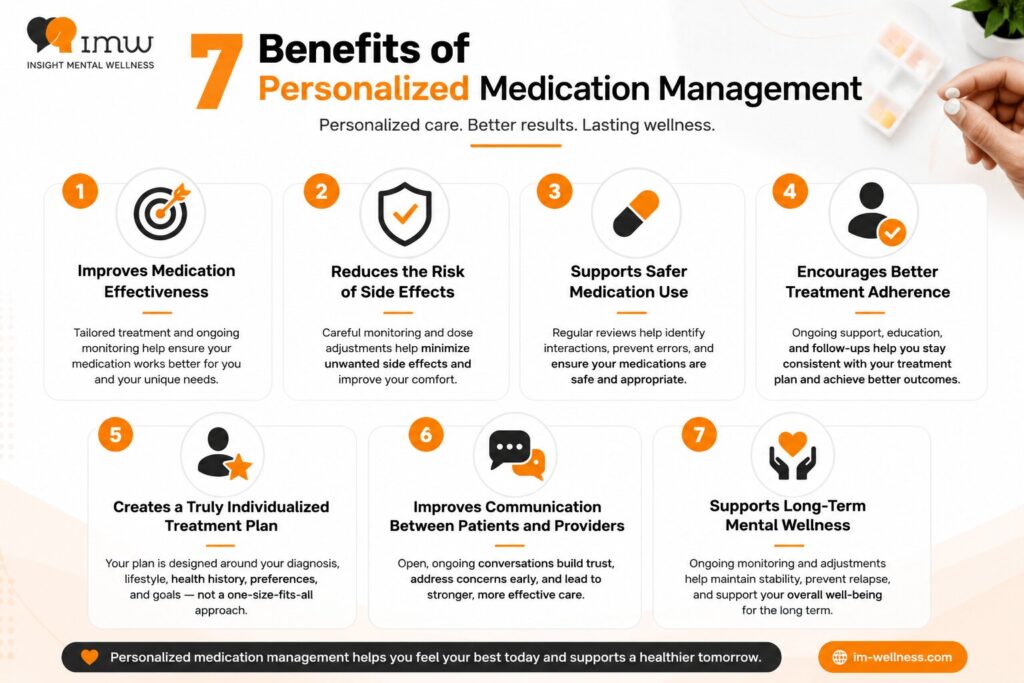
1. Improves Medication Effectiveness
One of the biggest advantages of personalized medication management is that treatment is continually optimized.
Mental health medications often require careful adjustments before the ideal balance is found. Rather than leaving patients on an ineffective medication for months, providers regularly assess progress and make informed changes when necessary.
This may involve:
- Adjusting dosage
- Changing medications
- Combining therapies
- Monitoring symptom improvement
- Evaluating treatment goals
As a result, patients are more likely to experience meaningful symptom relief and improved daily functioning.
2. Reduces the Risk of Side Effects
Every medication carries the potential for side effects, but careful monitoring helps reduce unnecessary discomfort.
Providers routinely evaluate whether symptoms such as:
- Fatigue
- Weight changes
- Sleep disturbances
- Nausea
- Increased anxiety
- Sexual side effects
- Dizziness
are temporary, manageable, or signs that treatment should be modified.
Addressing side effects early often improves medication adherence and prevents patients from discontinuing treatment without medical guidance.
3. Supports Safer Medication Use
Many people take medications for multiple health conditions at the same time.
Personalized medication management helps identify:
- Drug interactions
- Duplicate medications
- Incorrect dosages
- Potential allergic reactions
- Medical conditions that affect medication safety
This comprehensive review helps reduce preventable medication-related complications while improving patient safety.
4. Encourages Better Treatment Adherence
Even the most effective medication cannot work if it isn’t taken consistently.
Patients often stop medications because they:
- Feel better
- Experience side effects
- Forget doses
- Don’t understand how long treatment takes
- Believe the medication isn’t working
Regular medication management appointments provide education, reassurance, and problem-solving strategies that encourage long-term treatment adherence.
Providers can also discuss realistic expectations, explain how medications work, and address concerns before they become barriers to success.
5. Creates a Truly Individualized Treatment Plan
No two people experience mental health conditions in exactly the same way.
Personalized medication management recognizes differences in:
- Age
- Overall health
- Pregnancy status
- Work schedule
- Family responsibilities
- Lifestyle
- Personal preferences
- Treatment goals
Rather than treating a diagnosis alone, providers focus on treating the individual behind the diagnosis.
For example, someone working overnight shifts may require a different medication schedule than someone working a traditional daytime routine. Similarly, an older adult may metabolize medications differently than a younger patient, requiring careful dose adjustments.
6. Improves Communication Between Patients and Providers
Successful treatment depends on open communication.
Medication management appointments give patients an opportunity to discuss:
- New symptoms
- Medication concerns
- Mood changes
- Sleep quality
- Daily functioning
- Stressors affecting mental health
These conversations help providers make informed clinical decisions while empowering patients to take an active role in their care.
7. Supports Long-Term Mental Wellness
Mental health needs often change over time. A medication that works well today may require adjustment months or years later due to changes in health, stress levels, or life circumstances.
Personalized medication management provides ongoing support rather than a one-time prescription.
By monitoring progress, identifying challenges early, and adapting treatment as needed, providers help patients maintain symptom stability and improve their overall quality of life.
The right medication can make a meaningful difference. Explore our personalized Medication Management in Dallas services and take the next step toward better mental wellness.
Personalized Medication Management vs. Traditional Medication Prescribing
| Personalized Medication Management | Traditional Medication Prescribing |
|---|---|
| Ongoing monitoring | Limited follow-up |
| Individualized treatment adjustments | Standard treatment approach |
| Regular symptom tracking | Minimal symptom evaluation |
| Focus on long-term outcomes | Focus on initial prescription |
| Medication reviews at each visit | Less frequent medication reassessment |
| Patient-provider collaboration | Primarily prescription-based care |
Who Can Benefit from Personalized Medication Management?
Personalized medication management can benefit people of all ages who take prescription medications for mental health conditions. Whether you’re beginning treatment for the first time or have been managing a condition for years, regular medication reviews help ensure your treatment continues to meet your changing needs.
This approach is especially valuable for individuals living with:
- Depression
- Anxiety disorders
- Bipolar disorder
- Attention-Deficit/Hyperactivity Disorder (ADHD)
- Obsessive-Compulsive Disorder (OCD)
- Post-Traumatic Stress Disorder (PTSD)
- Panic disorder
- Schizophrenia and other psychotic disorders
It can also benefit patients who:
- Take multiple prescription medications
- Have experienced medication side effects
- Feel their current medication is no longer effective
- Have recently received a new diagnosis
- Are transitioning between different medications
- Have underlying medical conditions that affect medication choices
Because treatment needs evolve over time, ongoing medication management helps ensure that your care remains safe, effective, and aligned with your health goals.
Real-World Examples of Personalized Medication Management
Every patient’s treatment journey is unique. Here are a few examples of how personalized medication management can improve outcomes.
Example 1: Managing Depression More Effectively
A patient begins an antidepressant but notices only slight improvement after several weeks. During a follow-up visit, their psychiatric provider evaluates symptom changes, reviews sleep patterns and energy levels, and adjusts the dosage. Within the following month, the patient experiences significant improvement without changing medications entirely.
Example 2: Reducing Medication Side Effects
Another patient experiences excessive daytime drowsiness after starting medication for anxiety. Rather than discontinuing treatment, the provider adjusts the timing of the medication and recommends a different dosage, reducing side effects while maintaining symptom control.
Example 3: Supporting ADHD Treatment
A college student taking medication for ADHD reports difficulty concentrating in evening classes. After reviewing their daily routine, the provider modifies the treatment plan to better support their academic schedule while minimizing unwanted effects.
These examples demonstrate that effective medication management is an ongoing process, not a one-time prescription.
The Importance of Regular Follow-Up Appointments
Medication management doesn’t end after your prescription is written. Follow-up appointments allow your provider to monitor progress and make informed decisions based on your response to treatment.
During these visits, your provider may:
- Review symptom improvement
- Discuss any new concerns or side effects
- Monitor medication effectiveness
- Check for potential drug interactions
- Adjust dosages if necessary
- Answer questions about your treatment plan
- Recommend additional therapies or lifestyle strategies
Regular appointments also create opportunities to address challenges before they interfere with your recovery.
If you’re preparing for your first medication follow-up, our guide on What to Expect During a Medication Management Appointment can help you feel more confident and informed.
Personalized Medication Management and Whole-Person Care
Medication is only one part of a comprehensive mental health treatment plan.
A personalized approach often includes recommendations for:
- Individual psychotherapy
- Cognitive Behavioral Therapy (CBT)
- Stress management techniques
- Healthy sleep habits
- Physical activity
- Balanced nutrition
- Mindfulness practices
- Family or social support
When medication is combined with healthy lifestyle changes and evidence-based therapy, many patients experience greater improvements than with medication alone.
Treating the whole person, not just the diagnosis, helps support long-term emotional well-being.
Signs Your Medication Management Plan May Need to Be Reviewed
Even if your medication has worked well in the past, changes in your health or lifestyle may mean it’s time for a review.
Consider scheduling a medication management appointment if you notice:
- Your symptoms are returning or worsening
- You’re experiencing bothersome side effects
- You’ve started another prescription medication
- Your sleep, appetite, or energy has changed significantly
- You’re pregnant or planning pregnancy
- You’ve experienced major life changes or increased stress
- You’re considering stopping your medication
Never stop or change psychiatric medication without consulting your healthcare provider, as doing so may increase the risk of withdrawal symptoms or symptom relapse.
Why Choosing the Right Provider Matters
Successful medication management depends on more than prescribing the right medication—it also requires trust, communication, and ongoing collaboration.
A qualified psychiatric provider will:
- Conduct comprehensive evaluations
- Develop individualized treatment plans
- Monitor progress consistently
- Educate you about your medications
- Address concerns promptly
- Adjust treatment based on your changing needs
If you’re looking for guidance on selecting the right mental health professional, read our article on How to Choose a Medication Management Provider for practical tips on what to look for.
For individuals seeking Medication Management in Dallas, working with an experienced psychiatric provider ensures that your treatment plan is regularly monitored and tailored to your unique needs for the best possible outcomes.
Personalized Medication Management Checklist
Use this checklist to make the most of your medication management appointments:
✔ Take your medication exactly as prescribed.
✔ Keep a list of all medications, vitamins, and supplements you use.
✔ Track any changes in your mood, sleep, appetite, or energy.
✔ Write down any questions before your appointment.
✔ Report side effects promptly instead of stopping medication on your own.
✔ Attend scheduled follow-up visits consistently.
✔ Discuss any major life or health changes with your provider.
Key Takeaways
- Personalized medication management tailors treatment to each individual’s unique health needs.
- Regular follow-up appointments help improve medication effectiveness and reduce side effects.
- Ongoing monitoring allows providers to adjust treatment as symptoms and circumstances change.
- A collaborative relationship between patients and providers supports better long-term outcomes.
- Medication management works best when combined with therapy, healthy lifestyle habits, and consistent communication.
- Choosing experienced providers for Medication Management in Dallas can help ensure safe, effective, and individualized psychiatric care.
FAQs
What is personalized medication management?
Personalized medication management is an individualized approach to prescribing, monitoring, and adjusting medications based on a person’s diagnosis, medical history, treatment response, and overall health. It helps improve effectiveness while reducing the risk of side effects.
How often should medication management appointments be scheduled?
The frequency depends on your condition and treatment plan. Patients starting a new medication may need more frequent visits, while those with stable symptoms may only require periodic follow-ups as recommended by their provider.
Why are follow-up appointments important?
Follow-up appointments allow providers to monitor symptom improvement, identify side effects, adjust medications if necessary, and ensure your treatment continues to meet your changing needs.
Can medication management reduce side effects?
Yes. Regular monitoring allows providers to identify side effects early and make appropriate changes, such as adjusting the dosage, switching medications, or modifying the treatment plan to improve comfort and safety.
Is medication management only for people with severe mental health conditions?
No. Medication management can benefit anyone taking psychiatric medication, whether they have mild, moderate, or complex mental health conditions. Ongoing monitoring helps optimize treatment for every stage of care.
Conclusion
Personalized medication management goes beyond writing a prescription; it’s an ongoing partnership focused on helping you achieve the best possible outcomes. By tailoring treatment to your individual needs, monitoring your progress, and making thoughtful adjustments along the way, this approach can improve symptom control, reduce side effects, and support lasting mental wellness.
Because mental health needs can change over time, regular communication with your provider is essential. A personalized treatment plan ensures that your care evolves with you, helping you stay on track toward your wellness goals with confidence.
Personalized Medication Management in Dallas
At Insight Mental Wellness, we provide compassionate, personalized Medication Management in Dallas to help you find the right treatment and achieve lasting mental wellness. Schedule an appointment today and take the next step toward feeling your best.