Young adulthood is a period of rapid change. Between college, starting a career, managing relationships, and becoming more independent, it is also a time when many mental health conditions first appear or become more noticeable. According to mental health research, anxiety disorders, depression, bipolar disorder, ADHD, and other psychiatric conditions commonly emerge between the late teens and early thirties.
For many young adults, medication can play an important role in recovery. However, taking psychiatric medication is not simply about receiving a prescription. It requires regular monitoring, open communication, and adjustments based on changing needs. That is where mental health medication management for young adults becomes essential.
This guide explains how medication management works, who can benefit, what to expect during treatment, common concerns, and how young adults can take an active role in improving their mental health.
What Is Mental Health Medication Management for Young Adults?
Mental health medication management is the ongoing process of prescribing, monitoring, adjusting, and evaluating psychiatric medications to ensure they remain safe, effective, and appropriate for a person’s individual needs.
Rather than being a one-time appointment, medication management involves continuous collaboration between the patient and a qualified mental health provider.
For young adults, medication management often includes:
- Reviewing symptoms and treatment progress
- Monitoring medication effectiveness
- Managing side effects
- Adjusting dosages when needed
- Preventing medication interactions
- Supporting long-term mental wellness
The goal is not simply symptom reduction but helping young adults function successfully at school, work, and in everyday life.
Why Young Adults Need Specialized Medication Management
Young adulthood brings unique biological, emotional, and lifestyle changes that can affect how medications work.
Common life transitions include:
- Moving away from home
- Starting college or a new job
- Increased stress and responsibility
- Irregular sleep schedules
- Changes in diet and exercise
- Alcohol or recreational substance exposure
- New relationships
These factors may influence medication effectiveness, adherence, and mental health symptoms.
Unlike children or older adults, young adults are often learning how to manage healthcare independently for the first time. Regular medication management appointments provide education and support during this transition.
Conditions Commonly Treated with Medication Management
Medication management can help individuals diagnosed with many psychiatric conditions.
These include:
- Major depressive disorder
- Generalized anxiety disorder
- Panic disorder
- Social anxiety disorder
- Bipolar disorder
- ADHD
- Obsessive-compulsive disorder (OCD)
- Post-traumatic stress disorder (PTSD)
- Schizophrenia
- Mood disorders
Not every young adult requires medication, but for many individuals, medication combined with therapy provides the best outcomes.
Signs It May Be Time to Consider Medication Management
Many young adults wonder whether they should seek professional help.
Some signs include:
- Persistent sadness lasting several weeks
- Constant worry or anxiety
- Difficulty concentrating
- Significant mood swings
- Loss of motivation
- Sleeping too much or too little
- Appetite changes
- Panic attacks
- Difficulty keeping up with school or work
- Thoughts of self-harm or hopelessness (which require immediate professional attention)
Early evaluation can prevent symptoms from becoming more severe.
How Medication Management Works
Medication management is a structured process rather than a single visit.
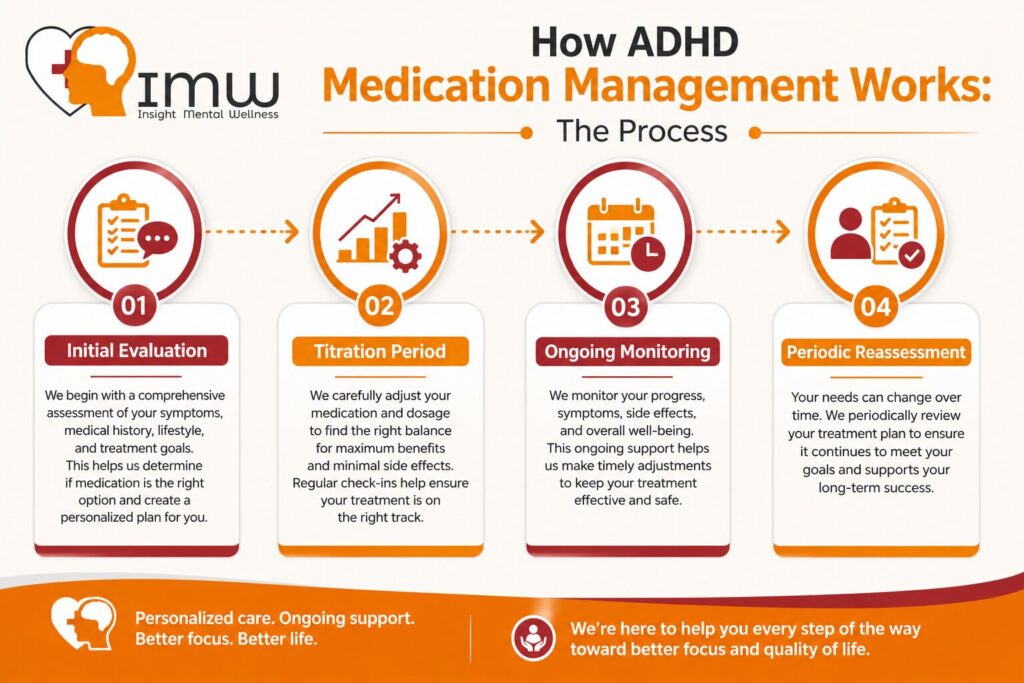
Step 1: Comprehensive Psychiatric Evaluation
The provider begins by reviewing:
- Current symptoms
- Medical history
- Family mental health history
- Previous medications
- Lifestyle habits
- Sleep patterns
- Substance use
- Current medications and supplements
This information helps determine whether medication is appropriate.
Step 2: Personalized Treatment Plan
If medication is recommended, the provider selects one based on factors such as:
- Diagnosis
- Age
- Medical conditions
- Potential side effects
- Daily routine
- Treatment goals
No single medication works for everyone.
Step 3: Regular Follow-Up Visits
Medication often requires adjustments during the first few months.
Follow-up appointments allow providers to evaluate:
- Symptom improvement
- Side effects
- Medication adherence
- Dosage effectiveness
- Emotional well-being
Step 4: Ongoing Monitoring
Mental health changes over time.
Medication management helps ensure treatment evolves with changing needs instead of remaining static.
Benefits of Medication Management for Young Adults
Proper medication management offers advantages beyond symptom relief.
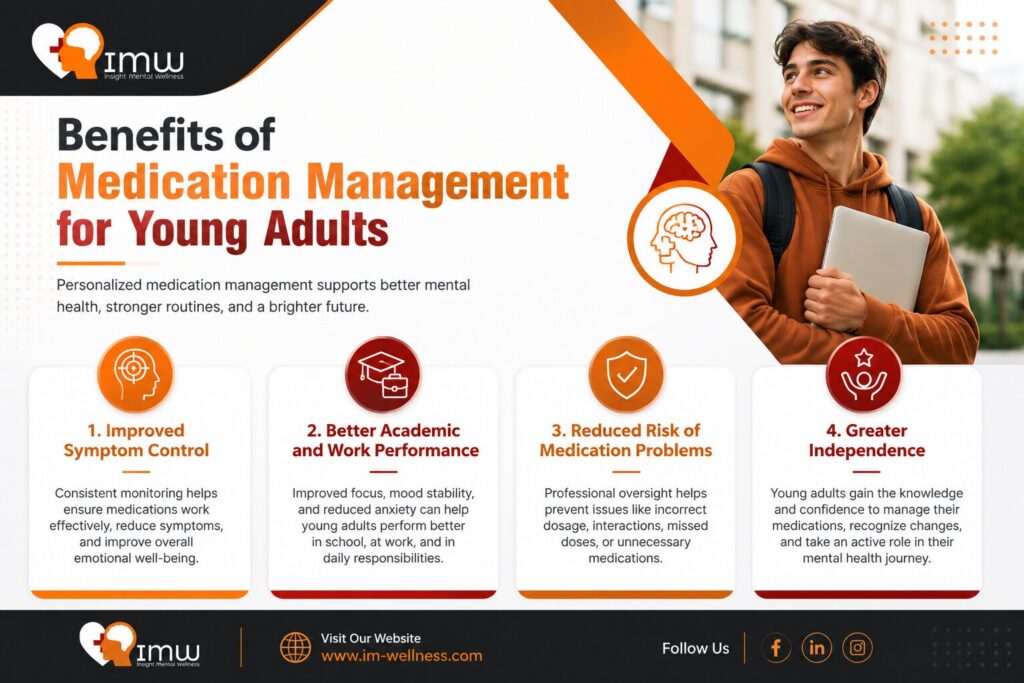
Improved Symptom Control
Consistent monitoring helps medications achieve their intended effect while reducing unwanted symptoms.
Better Academic and Work Performance
Improved concentration, mood stability, and reduced anxiety often make it easier to succeed in school or at work.
Reduced Risk of Medication Problems
Professional monitoring helps identify issues before they become serious.
Examples include:
- Incorrect dosage
- Drug interactions
- Missed doses
- Unnecessary medications
Many patients benefit from learning about the Benefits Medication Management provides through regular medication reviews and individualized treatment planning.
Greater Independence
Young adults gradually learn:
- How medications work
- When to seek help
- How to recognize symptom changes
- How to participate in treatment decisions
This builds long-term confidence in managing their mental health.
Common Types of Psychiatric Medications
Depending on the diagnosis, providers may prescribe:
| Medication Type | Common Purpose |
|---|---|
| Antidepressants | Depression and anxiety disorders |
| Mood stabilizers | Bipolar disorder |
| Anti-anxiety medications | Short-term anxiety relief |
| Stimulants | ADHD |
| Non-stimulant ADHD medications | Attention and focus |
| Antipsychotics | Bipolar disorder, schizophrenia, severe mood disorders |
Medication selection is always individualized based on clinical evaluation.
Medication Management vs. Medication Prescription
Many people assume receiving a prescription is the same as medication management.
They are very different.
| Prescription Only | Medication Management |
|---|---|
| One-time prescription | Ongoing monitoring |
| Limited follow-up | Regular appointments |
| Little dosage review | Dosage adjustments |
| Minimal education | Continuous guidance |
| Focus on medication | Focus on overall wellness |
Medication management supports long-term treatment success rather than simply dispensing medication.
Common Challenges Young Adults Face
Managing mental health medication isn’t always easy.
Some common challenges include:
Forgetting to Take Medication
Busy schedules and changing routines can make consistency difficult.
Helpful strategies include:
- Phone reminders
- Pill organizers
- Daily habit stacking
- Medication tracking apps
Stopping Medication Too Soon
Some individuals discontinue medication once they begin feeling better.
Doing so without medical guidance may increase the risk of symptom recurrence.
Fear of Side Effects
Many medications have potential side effects, but not everyone experiences them.
Providers monitor for issues such as:
- Sleep changes
- Weight fluctuations
- Nausea
- Fatigue
- Emotional blunting
Routine follow-ups help address Medication Management side Effects before they interfere with treatment.
Social Stigma
Young adults sometimes worry about being judged for taking psychiatric medication.
Mental health treatment is healthcare—not a personal weakness.
Seeking treatment demonstrates responsibility and self-care.
How Therapy and Medication Work Together
Medication addresses biological aspects of mental illness, while therapy teaches coping skills and behavior change.
Together they may help individuals:
- Build resilience
- Improve emotional regulation
- Strengthen relationships
- Develop healthier habits
- Reduce relapse risk
Many providers recommend combining both approaches whenever appropriate.
Lifestyle Habits That Support Medication Success
Medication works best alongside healthy daily habits.
Consider prioritizing:
- Regular sleep
- Balanced nutrition
- Physical activity
- Stress management
- Reduced alcohol use
- Avoiding recreational drugs
- Social support
- Consistent therapy attendance
These habits often improve overall treatment outcomes.
Questions Young Adults Should Ask Their Provider
Before starting medication, consider asking:
- What benefits should I expect?
- How long before it starts working?
- What side effects are common?
- What should I do if I miss a dose?
- Will this interact with other medications?
- How often should I schedule follow-up visits?
- When should medication be adjusted?
Open communication improves treatment success.
Practical Checklist for Young Adults Taking Mental Health Medication
Use this checklist to stay engaged in your care:
- Attend all follow-up appointments
- Take medication exactly as prescribed
- Keep a symptom journal
- Report new or worsening side effects
- Avoid stopping medication without medical advice
- Inform providers about all supplements and medications
- Prioritize sleep and healthy routines
- Ask questions whenever something feels unclear
When Should Medication Be Reassessed?
Medication should be reviewed if you experience:
- New symptoms
- Worsening anxiety or depression
- Persistent side effects
- Significant life changes
- Pregnancy planning
- Changes in other medications
- Difficulty remembering doses
Regular reassessment ensures treatment remains effective as your needs evolve.
Young Adult Mental Health: Early Treatment Matters
Mental health conditions often respond better when identified and treated early. Delaying care may allow symptoms to interfere with education, relationships, employment, and overall quality of life.
Whether someone is beginning treatment for anxiety or exploring Depression Medication Management, consistent follow-up and personalized care help create a safer, more effective treatment experience. Similarly, individuals living with mood disorders can benefit from structured Bipolar Disorder Medication Management, where medication effectiveness and long-term stability are regularly monitored.
Avoiding Common Medication Mistakes, such as skipping doses, sharing prescriptions, or stopping medication without guidance, is another important part of successful long-term care.
For individuals seeking personalized psychiatric support, exploring Medication Management in Dallas can help connect them with providers who offer ongoing medication monitoring tailored to changing mental health needs. Those looking for local treatment options can also learn more about Medication Management in Dallas to understand how regular follow-up visits support safe, individualized care.
Key Takeaways
- Mental health medication management is an ongoing process, not a one-time prescription.
- Young adults often face unique life changes that require individualized medication monitoring.
- Regular follow-up appointments improve safety, effectiveness, and long-term treatment success.
- Medication and therapy frequently work best together.
- Healthy lifestyle habits enhance medication effectiveness.
- Open communication with your provider supports better outcomes and fewer medication-related problems.
FAQs:
Can young adults take psychiatric medication safely?
Yes. When prescribed and monitored by a qualified mental health provider, psychiatric medications are generally safe and effective. Regular follow-up appointments help monitor progress and manage any side effects.
How often should medication management appointments occur?
Appointments are typically more frequent when starting or changing medication, often every few weeks. Once symptoms are stable, visits may be scheduled every few months based on individual needs.
Is therapy still necessary if I’m taking medication?
Medication and therapy address different aspects of mental health. Many people experience better long-term outcomes when both are used together, though treatment plans vary by individual.
What if my medication doesn’t seem to be working?
Do not stop taking medication on your own. Speak with your provider, who may recommend adjusting the dosage, changing medications, or exploring additional treatment options.
Can I stop taking psychiatric medication once I feel better?
Not without consulting your healthcare provider. Stopping medication abruptly can lead to withdrawal symptoms or a return of mental health symptoms. Your provider can create a safe plan if medication changes are appropriate.
What should I do if I miss a dose?
Follow the instructions provided with your medication or contact your healthcare provider or pharmacist. Do not double your next dose unless specifically instructed to do so.
Conclusion
Managing a mental health condition during young adulthood can feel overwhelming, but you don’t have to navigate it alone. Medication management is more than prescribing medication; it is an ongoing partnership focused on finding the right treatment, monitoring progress, addressing concerns, and supporting your long-term well-being.
Managing your mental health doesn’t have to be overwhelming. At Insight Mental Wellness, we provide personalized Medication Management in Dallas to help you find the right treatment plan, monitor your progress, and support your long-term well-being. Schedule an appointment today and take the next step toward feeling your best.