Schizophrenia is a long-term mental health condition that requires more than simply taking medication. While antipsychotic medications play a critical role in managing symptoms, achieving lasting stability depends on consistent monitoring, timely medication adjustments, and ongoing collaboration with a mental health provider.
Managing medications for schizophrenia isn’t a “set it and forget it” process. The right medication and dosage today may need to be adjusted months or even years later based on symptom changes, side effects, physical health, lifestyle, or life events.
This guide explains why regular medication follow-ups matter, what happens during these appointments, how they improve treatment outcomes, and how consistent medication management helps people living with schizophrenia maintain stability and a better quality of life.
What Is Medication Management for Schizophrenia?
Medication management for schizophrenia is the ongoing process of prescribing, monitoring, evaluating, and adjusting psychiatric medications to ensure they remain safe, effective, and aligned with a person’s changing needs.
Rather than focusing only on prescribing medication, comprehensive medication management includes:
- Monitoring symptom improvement
- Identifying side effects early
- Adjusting medication dosage when necessary
- Improving medication adherence
- Preventing relapse
- Reviewing physical health and laboratory results
- Coordinating treatment with therapy and primary care providers
The goal is to help individuals experience the greatest symptom control with the fewest side effects while supporting long-term recovery.
Why Regular Follow-Ups Are Essential
Many people begin feeling better after starting treatment and wonder if follow-up visits are still necessary. The answer is yes.
Schizophrenia symptoms can change gradually, and medication effectiveness may shift over time. Regular appointments help detect small problems before they become serious setbacks.
Without routine follow-ups, patients may experience:
- Medication becoming less effective
- Increased hallucinations or delusions
- Worsening negative symptoms
- Missed warning signs of relapse
- Serious medication side effects
- Poor medication adherence
- Hospitalization that may have been preventable
Consistent psychiatric monitoring allows providers to intervene early instead of waiting for symptoms to become severe.
What Happens During a Medication Management Appointment?
Medication follow-up appointments are designed to evaluate the entire treatment picture, not just whether medication is being taken.
A provider may discuss:
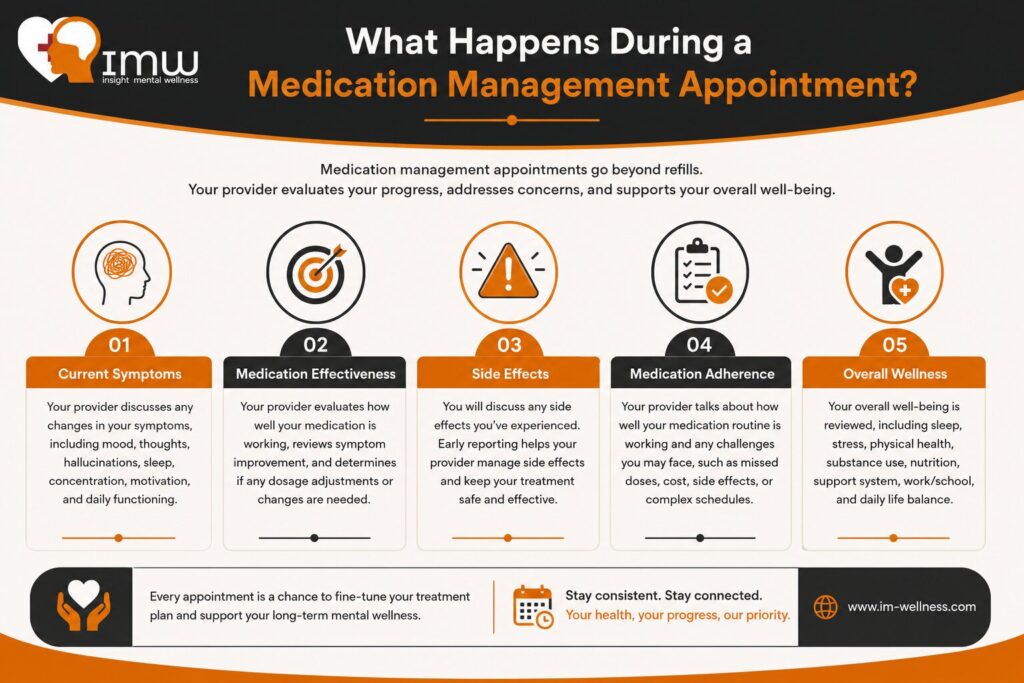
Current Symptoms
Questions often include:
- Are hallucinations improving?
- Have paranoid thoughts changed?
- How is concentration?
- Are daily activities easier?
- Has mood changed?
Medication Effectiveness
Providers evaluate:
- Whether the medication is working
- If symptom control has improved
- Whether dosage changes are needed
- If another medication may be more appropriate
Side Effects
Common medication concerns include:
- Weight gain
- Fatigue
- Restlessness
- Muscle stiffness
- Tremors
- Dizziness
- Dry mouth
- Sexual side effects
- Sleep changes
Early reporting allows providers to address side effects before they interfere with treatment.
Medication Adherence
Many patients occasionally miss doses for understandable reasons.
Providers discuss:
- Difficulty remembering medications
- Cost concerns
- Fear of side effects
- Complex medication schedules
- Personal concerns about treatment
The purpose is to solve problems, not judge patients.
Overall Wellness
Medication management also considers:
- Sleep quality
- Stress levels
- Physical health
- Substance use
- Nutrition
- Exercise
- Family support
- Work or school functioning
Schizophrenia treatment works best when mental and physical health are addressed together.
How Often Should Medication Follow-Ups Occur?
The schedule varies depending on each person’s situation.
| Treatment Stage | Typical Follow-Up Frequency |
|---|---|
| Starting medication | Every 1–4 weeks |
| Medication adjustment | Every 2–6 weeks |
| Stable treatment | Every 1–3 months |
| Long-term maintenance | Every 3–6 months (when clinically appropriate) |
People experiencing symptom changes may need more frequent visits.
Why Medication Needs Can Change Over Time
One common misconception is that the first medication prescribed will always remain the best choice.
Several factors can affect treatment over time.
Life Changes
Major events can influence symptoms, including:
- New job
- College
- Pregnancy
- Aging
- Increased stress
- Loss of a loved one
Physical Health
Conditions like:
- Diabetes
- High blood pressure
- Thyroid disorders
- Liver disease
can affect medication choices.
New Medications
Adding medications for other health conditions may increase the risk of drug interactions.
Regular medication reviews help ensure treatments remain safe.
Changes in Symptoms
Some symptoms improve while others emerge later.
Providers continually evaluate:
- Positive symptoms
- Negative symptoms
- Cognitive symptoms
- Emotional functioning
Treatment evolves alongside the patient’s needs.
The Importance of Monitoring Side Effects
Managing side effects is one of the biggest reasons follow-up appointments matter.
Many antipsychotic medications require monitoring because they may affect:
- Weight
- Blood sugar
- Cholesterol
- Blood pressure
- Heart rhythm
- Hormone levels
Routine follow-ups may include:
- Weight checks
- Blood pressure
- Laboratory testing
- Medication review
- Physical health assessments
This proactive monitoring improves both safety and long-term treatment success.
Related Reading: Learn more about recognizing and managing Medication Management Side Effects to understand when symptoms should be discussed with your provider.
Preventing Relapse Through Consistent Monitoring
Relapse rarely occurs without warning.
Early signs often include:
- Sleep changes
- Increased anxiety
- Social withdrawal
- Trouble concentrating
- Suspicious thinking
- Reduced motivation
- Mood changes
Regular appointments help identify these early warning signs before symptoms escalate.
Adjusting treatment early can often reduce the likelihood of hospitalization or a psychiatric crisis.
Signs It’s Time to Schedule a Follow-Up Sooner
Don’t wait until your next scheduled appointment if you notice:
- Hallucinations returning
- Increased paranoia
- Severe mood changes
- Missing several medication doses
- New or worsening side effects
- Trouble sleeping for several days
- Difficulty functioning at work or school
- Family members noticing behavioral changes
Early intervention often leads to better outcomes.
Medication Alone Is Only One Part of Recovery
Medication is highly effective for many people with schizophrenia, but the strongest outcomes often come from combining medication with additional support.
Treatment may include:
- Individual therapy
- Family education
- Social skills training
- Vocational rehabilitation
- Peer support
- Healthy lifestyle habits
- Stress management
Medication management helps coordinate these services into a comprehensive care plan.
Tips for Getting the Most Out of Your Follow-Up Visits
Preparing before each appointment helps providers make informed treatment decisions.
Bring:
- A current medication list
- Questions about treatment
- Notes about symptom changes
- Side effects you’ve experienced
- Sleep patterns
- Mood changes
- Any new medical diagnoses
- Vitamins or supplements you’re taking
Keeping a symptom journal between visits can also make it easier to identify patterns and track progress.
Medication Management vs. Medication Refills
Many people assume follow-up appointments are simply for prescription renewals.
The difference is significant.
| Medication Refills | Medication Management |
|---|---|
| Renews prescriptions | Evaluates treatment effectiveness |
| Limited discussion | Comprehensive psychiatric assessment |
| Focus on continuing medication | Focus on improving outcomes |
| Minimal monitoring | Ongoing symptom and side effect evaluation |
| Little treatment planning | Personalized medication adjustments |
Effective schizophrenia care involves far more than refilling prescriptions.
How Consistent Medication Management Improves Long-Term Outcomes
Research consistently shows that regular psychiatric follow-up is associated with:
- Better medication adherence
- Fewer relapses
- Reduced hospitalization risk
- Earlier detection of side effects
- Improved daily functioning
- Better quality of life
- Stronger therapeutic relationships
Ongoing care helps patients stay engaged in treatment and adapt to changes over time rather than reacting only during a crisis.
If you’re looking for personalized Medication Management in Dallas, consistent follow-up appointments can help ensure your treatment remains effective as your needs evolve. Learn more about our Medication Management in Dallas services and how individualized psychiatric care supports long-term stability.
Related Resources
To better understand psychiatric medication management, you may also find these guides helpful:
- Benefits of Medication Management
- Common Medication Mistakes
- Bipolar Disorder Medication Management
- Depression Medication Management
These resources explore how medication monitoring supports safe, effective treatment across different mental health conditions.
Key Takeaways
- Medication management is an ongoing process, not a one-time prescription.
- Regular follow-ups help providers monitor symptom changes and medication effectiveness.
- Early identification of side effects improves treatment safety.
- Routine appointments reduce relapse risk through timely medication adjustments.
- Combining medication with therapy and healthy lifestyle habits often leads to better long-term outcomes.
- Active communication between patients, families, and providers is essential for successful schizophrenia treatment.
FAQs
How often should someone with schizophrenia have medication follow-ups?
Most people need follow-up visits every one to three months once their condition is stable, although individuals starting a new medication or experiencing symptom changes may require more frequent appointments.
Why can’t schizophrenia medications stay the same forever?
Medication needs may change due to aging, physical health conditions, side effects, stress, lifestyle changes, or changes in symptom severity. Regular evaluations help ensure treatment continues to meet the patient’s needs.
What should I tell my provider during a medication follow-up?
Discuss any symptom changes, missed doses, side effects, sleep problems, mood changes, new medical conditions, or concerns about your medication. Honest communication helps your provider make the safest and most effective treatment decisions.
What happens if schizophrenia medications stop working?
Your provider may adjust the dosage, switch medications, recommend additional treatments, or investigate other factors affecting symptom control. Do not stop taking medication without medical guidance.
Can medication management help reduce hospitalization?
Yes. Regular follow-ups allow providers to identify early warning signs of relapse, adjust treatment promptly, and address medication issues before symptoms become severe enough to require hospitalization.
Conclusion
Managing schizophrenia is an ongoing journey that requires more than simply taking medication as prescribed. Regular follow-up appointments allow your provider to monitor progress, manage side effects, adjust treatment when needed, and support your overall well-being. This proactive approach can improve symptom control, reduce the risk of relapse, and help you maintain greater independence over time.
Managing schizophrenia doesn’t end with a prescription; it requires ongoing care, regular follow-ups, and a treatment plan tailored to your needs. If you or a loved one is looking for compassionate, personalized Medication Management in Dallas, Insight Mental Wellness provides expert psychiatric care focused on improving medication effectiveness, minimizing side effects, and supporting long-term mental wellness. Schedule an appointment today and take the next step toward more consistent, confident care.