Infidelity can shake the foundation of a relationship in ways few other experiences can. Trust breaks, communication becomes strained, and both partners often feel emotionally overwhelmed. Yet many couples do recover and rebuild stronger relationships through intentional healing, accountability, and professional support.
Couple therapy for cheating helps partners process betrayal, understand the underlying relationship dynamics, rebuild trust, and decide whether the relationship can move forward in a healthy way. While not every relationship survives infidelity, therapy often provides clarity, emotional safety, and structured guidance during one of the most painful periods a couple can experience.
This guide explains how couples therapy works after cheating, what to expect during counseling, common challenges, recovery timelines, and signs that healing may be possible.
What Is Couple Therapy for Cheating?
Couple therapy for cheating is a specialized form of relationship counseling designed to help partners address the emotional, psychological, and relational impact of infidelity.
The therapy process usually focuses on:
- Understanding what happened
- Processing betrayal trauma
- Improving communication
- Rebuilding emotional and physical trust
- Identifying unhealthy relationship patterns
- Establishing accountability
- Deciding whether reconciliation is possible
Therapists may use evidence-based approaches such as:
- Emotionally Focused Therapy (EFT)
- Cognitive Behavioral Therapy (CBT)
- The Gottman Method
- Trauma-informed couples counseling
- Attachment-based therapy
Unlike casual relationship advice, structured therapy creates a safe environment where both partners can express emotions honestly without escalating conflict.
Read More: What Is Couples Therapy? How It Works, What to Expect, and When It Helps
Can Couples Recover After Cheating?
Yes, many couples recover after infidelity, but recovery depends on several critical factors.
Relationships Are More Likely to Heal When:
| Positive Recovery Factors | Why They Matter |
|---|---|
| The cheating partner takes full accountability | Reduces defensiveness and rebuilds trust |
| Both partners are willing to participate in therapy | Creates shared commitment to healing |
| The affair has ended completely | Prevents ongoing emotional damage |
| Communication remains respectful | Helps avoid emotional shutdown |
| Both individuals are emotionally invested in repair | Increases long-term recovery potential |
Recovery Becomes More Difficult When:
- There are repeated affairs
- One partner refuses accountability
- Emotional abuse exists
- There is ongoing dishonesty
- Either partner feels unsafe
- Addiction or untreated mental health concerns are involved
Healing is rarely quick. For many couples, rebuilding trust takes months or even years.
Why People Seek Couples Therapy After Infidelity
Many couples wait too long before seeking professional help because they believe they should “fix it themselves.” In reality, infidelity often creates intense emotional reactions that are difficult to navigate alone.
Common Reasons Couples Start Therapy
Emotional Fallout
Partners may experience:
- Anxiety
- Anger
- Shame
- Depression
- Hypervigilance
- Intrusive thoughts
- Emotional numbness
Communication Breakdown
Arguments often become repetitive, defensive, or emotionally explosive.
Loss of Trust
The betrayed partner may constantly question:
- Where their partner is
- Whether they are telling the truth
- If another affair could happen again
Desire to Rebuild the Relationship
Some couples genuinely want to repair the relationship but do not know where to begin.
What Happens in Couples Therapy for Cheating?
Every therapist approaches infidelity differently, but most counseling processes follow similar stages.
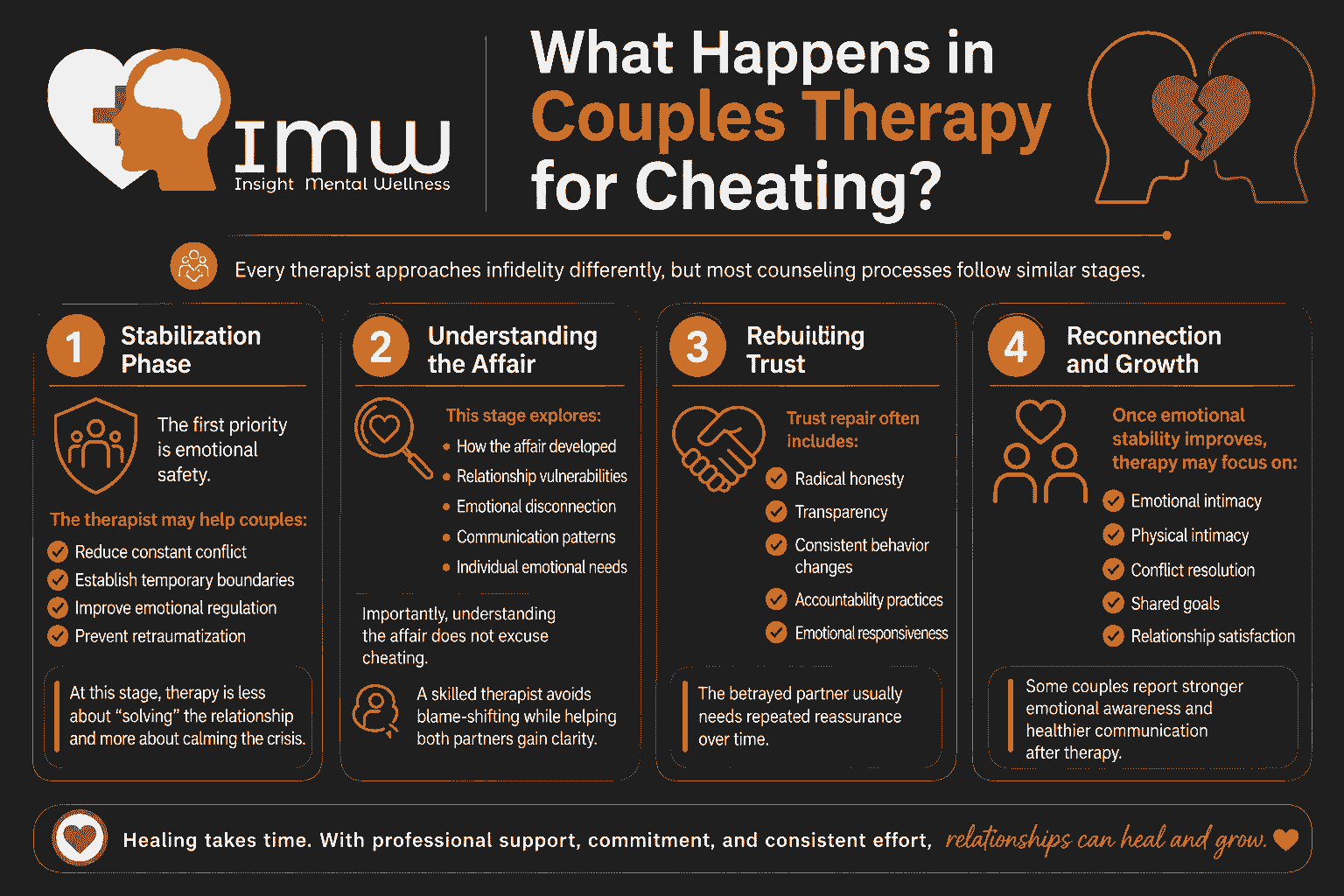
1. Stabilization Phase
The first priority is emotional safety.
The therapist may help couples:
- Reduce constant conflict
- Establish temporary boundaries
- Improve emotional regulation
- Prevent retraumatization
At this stage, therapy is less about “solving” the relationship and more about calming the crisis.
2. Understanding the Affair
This stage explores:
- How the affair developed
- Relationship vulnerabilities
- Emotional disconnection
- Communication patterns
- Individual emotional needs
Importantly, understanding the affair does not excuse cheating.
A skilled therapist avoids blame-shifting while helping both partners gain clarity.
3. Rebuilding Trust
Trust repair often includes:
- Radical honesty
- Transparency
- Consistent behavior changes
- Accountability practices
- Emotional responsiveness
The betrayed partner usually needs repeated reassurance over time.
Examples of Trust-Building Behaviors
| Healthy Actions | Unhelpful Actions |
|---|---|
| Open communication | Defensive reactions |
| Consistent honesty | Minimizing the betrayal |
| Following boundaries | Secrecy |
| Empathy for pain | Rushing forgiveness |
| Patience with healing | Avoiding difficult conversations |
4. Reconnection and Growth
Once emotional stability improves, therapy may focus on:
- Emotional intimacy
- Physical intimacy
- Conflict resolution
- Shared goals
- Relationship satisfaction
Some couples report stronger emotional awareness and healthier communication after therapy.
How Long Does Recovery Take After Cheating?
There is no universal timeline.
Some couples begin feeling emotionally stable within several months, while deeper trust rebuilding may take 1–3 years.
Factors That Influence Recovery Time
- Severity of betrayal
- Length of the affair
- Whether the affair was emotional, physical, or both
- Transparency after discovery
- Previous relationship issues
- Commitment to therapy
- Emotional coping skills
Recovery is usually nonlinear. Progress often includes setbacks, emotional triggers, and periods of uncertainty.
Signs Couples Therapy Is Working
Many couples wonder whether counseling is actually helping.
Positive Signs of Progress
- Fewer emotionally explosive arguments
- Increased honesty
- More empathy between partners
- Better emotional regulation
- Reduced obsessive questioning
- Gradual rebuilding of intimacy
- Improved conflict resolution
- Increased emotional safety
Healing does not mean forgetting the betrayal. It means learning how to move forward in a healthier and more stable way.
Read More: What kind of therapy is best for couples?
Common Mistakes Couples Make After Infidelity
Ignoring the Emotional Impact
Some couples try to “move on quickly” without processing trauma. This often causes unresolved resentment later.
Demanding Immediate Forgiveness
Forgiveness cannot be forced or rushed.
Avoiding Hard Conversations
Silence often increases emotional distance.
Over-Focusing on Blame
While accountability matters, endless blame cycles can prevent healing.
Skipping Professional Help
Infidelity recovery is emotionally complex. Structured guidance often improves communication and emotional understanding.
Many couples benefit from professional support through programs such as Couples Therapy Services that focus on trust rebuilding, emotional healing, and relationship repair.
Emotional Affairs vs Physical Affairs
Not all infidelity looks the same.
Emotional Affairs
An emotional affair usually involves:
- Emotional intimacy outside the relationship
- Secret conversations
- Romantic attachment
- Emotional dependency
Many people experience emotional affairs as equally painful as physical cheating.
Physical Affairs
Physical infidelity involves sexual or physical intimacy outside the relationship.
In many situations, emotional and physical affairs overlap.
When Couples Therapy May Not Be Enough
Therapy can help many couples, but certain situations may require additional intervention or separation.
Red Flags Include:
- Ongoing cheating
- Emotional manipulation
- Domestic abuse
- Coercive control
- Severe untreated addiction
- Refusal to participate honestly in therapy
In these cases, individual therapy or safety planning may be more appropriate before relationship repair.
How to Choose the Right Couples Therapist
Not every therapist specializes in infidelity recovery.
Look for Therapists Who Have Experience With:
- Affair recovery
- Trauma-informed care
- Attachment theory
- Relationship conflict resolution
- Emotionally Focused Therapy
- Evidence-based couples counseling
If you are looking for professional support after infidelity, Insight Mental Wellness is providing Couples Therapy in San Antonio, TX, with compassionate, structured care designed to help couples rebuild trust, improve communication, and navigate the healing process together.
Key Takeaways
- Couple therapy for cheating helps partners process betrayal and rebuild trust.
- Recovery after infidelity is possible, but it requires honesty, accountability, and emotional work.
- Healing often takes significant time and patience.
- Structured therapy can improve communication, emotional safety, and long-term relationship stability.
- Not every relationship survives cheating, but therapy can still provide clarity and emotional healing.
FAQs
Does couples therapy help after cheating?
Yes, couples therapy can help partners process betrayal, improve communication, rebuild trust, and decide whether reconciliation is healthy and realistic.
How successful is couples therapy after infidelity?
Success varies depending on factors such as honesty, accountability, emotional commitment, and willingness to participate consistently in therapy.
Should both partners attend therapy after cheating?
In many cases, yes. Couples counseling is often more effective when both partners actively participate. Some individuals also benefit from separate individual therapy.
How long should couples wait before starting therapy after cheating?
Most experts recommend starting therapy as soon as possible after discovery because early intervention can reduce emotional escalation and communication breakdown.
Can trust fully return after infidelity?
For some couples, trust can gradually rebuild over time through consistent honesty, transparency, emotional accountability, and therapeutic support.
Is cheating always a sign the relationship should end?
Not necessarily. Some relationships end after infidelity, while others recover and develop healthier dynamics. The outcome depends on the individuals involved and the willingness to repair the relationship.
Final Thoughts
Infidelity can create deep emotional wounds, but it does not automatically define the future of a relationship. Healing requires vulnerability, accountability, emotional honesty, and patience from both partners.
Couples therapy offers a structured path for navigating betrayal, rebuilding communication, and determining whether the relationship can move forward in a healthier direction. Even when reconciliation is uncertain, therapy can help both individuals gain clarity, emotional support, and healthier relationship skills for the future.
If infidelity, broken trust, or ongoing relationship conflict is affecting your connection, you do not have to navigate it alone. Professional support can help couples communicate more openly, process emotional pain, and begin rebuilding trust in a healthier way. Insight Mental Wellness provides compassionate and evidence-based couples therapy in San Antonio, TX, helping partners work through challenges and strengthen their relationships with guidance tailored to their unique situation.