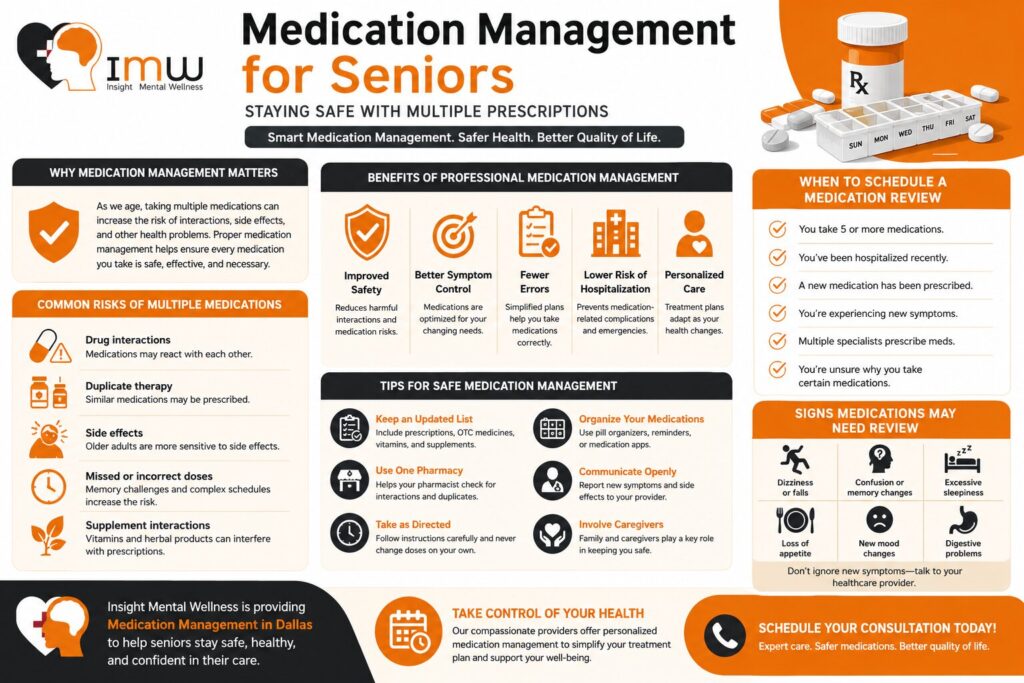
As we age, managing medications often becomes more complex. Many older adults take several prescriptions to control chronic conditions such as high blood pressure, diabetes, arthritis, heart disease, and depression. While these medications improve health and quality of life, taking multiple drugs also increases the risk of medication errors, harmful interactions, and unwanted side effects.
Medication management for seniors is the ongoing process of reviewing, organizing, monitoring, and optimizing medications to ensure they are safe, effective, and appropriate. It helps reduce medication-related problems while supporting better long-term health outcomes.
In this guide, you’ll learn how medication management works for older adults, common risks associated with multiple prescriptions, practical safety strategies, warning signs to watch for, and when professional medication management can make a meaningful difference.
What Is Medication Management for Seniors?
Medication management is a structured approach to ensuring every medication a senior takes is necessary, correctly dosed, compatible with other medications, and monitored regularly.
It involves much more than remembering to take pills on time. Effective medication management includes:
- Reviewing all prescription medications
- Evaluating over-the-counter medicines and supplements
- Identifying duplicate therapies
- Monitoring side effects
- Preventing dangerous drug interactions
- Adjusting medications as health conditions change
- Improving medication adherence
For seniors taking multiple prescriptions, medication management becomes an essential part of preventive healthcare rather than simply an added convenience.
Why Seniors Are More Vulnerable to Medication Problems
Older adults process medications differently than younger individuals. Natural changes in kidney function, liver metabolism, body composition, and cognitive abilities can alter how medications work.
Common reasons medication risks increase with age include:
- Multiple chronic medical conditions
- Polypharmacy (taking five or more medications)
- Several healthcare providers prescribing medications
- Changes in memory or vision
- Reduced kidney or liver function
- Difficulty reading medication labels
- Taking dietary supplements alongside prescriptions
These factors make regular medication reviews increasingly important.
What Is Polypharmacy?
Polypharmacy refers to the use of multiple medications at the same time, commonly defined as taking five or more prescription drugs daily.
Although polypharmacy is sometimes medically necessary, it can increase the likelihood of:
- Drug interactions
- Duplicate medications
- Increased side effects
- Falls
- Confusion
- Hospitalizations
- Poor medication adherence
The goal isn’t necessarily fewer medications; it’s ensuring every medication continues to provide more benefit than risk.
Common Medication Safety Risks for Seniors
| Risk | Why It Happens | Possible Consequences |
|---|---|---|
| Drug interactions | Multiple medications affect one another | Reduced effectiveness or harmful reactions |
| Duplicate therapy | Similar medications prescribed by different providers | Overmedication |
| Missed doses | Memory challenges or complicated schedules | Poor disease control |
| Incorrect dosing | Vision problems or confusing instructions | Toxicity or treatment failure |
| Side effects | Age-related changes in metabolism | Falls, dizziness, confusion |
| Supplement interactions | Vitamins or herbal products interfere with prescriptions | Increased bleeding, blood pressure changes |
Signs That Medications May Need Review
Many medication-related problems develop gradually and may be mistaken for normal aging.
Watch for symptoms such as:
- Frequent dizziness
- Increased falls
- Confusion or memory changes
- Excessive sleepiness
- Loss of appetite
- New digestive problems
- Unexpected weight changes
- Mood changes
- Difficulty walking
- Repeated hospital or emergency room visits
A comprehensive medication review can help determine whether medications may be contributing to these issues.
Benefits of Professional Medication Management
Working with a psychiatric or primary care medication management provider offers several advantages beyond prescription refills.
Benefits include:
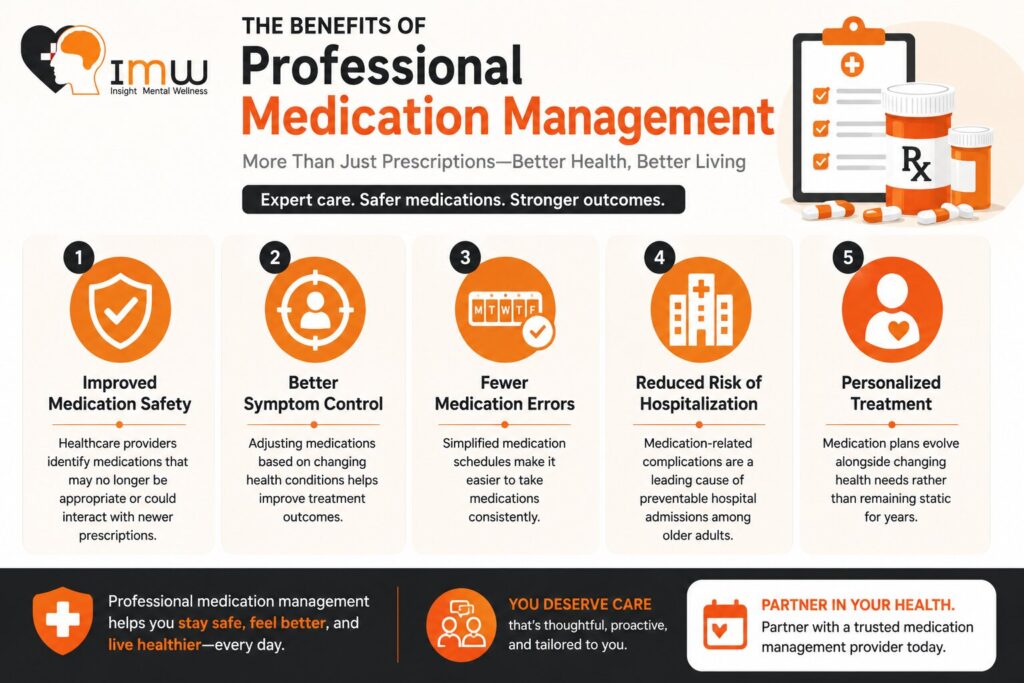
Improved Medication Safety
Healthcare providers identify medications that may no longer be appropriate or could interact with newer prescriptions.
Better Symptom Control
Adjusting medications based on changing health conditions helps improve treatment outcomes.
Fewer Medication Errors
Simplified medication schedules make it easier to take medications consistently.
Reduced Risk of Hospitalization
Medication-related complications are a leading cause of preventable hospital admissions among older adults.
Personalized Treatment
Medication plans evolve alongside changing health needs rather than remaining static for years.
If you’re interested in learning more about the broader Benefits Medication Management, understanding how medication reviews improve safety and treatment outcomes can provide valuable insight into long-term care planning.
How Healthcare Providers Manage Multiple Prescriptions
Professional medication management typically includes several steps.
Comprehensive Medication Review
Providers review:
- Prescription medications
- Over-the-counter medicines
- Vitamins
- Herbal supplements
- Recently discontinued medications
This helps create a complete picture of everything affecting a patient’s health.
Evaluating Medication Necessity
Each medication is assessed by asking:
- Is it still needed?
- Is it working?
- Is the dosage appropriate?
- Does it interact with other medications?
- Is there a safer alternative?
Monitoring Side Effects
Routine follow-up visits allow providers to identify unwanted effects before they become serious.
Understanding Medication Management side Effects can also help patients recognize when symptoms should be discussed with their healthcare provider.
Ongoing Follow-Up
Medication plans should be reviewed:
- After hospital discharge
- When new medications are added
- Following major health changes
- During annual wellness visits
Tips for Seniors to Stay Safe with Multiple Prescriptions
Simple habits can significantly reduce medication-related risks.
Keep an Updated Medication List
Include:
- Medication names
- Dosages
- Instructions
- Prescribing providers
- Allergies
- Supplements
Bring this list to every healthcare appointment.
Use One Pharmacy Whenever Possible
Filling prescriptions at a single pharmacy allows pharmacists to detect potential drug interactions more effectively.
Take Medications Exactly as Directed
Avoid:
- Skipping doses
- Doubling doses
- Stopping medications without medical advice
- Sharing medications with others
Organize Medications
Helpful tools include:
- Weekly pill organizers
- Medication reminder apps
- Calendar reminders
- Family caregiver support
Never Ignore New Symptoms
New symptoms aren’t always caused by aging.
Always report:
- Balance problems
- Memory changes
- Persistent fatigue
- Mood changes
- Vision changes
These may indicate medication-related complications.
Medication Management for Seniors with Mental Health Conditions
Older adults living with depression, anxiety, bipolar disorder, or other psychiatric conditions often require additional medication monitoring.
Psychiatric medications may need dosage adjustments due to age-related changes in metabolism, increased sensitivity to side effects, or interactions with medications prescribed for physical health conditions.
Common situations include:
- Managing antidepressants safely
- Monitoring anxiety medications
- Reviewing sleep medications
- Adjusting mood stabilizers
- Evaluating antipsychotic medications when appropriate
Patients receiving Depression Medication Management or Bipolar Disorder Medication Management benefit from regular follow-up visits that assess both symptom improvement and medication safety.
Common Medication Mistakes Seniors Should Avoid
Many medication problems are preventable.
Avoid these common mistakes:
- Taking expired medications
- Mixing prescriptions with certain supplements without medical guidance
- Using another person’s medication
- Forgetting to update medication lists
- Skipping follow-up appointments
- Changing doses independently
- Ignoring mild side effects until they worsen
Learning about Common Medication Mistakes can help seniors and caregivers recognize preventable risks before they become serious health concerns.
The Role of Caregivers in Medication Management
Family members and caregivers often play a vital role by helping seniors:
- Organize medications
- Attend medical appointments
- Track side effects
- Refill prescriptions on time
- Monitor adherence
- Communicate changes with healthcare providers
Their involvement can greatly improve medication safety, particularly for individuals with memory impairment or complex treatment plans.
When Should Seniors Schedule a Medication Review?
Consider scheduling a medication review if:
- You take five or more medications.
- You’ve recently been hospitalized.
- A new medication has been prescribed.
- You’re experiencing new symptoms.
- Multiple specialists prescribe medications.
- You’re unsure why you’re taking certain medications.
Regular reviews help ensure treatment remains both safe and effective.
Medication Management Checklist
Use this checklist during your next healthcare visit:
✔ Bring a complete medication list
✔ Include vitamins and supplements
✔ Ask about possible drug interactions
✔ Discuss any new symptoms
✔ Review whether every medication is still necessary
✔ Confirm correct dosages
✔ Ask about safer alternatives if side effects occur
✔ Update emergency medication information
Medication Management in Dallas
For seniors and caregivers seeking individualized support, professional Medication Management in Dallas can help simplify complex medication regimens, monitor for drug interactions, and ensure treatments remain appropriate as health needs evolve.
Routine medication reviews are especially valuable for older adults managing chronic medical conditions alongside mental health concerns.
If you’re searching for comprehensive Medication Management in Dallas, working with an experienced psychiatric medication management provider can help improve safety, treatment adherence, and overall quality of life through ongoing evaluation and personalized care.
Key Takeaways
- Seniors are more likely to take multiple medications, increasing the risk of interactions and side effects.
- Medication management focuses on safety, effectiveness, and ongoing monitoring.
- Polypharmacy requires regular professional review rather than simply reducing medications.
- Keeping an updated medication list and using one pharmacy can reduce preventable medication errors.
- Caregivers play an important role in supporting safe medication use.
- Routine medication reviews help identify unnecessary medications and improve treatment outcomes.
FAQs
What is medication management for seniors?
Medication management for seniors is the ongoing process of reviewing, organizing, monitoring, and adjusting medications to ensure they remain safe, effective, and appropriate while reducing the risk of medication-related complications.
How often should seniors have their medications reviewed?
Most healthcare professionals recommend reviewing medications at least once a year, after hospitalization, whenever a new medication is added, or if new symptoms develop.
What is considered polypharmacy?
Polypharmacy generally refers to taking five or more medications simultaneously. While it is common among older adults, regular medication reviews help minimize associated risks.
Can over-the-counter medications interact with prescriptions?
Yes. Common pain relievers, allergy medications, acid reducers, herbal supplements, and vitamins can interact with prescription medications. Always inform your healthcare provider about everything you take.
Who benefits most from professional medication management?
Older adults taking multiple prescriptions, individuals with chronic medical or mental health conditions, those experiencing medication side effects, and seniors seeing multiple healthcare providers often benefit the most.
Is medication management only for mental health medications?
No. Medication management includes all prescription medications, over-the-counter medicines, supplements, and vitamins. Psychiatric medication management is one specialized area that focuses on medications used to treat mental health conditions.
Final Thoughts
Managing multiple prescriptions doesn’t have to feel overwhelming. With regular medication reviews, open communication with healthcare providers, and a well-organized medication routine, seniors can reduce avoidable risks while getting the greatest benefit from their treatment.
If you or a loved one has questions about medication safety or complex prescription regimens, speaking with a qualified healthcare professional is an important next step. Personalized medication management can help ensure every medication continues to support your health, safety, and quality of life.
Safe medication management can make a meaningful difference in your health and quality of life. At Insight Mental Wellness, we provide personalized Medication Management in Dallas for seniors and adults, helping patients safely manage multiple prescriptions, monitor side effects, and receive ongoing support as their healthcare needs change. If you or a loved one could benefit from expert medication oversight, our compassionate team is here to help you move forward with confidence. Request Appointment