Mental health treatment is not static. Symptoms can change, life circumstances evolve, and your body’s response to medication may shift over time. That’s why medication reviews are an essential part of effective mental health care, not just when starting a new prescription, but throughout your treatment journey.
A medication review helps ensure that your medications continue to support your mental health goals while minimizing unwanted side effects and reducing unnecessary medications. Whether you’re managing depression, anxiety, bipolar disorder, ADHD, or another mental health condition, regular reviews allow your healthcare provider to make informed adjustments based on your current needs.
In this guide, you’ll learn what a medication review involves, why it’s important, when it should happen, what to expect during an appointment, and how it supports safer, more personalized psychiatric care.
What Is a Medication Review?
A medication review is a structured evaluation of all medications you’re currently taking. During the review, a psychiatric provider assesses whether each medication is:
- Still appropriate for your diagnosis
- Working as intended
- Causing unwanted side effects
- Interacting with other medications or supplements
- Being taken correctly
- Still aligned with your treatment goals
Unlike a routine prescription refill, a medication review is a collaborative discussion focused on optimizing your treatment rather than simply renewing prescriptions.
Quick Answer
A medication review is a scheduled assessment of your psychiatric medications to ensure they remain safe, effective, and appropriate for your current mental health needs.
Why Medication Reviews Matter in Mental Health Care
Mental health medications can significantly improve quality of life, but their effectiveness depends on regular monitoring. A medication that worked well six months ago may no longer be the best option today.
Regular medication reviews help providers identify changes early and make timely adjustments before problems become more serious.
Some of the biggest benefits include:
- Better symptom control
- Reduced medication side effects
- Improved medication adherence
- Lower risk of drug interactions
- More personalized treatment plans
- Greater confidence in your care
These reviews are especially valuable because mental health conditions often change over time, requiring adjustments rather than a one-size-fits-all approach.
How Mental Health Needs Change Over Time
Several factors can influence how psychiatric medications work.
Changes in Symptoms
Mental health symptoms rarely remain identical throughout treatment. Stress, recovery, illness, and life transitions can all affect symptom severity.
For example:
- Depression symptoms may improve enough to reduce medication needs.
- Anxiety symptoms may increase during major life changes.
- Bipolar disorder may require medication adjustments after mood episodes.
- ADHD symptoms may shift with work or school demands.
Regular medication reviews help providers recognize these changes and respond appropriately.
Physical Health Changes
Your physical health also affects medication response.
Factors include:
- Aging
- Weight changes
- Pregnancy
- Hormonal changes
- Liver or kidney function
- New medical diagnoses
These changes may require dose adjustments or different medications.
Lifestyle Changes
Mental health treatment should fit your current lifestyle.
Providers often review:
- Sleep habits
- Diet
- Alcohol use
- Exercise
- Work schedule
- Stress levels
- Daily routines
Even positive life events can influence medication effectiveness.
What Happens During a Medication Review?
Many patients aren’t sure what to expect. Fortunately, medication reviews are straightforward conversations designed to improve your care.
A provider will typically discuss:
| Review Area | Why It Matters |
|---|---|
| Current symptoms | Determines whether treatment remains effective |
| Medication effectiveness | Evaluates progress toward treatment goals |
| Side effects | Identifies issues affecting quality of life |
| Medication adherence | Ensures medications are being taken correctly |
| Other medications | Screens for potential interactions |
| Lifestyle changes | Helps personalize treatment |
| Questions or concerns | Encourages shared decision-making |
Depending on your situation, the provider may recommend:
- Continuing your current medications
- Adjusting the dosage
- Changing medications
- Slowly tapering a medication
- Adding supportive therapies
- Scheduling closer follow-up appointments
Signs You May Need a Medication Review Sooner
Although regular reviews are recommended, certain situations warrant an earlier appointment.
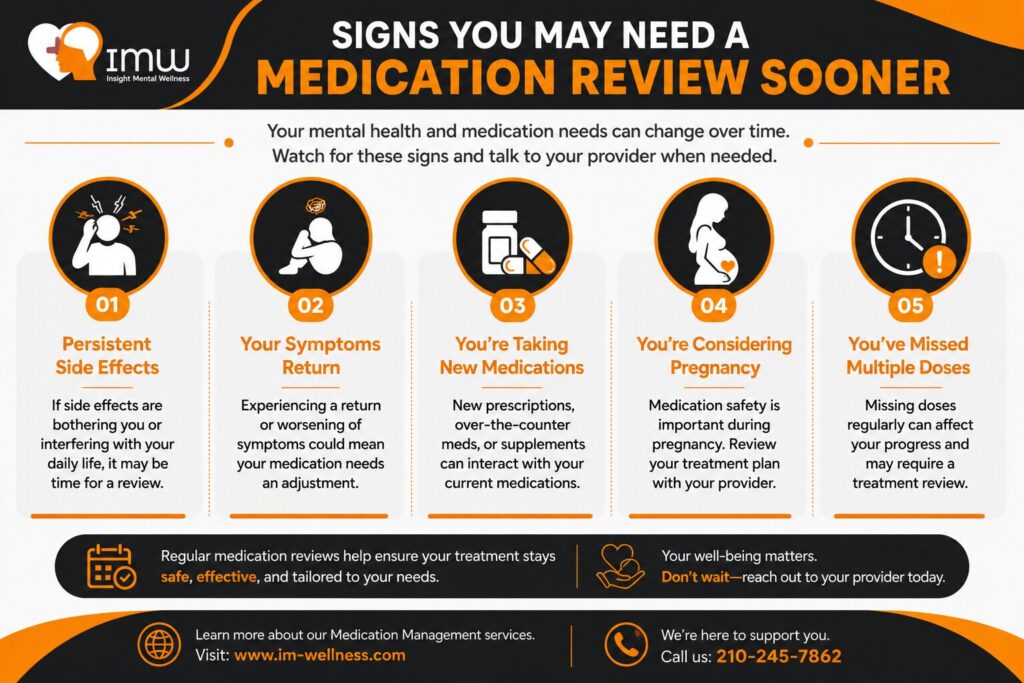
Persistent Side Effects
If side effects interfere with daily life, don’t wait until your next scheduled visit.
Examples include:
- Excessive drowsiness
- Insomnia
- Weight changes
- Sexual side effects
- Dizziness
- Headaches
- Tremors
- Digestive problems
Your Symptoms Return
If anxiety, depression, mood swings, panic attacks, or other symptoms begin returning after improvement, your medication may need adjustment.
You’re Taking New Medications
Even medications prescribed by another healthcare provider can interact with psychiatric medications.
Always inform your psychiatric provider if you’ve started:
- Antibiotics
- Pain medications
- Blood pressure medications
- Hormonal treatments
- Over-the-counter medications
- Herbal supplements
You’re Considering Pregnancy
Medication safety should always be reviewed before pregnancy whenever possible.
Your provider can discuss:
- Medication risks
- Alternative treatments
- Monitoring plans
- Benefits versus potential risks
You’ve Missed Multiple Doses
If you’ve stopped taking medication or have difficulty remembering doses, a review can help identify practical solutions.
The Benefits of Regular Medication Reviews
Medication reviews provide much more than prescription management.
Improved Medication Effectiveness
Treatment becomes more precise as providers monitor your progress and make evidence-based adjustments.
Reduced Side Effects
Small dose changes or switching medications may significantly reduce unwanted side effects while maintaining symptom control.
Better Medication Safety
Providers routinely evaluate for:
- Drug interactions
- Duplicate medications
- Incorrect dosages
- Long-term medication risks
Greater Treatment Confidence
Understanding why you’re taking each medication often improves adherence and reduces uncertainty about treatment.
Patients who actively participate in medication reviews tend to feel more informed and engaged in their care.
Medication Reviews vs. Medication Refills
Many people confuse these two appointments.
| Medication Review | Medication Refill |
|---|---|
| Evaluates treatment effectiveness | Renews prescription |
| Reviews symptoms | Limited discussion |
| Assesses side effects | Usually no medication adjustments |
| Considers treatment changes | Continues existing treatment |
| Personalized clinical evaluation | Administrative process |
A refill keeps medication available. A review ensures it’s still the right medication.
Conditions That Often Require Ongoing Medication Reviews
Medication reviews are valuable for many mental health conditions, including:
- Major depressive disorder
- Generalized anxiety disorder
- Panic disorder
- Bipolar disorder
- ADHD
- PTSD
- Obsessive-compulsive disorder (OCD)
- Schizophrenia and related disorders
Each condition may require different monitoring schedules based on medication type and symptom stability.
How Often Should Medication Reviews Be Scheduled?
The ideal schedule varies from person to person.
General guidelines include:
| Treatment Stage | Typical Review Frequency |
|---|---|
| Starting a new medication | Every 2–6 weeks |
| Adjusting medication | Every 2–8 weeks |
| Stable treatment | Every 3–6 months |
| Complex medication regimens | More frequent monitoring |
Your psychiatric provider will recommend a schedule based on your diagnosis, medications, response to treatment, and overall health.
How to Prepare for Your Medication Review
Getting ready beforehand helps make the appointment more productive.
Bring:
- A complete medication list
- Over-the-counter medications
- Vitamins and supplements
- Questions about treatment
- Notes about symptom changes
- Information about side effects
It also helps to keep a simple journal documenting:
- Mood changes
- Sleep quality
- Energy levels
- Anxiety levels
- Medication timing
- Any missed doses
Common Misconceptions About Medication Reviews
“If my medication works, I don’t need reviews.”
Even effective medications should be monitored regularly to ensure they continue meeting your needs safely.
“Medication reviews always mean changing medications.”
Not at all.
Sometimes the best outcome is confirming that your current treatment continues to work well.
“Side effects are just something I have to live with.”
Many side effects can often be reduced through dosage adjustments, timing changes, or alternative medications.
Key Takeaways
✔ Medication reviews help ensure psychiatric medications remain safe and effective.
✔ They allow providers to monitor symptom changes, side effects, and treatment progress.
✔ Regular reviews support personalized mental health care rather than one-size-fits-all treatment.
✔ Open communication with your provider leads to better long-term outcomes.
✔ Medication reviews are an important part of maintaining both mental wellness and medication safety.
FAQs
What is the purpose of a medication review?
A medication review evaluates whether your current medications are still effective, safe, and appropriate for your mental health needs while identifying opportunities to improve treatment.
How long does a medication review appointment take?
Most appointments last between 20 and 45 minutes, depending on your symptoms, medication regimen, and any concerns that need discussion.
Can my medication be changed during a review?
Yes. If your provider determines that adjustments may improve symptom control or reduce side effects, they may recommend changing the dosage, switching medications, or gradually tapering a medication.
Are medication reviews only for people taking multiple medications?
No. Even individuals taking a single psychiatric medication benefit from regular reviews to ensure continued effectiveness and safety.
Should I stop taking medication before my review?
No. Never stop psychiatric medication without guidance from your healthcare provider, as abrupt discontinuation may worsen symptoms or cause withdrawal effects.
How can I get the most from my medication review?
Be honest about your symptoms, side effects, missed doses, lifestyle changes, and treatment goals. The more information you share, the better your provider can tailor your care.
Conclusion
Mental health care doesn’t end once a prescription is written. As your life, health, and symptoms change, your treatment should evolve with you. Regular medication reviews provide an opportunity to ensure your medications continue to support your well-being while reducing risks and improving long-term outcomes.
Whether you’re starting treatment or have been taking psychiatric medication for years, ongoing reviews help create a more personalized, safer, and more effective care plan.
Take the Next Step Toward Better Mental Health
Managing your mental health is an ongoing journey, and regular medication reviews play an important role in keeping your treatment safe and effective. At Insight Mental Wellness, we provide personalized Medication Management in Dallas, helping patients receive thoughtful medication evaluations, ongoing monitoring, and individualized treatment plans tailored to their unique needs. If you’re ready to feel more confident about your care, schedule an appointment with our experienced team today.