Managing a mental health condition often involves more than simply taking a prescription. The right medication, appropriate dosage, regular monitoring, and ongoing communication with a qualified provider all play an important role in achieving the best possible outcomes. That’s where medication management becomes essential.
Whether you’re beginning treatment for anxiety, depression, ADHD, bipolar disorder, or another psychiatric condition, understanding how medication management works can help you feel more confident and informed throughout your care journey.
This comprehensive guide explains what medication management is, who can benefit from it, what to expect during appointments, and how patients in Dallas can make informed decisions about their mental health treatment.
What Is Medication Management?
Medication management is the ongoing process of evaluating, prescribing, monitoring, and adjusting medications to ensure they are safe, effective, and aligned with a patient’s treatment goals.
Unlike simply receiving a prescription, medication management involves regular follow-up appointments where your provider reviews:
- Your symptoms and progress
- Medication effectiveness
- Potential side effects
- Changes in your health or lifestyle
- Drug interactions
- Whether dosage adjustments are needed
The goal is to maximize therapeutic benefits while minimizing risks and unwanted side effects.
Quick Answer
Medication management is a personalized healthcare service that helps patients safely use psychiatric medications through continuous evaluation, monitoring, education, and treatment adjustments.
Why Medication Management Matters
Mental health medications affect each person differently. Factors such as age, metabolism, medical history, genetics, lifestyle, and other medications can influence how well a treatment works.
Without ongoing monitoring, patients may experience:
- Persistent symptoms
- Unnecessary side effects
- Medication interactions
- Incorrect dosing
- Poor treatment adherence
- Increased risk of relapse
Regular medication management appointments allow providers to identify these issues early and make evidence-based adjustments that improve treatment outcomes.
Looking for personalized medication management in Dallas? Insight Mental Wellness offers compassionate, ongoing care tailored to your unique mental health needs.
Who Can Benefit from Medication Management?
Medication management is beneficial for individuals experiencing a wide range of mental health conditions.
Common conditions include:
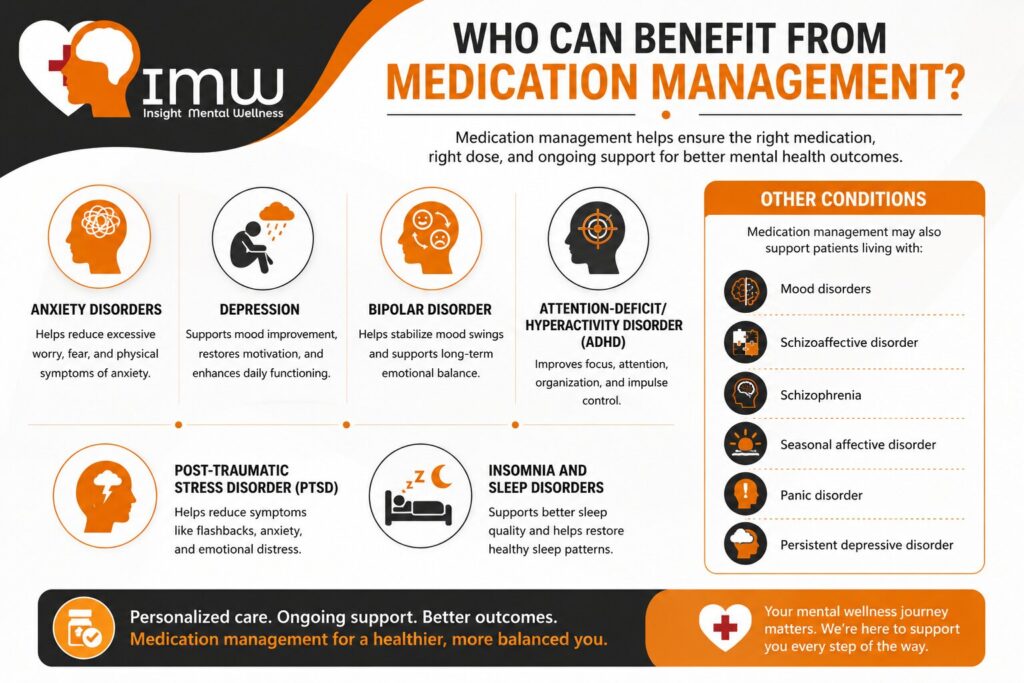
Anxiety Disorders
Patients living with generalized anxiety disorder, panic disorder, social anxiety disorder, or obsessive-compulsive disorder may benefit from medications that help reduce excessive worry and improve daily functioning.
Depression
Medication management helps monitor antidepressant effectiveness, adjust dosages when necessary, and address side effects while supporting long-term symptom improvement.
Bipolar Disorder
Mood stabilizers, atypical antipsychotics, and other medications often require careful monitoring to maintain mood stability while minimizing adverse effects.
Attention-Deficit/Hyperactivity Disorder (ADHD)
Individuals with ADHD may require periodic medication adjustments to improve focus, attention, organization, and daily performance.
Post-Traumatic Stress Disorder (PTSD)
Medication may be incorporated into a comprehensive treatment plan to help reduce symptoms such as hypervigilance, anxiety, and sleep disturbances.
Insomnia and Sleep Disorders
Some patients benefit from carefully monitored medications that support healthy sleep while reducing the risks associated with long-term use.
Other Conditions
Medication management may also support patients living with:
- Mood disorders
- Schizoaffective disorder
- Schizophrenia
- Seasonal affective disorder
- Panic disorder
- Persistent depressive disorder
What Happens During a Medication Management Appointment?
Many patients are surprised to learn that medication management visits involve much more than renewing prescriptions.
During an appointment, your psychiatric provider may:
Review Your Symptoms
Your provider will ask how you’ve been feeling since your last visit, including improvements, ongoing concerns, and any new symptoms you’ve noticed.
Evaluate Medication Effectiveness
Together, you’ll discuss whether your current medication is helping achieve your treatment goals.
Questions may include:
- Are your symptoms improving?
- Are you sleeping better?
- Has your mood changed?
- Are you experiencing fewer panic attacks?
- Is your concentration improving?
Discuss Side Effects
Even effective medications can produce side effects.
Your provider may ask about:
- Fatigue
- Nausea
- Appetite changes
- Weight changes
- Sexual side effects
- Headaches
- Sleep disturbances
- Dry mouth
- Dizziness
Identifying side effects early helps determine whether dosage adjustments or medication changes are appropriate.
Review Overall Health
Medication management also considers:
- Blood pressure
- Weight changes
- Medical conditions
- Pregnancy planning
- Alcohol or substance use
- New medications prescribed by other providers
This comprehensive approach helps reduce the risk of medication interactions and supports safe treatment.
Adjust the Treatment Plan
If necessary, your provider may:
- Increase or decrease dosage
- Change medications
- Add another medication
- Recommend psychotherapy
- Suggest lifestyle modifications
- Order laboratory testing when appropriate
Medication management is a collaborative process focused on finding the safest and most effective treatment plan for your individual needs.
The right medication plan starts with the right support. Learn how Insight Mental Wellness provides personalized medication management in Dallas.
What Makes Medication Management Different from Simply Receiving a Prescription?
Many people assume that once medication is prescribed, there is little else to do. In reality, successful psychiatric treatment depends on continuous evaluation rather than a one-time decision.
Medication management focuses on:
| Prescription Only | Medication Management |
|---|---|
| Initial prescription | Ongoing treatment monitoring |
| Limited follow-up | Regular appointments |
| Minimal symptom tracking | Continuous symptom evaluation |
| Fixed dosage | Personalized dosage adjustments |
| Little education | Comprehensive patient education |
| Reactive care | Proactive treatment optimization |
This ongoing partnership helps improve medication effectiveness while reducing unnecessary risks.
Benefits of Medication Management
Professional medication management offers advantages that extend beyond symptom relief. It supports safer, more personalized, and more effective treatment over the long term.
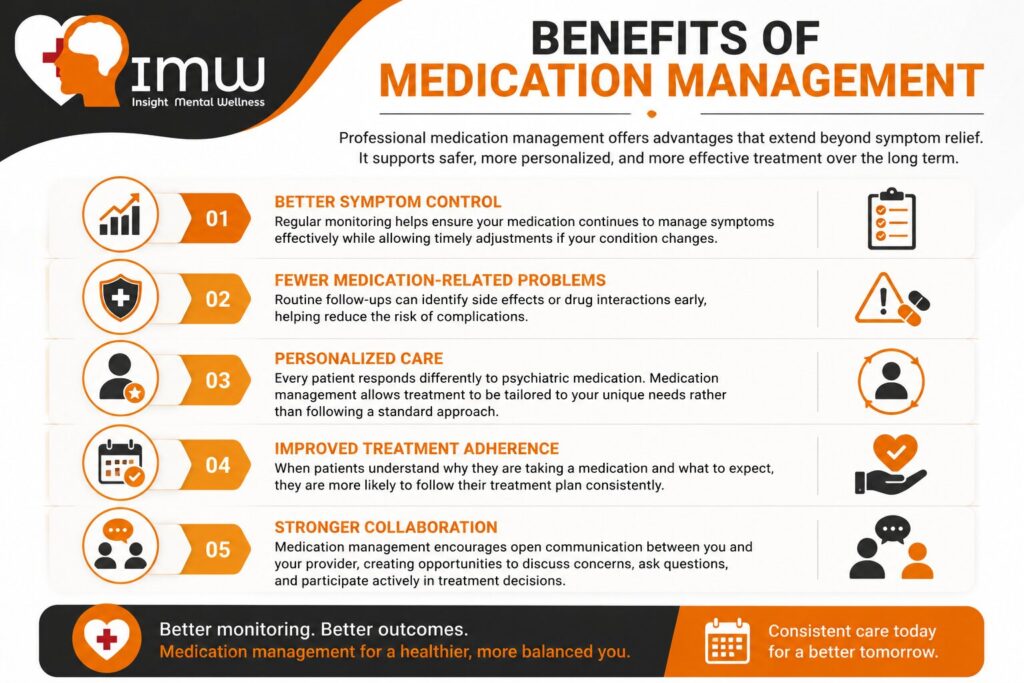
Better Symptom Control
Regular monitoring helps ensure your medication continues to manage symptoms effectively while allowing timely adjustments if your condition changes.
Fewer Medication-Related Problems
Routine follow-ups can identify side effects or drug interactions early, helping reduce the risk of complications.
Personalized Care
Every patient responds differently to psychiatric medication. Medication management allows treatment to be tailored to your unique needs rather than following a standard approach.
Improved Treatment Adherence
When patients understand why they are taking a medication and what to expect, they are more likely to follow their treatment plan consistently.
Stronger Collaboration
Medication management encourages open communication between you and your provider, creating opportunities to discuss concerns, ask questions, and participate actively in treatment decisions.
How to Choose a Medication Management Provider in Dallas
Selecting the right provider can have a significant impact on your treatment experience. Beyond credentials, it’s important to find someone who values collaboration, listens carefully, and develops treatment plans based on your individual needs.
When evaluating providers, consider the following:
Experience Treating Your Condition
Ask whether the provider has experience managing medications for conditions such as:
- Anxiety disorders
- Depression
- ADHD
- Bipolar disorder
- PTSD
- Mood disorders
Personalized Treatment Philosophy
Quality medication management should never feel rushed. Look for providers who take time to understand your symptoms, medical history, and treatment goals before making recommendations.
Ongoing Communication
Choose a provider who encourages questions, explains treatment options clearly, and schedules appropriate follow-up appointments to monitor your progress.
Integrated Mental Health Care
Medication often works best when combined with psychotherapy, healthy lifestyle habits, and other supportive services. Providers who coordinate comprehensive care can help improve long-term outcomes.
For individuals seeking personalized psychiatric care, Medication Management in Dallas can provide ongoing evaluation, medication adjustments, and collaborative treatment planning tailored to each patient’s needs.
Tips for Getting the Most Out of Medication Management
Your participation plays an important role in the success of treatment. Consider these practical strategies:
Be Honest About Your Symptoms
Share both improvements and challenges with your provider. Even small changes can help guide treatment decisions.
Take Medications as Prescribed
Avoid changing dosages or stopping medication without consulting your provider. Some psychiatric medications require gradual adjustments to reduce withdrawal symptoms or prevent relapse.
Track Your Progress
Keeping a journal of your mood, sleep, energy level, appetite, and medication side effects can provide valuable information during follow-up appointments.
Ask Questions
Understanding your treatment helps you make informed decisions. Consider asking:
- How long will this medication take to work?
- What side effects should I watch for?
- What should I do if I miss a dose?
- Are there foods, supplements, or medications I should avoid?
Maintain Healthy Habits
Medication is only one part of mental wellness. Regular exercise, quality sleep, balanced nutrition, stress management, and therapy can all support better outcomes.
When Should You Consider Medication Management?
You may benefit from professional medication management if you:
- Recently started psychiatric medication
- Feel your medication isn’t working as expected
- Experience bothersome side effects
- Have multiple mental health diagnoses
- Take several medications simultaneously
- Want a second opinion about your treatment plan
- Notice changes in your symptoms
- Need ongoing medication monitoring
Seeking support early can often prevent small concerns from becoming larger treatment challenges.
Managing your mental health is easier with expert guidance. Schedule a medication management appointment with Insight Mental Wellness to discuss your treatment options.
How the Medication Management Process Works
Medication management is not a one-size-fits-all service. Your treatment plan should evolve as your symptoms, lifestyle, and health needs change. A structured approach allows your provider to make informed decisions based on your progress rather than relying on guesswork.
1. Comprehensive Initial Evaluation
Your first appointment typically includes a detailed review of your:
- Medical history
- Mental health history
- Current symptoms
- Previous medications and treatment responses
- Family history of mental health conditions
- Lifestyle factors, including sleep, diet, and substance use
This evaluation helps your provider determine whether medication is appropriate and, if so, which option may best fit your needs.
2. Personalized Treatment Plan
If medication is recommended, your provider will explain:
- Why a particular medication was chosen
- Expected benefits
- How long it may take to notice improvements
- Possible side effects
- How and when to take the medication
- What symptoms to monitor
The treatment plan should reflect your diagnosis, health history, treatment goals, and personal preferences.
3. Regular Follow-Up Appointments
Follow-up visits are an essential part of medication management. During these appointments, your provider will evaluate:
- Symptom improvement
- Medication adherence
- Side effects
- Mood changes
- Sleep quality
- Daily functioning
- Stress levels
Based on your progress, your provider may continue your current medication, adjust the dosage, or recommend a different treatment approach.
4. Ongoing Monitoring
Medication management continues for as long as medication remains part of your treatment plan. Even when you’re feeling well, routine appointments help ensure your medication remains effective and appropriate over time.
Why Local, Ongoing Care Matters
Receiving care close to home makes it easier to attend regular appointments, maintain continuity of care, and build a trusted relationship with your provider.
If you’re looking for compassionate, individualized psychiatric care, Medication Management in Dallas offers ongoing support to help patients manage medications safely while working toward improved mental health and daily functioning.
Key Takeaways
- Medication management is an ongoing process, not a one-time prescription.
- Regular follow-up appointments improve safety and treatment effectiveness.
- Personalized care helps address changing symptoms and individual treatment goals.
- Open communication with your provider leads to better long-term outcomes.
- Combining medication with therapy and healthy lifestyle habits often produces the best results.
Take the Next Step Toward Better Mental Health
At Insight Mental Wellness, we provide compassionate, personalized medication management in Dallas. Our experienced psychiatric providers take the time to understand your unique needs, monitor your progress, and make thoughtful adjustments to support your long-term mental health goals.
Whether you’re starting medication for the first time or looking for continued support with your current treatment, our team is here to help you make informed decisions every step of the way. Contact Insight Mental Wellness to schedule an appointment and learn how personalized medication management can support your journey toward improved well-being.