An IV drip is a sterile fluid mixture, typically a saline or electrolyte base, that can be combined with specific vitamins, minerals, or antioxidants and delivered directly into the bloodstream through a vein. Names like “Energy Boost” or “Immunity Drip” are really just shorthand for a particular combination of these ingredients, chosen for a specific goal.
If you’re researching IV therapy in Dallas, it’s worth knowing exactly what’s going into your body before you book a session, not just the marketing name on the menu. IV bars and mobile services have multiplied across North Texas over the past few years, and the terminology on their menus can sound more like a cocktail list than a clinical treatment. This guide breaks down the actual components of a typical IV drip, what each one does in the body, how providers decide what goes into a given formula, and the questions worth asking before you choose where to book.
What’s the Base of Every IV Drip?
Every IV drip starts with a sterile carrier fluid. This base isn’t an afterthought; it’s the foundation that makes the rest of the formula possible, since vitamins and minerals can’t be delivered into a vein on their own. The two most common bases are:
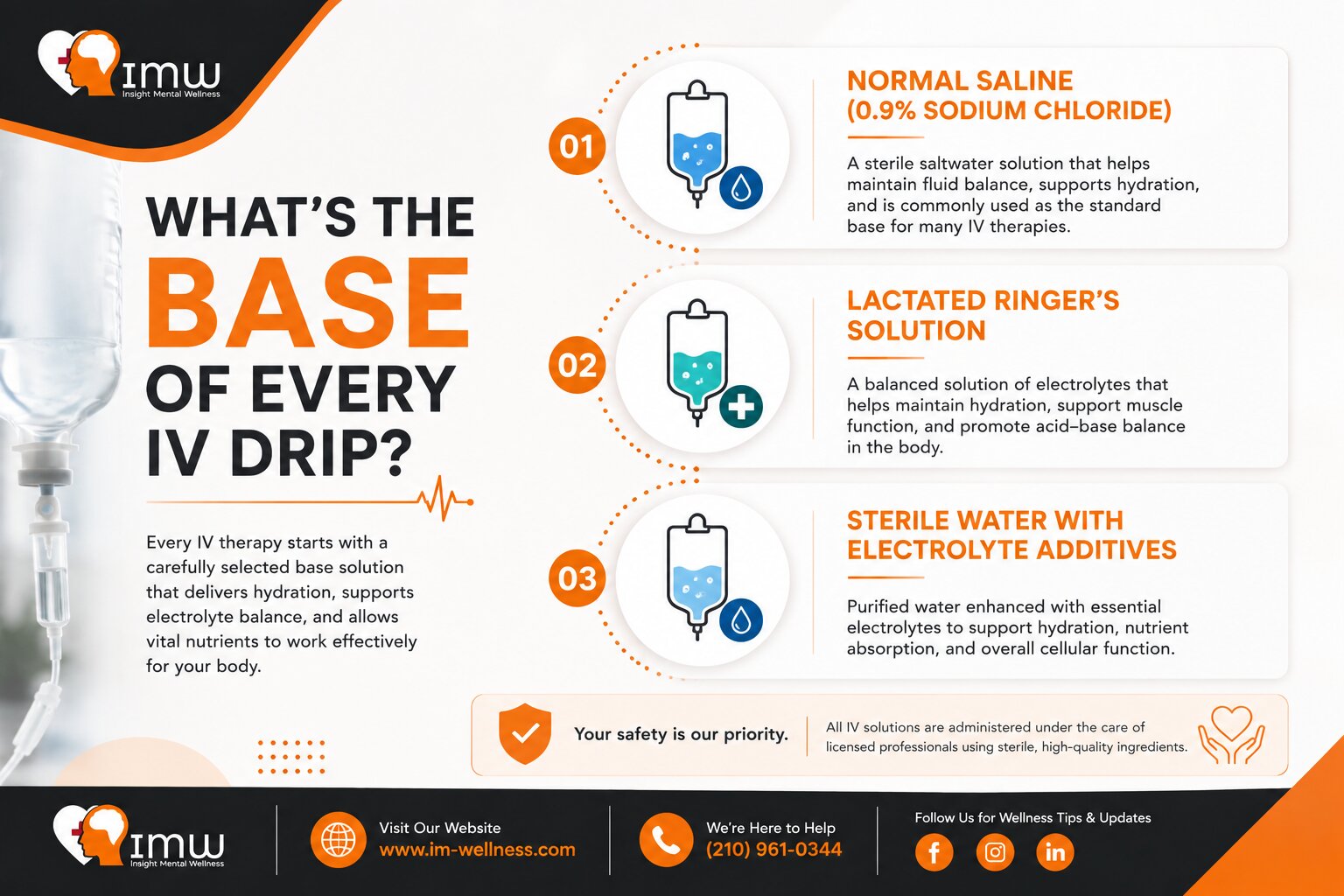
- Normal saline (0.9% sodium chloride) — a mixture of sterile water and salt formulated to closely match the concentration of your blood plasma. Because it’s isotonic (similar particle concentration to your blood), it moves into your bloodstream smoothly without disrupting the fluid balance inside and outside your cells.
- Lactated Ringer’s solution — similar to saline, but with added potassium, calcium, and lactate for broader electrolyte replacement. It’s often chosen when a more complete electrolyte correction is the goal, rather than hydration alone.
- Sterile water with electrolyte additives — a more customizable base some providers use as a starting point before adding specific minerals.
This base fluid does two jobs at once: it rehydrates the body, and it acts as the vehicle that carries any added vitamins or minerals into your bloodstream. A typical session uses roughly 500–1,000 mL of carrier fluid, though the exact amount depends on the formula, your size, and your provider’s assessment. Dehydration doesn’t just make you thirsty, it can disrupt the body’s sodium-water balance in ways that contribute to headaches, fatigue, and difficulty concentrating, which is part of why a saline base alone (with nothing else added) is still one of the most requested drips at most clinics.
What Gets Added to the Base?
Once the carrier fluid is chosen, a provider adds specific ingredients based on the formula’s purpose. Here’s a closer look at what’s typically included and why.
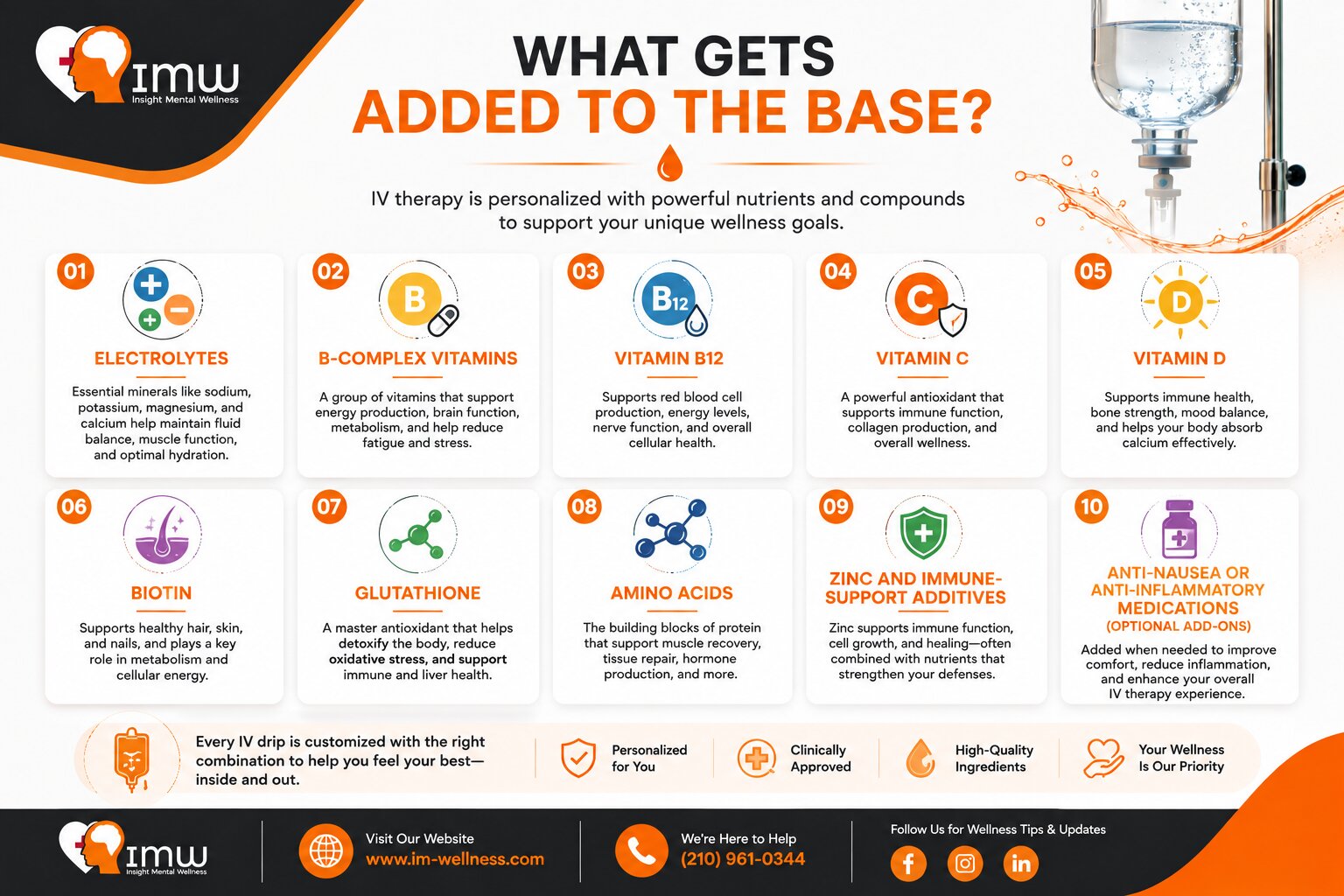
Electrolytes — Sodium, potassium, calcium, and magnesium regulate fluid balance, nerve signaling, and muscle contraction. When you sweat heavily, experience vomiting or diarrhea, or simply haven’t had enough fluids, these are usually the first thing a formula is built around. Magnesium in particular is often included in recovery-oriented drips because of its role in muscle relaxation.
B-Complex Vitamins — This isn’t a single vitamin but a group: B1 (thiamine), B2 (riboflavin), B3 (niacin), B5 (pantothenic acid), and B6 (pyridoxine). These water-soluble vitamins are involved in converting food into usable energy at the cellular level, which is why B-complex shows up in nearly every “energy” or “wellness” formula on the market.
Vitamin B12 — Often dosed separately from the B-complex group because of its association with red blood cell production, nerve function, and energy metabolism. It’s one of the most requested single-ingredient add-ons.
Vitamin C — An antioxidant involved in immune function, collagen production, and tissue repair. It’s a common addition to immune-support and “beauty” formulas alike, since collagen synthesis is tied to skin health.
Vitamin D — Plays a role in bone health and immune regulation. Many adults run low on vitamin D, particularly with limited sun exposure or time spent primarily indoors, which is part of why it’s frequently added to general wellness drips.
Biotin — A B-vitamin commonly associated with hair, skin, and nail health, and a frequent addition to “beauty” or “glow” formulas.
Glutathione — An antioxidant the body produces naturally in the liver. It’s sometimes added in higher doses to formulas marketed around detoxification or skin brightening, on the premise that supplementing above the body’s natural production may support these processes.
Amino Acids — The building blocks of protein. Blends targeting energy, athletic recovery, or general wellness sometimes include a mix of amino acids alongside electrolytes.
Zinc and Immune-Support Additives — Minerals commonly included in formulas marketed for immune support, particularly during cold and flu season.
Anti-Nausea or Anti-Inflammatory Medications (Optional Add-Ons) — Some clinics offer these as add-ons for specific symptoms, though these are medications rather than nutrients, and typically require a more thorough screening before use.
How Do These Ingredients Turn Into a Named “Drip”?
A provider combines a base fluid with a specific set of additives based on your goals and health screening — that combination is what gets a marketing name like “Energy Boost,” “Immunity,” or “Recovery.” At Insight Mental Wellness, for example, our IV Therapy menu includes formulas built around these ingredients: B12, Super Lipo, Vitamin C, Tri-Immune, B-Complex, Biotin, Vitamin D, Glutathione, a Z-Pack formula, and an Amino Blend — each combining the base fluid with a specific ingredient or combination geared toward a particular goal.
A reputable provider should be able to tell you exactly what’s in your formula and why — not just hand you a menu of appealing names. Some providers go a step further and disclose the specific dose of each ingredient, for example: “B-complex 1 mL, vitamin C 2 g, magnesium 200 mg, in 500 mL normal saline.” That level of specificity is a good sign. A vague answer built entirely around a catchy drip name, with no willingness to explain the actual contents, is worth treating as a red flag.
Ready to see which formula fits your goals? Explore our IV Therapy menu or reach out to our Dallas-Fort Worth team to talk through your options.
How Is an IV Drip Actually Prepared?
Ingredient quality matters as much as ingredient choice. Reputable providers prepare IV formulas under sterile compounding standards, meaning the fluids are mixed in controlled, clean environments designed to prevent contamination before the bag ever reaches you. Ingredients should be sourced from licensed pharmacies or suppliers, not assembled informally. If you’re evaluating a provider, particularly a newer mobile IV service- it’s reasonable to ask where their ingredients come from and how their formulas are compounded, the same way you’d ask a pharmacy about a prescription.
Does IV Drip Composition Matter If You’re in Mental Health Treatment?
Yes, and this is a detail most general wellness guides on this topic skip entirely. If you’re currently taking psychiatric medication, being treated for a mood or anxiety disorder, or working with a mental health provider, it’s worth telling your IV therapy provider about your full treatment picture before your session. Certain ingredients — particularly high-dose B-vitamin blends, amino acid formulas, and changes to your hydration status generally — can be relevant context for a clinician managing your broader care plan, even when the IV itself is unrelated to your mental health treatment.
This doesn’t mean IV therapy and mental health treatment conflict. It means coordination matters. At a clinic like Insight Mental Wellness, where IV therapy is offered alongside services such as Medication Management, your care team has the context to flag anything worth discussing — something a stand-alone IV bar or mobile service typically can’t offer, since they generally don’t have visibility into your psychiatric treatment plan at all.
If you’re managing a mental health condition and considering IV therapy purely for general wellness reasons — energy, hydration, immune support — that’s a reasonable goal on its own. The point isn’t that IV therapy requires special justification; it’s that your provider can only account for your full picture if you share it.
What Questions Should You Ask About IV Drip Ingredients Before Booking?
Before choosing a provider — in Dallas or anywhere else — these questions can help you evaluate whether a clinic is being transparent:
- Can you tell me exactly what’s in this formula, and the dose of each ingredient? A specific answer is a good sign. A vague answer built entirely around a marketing name is not.
- Where are these ingredients sourced, and are they prepared under sterile compounding standards?
- Will you screen my health history, allergies, and current medications before choosing a formula?
- Who is administering the IV? Ingredients matter, but so does who’s placing the line and monitoring you during the infusion — look for licensed medical professionals, not just certified technicians.
- What happens if I have a reaction? A responsible provider has a clear answer, including whether a clinician is on-site.
- Can formulas be customized, or are they fixed? Some clinics allow you to adjust a base formula (for example, adding or removing an ingredient), which can be useful if you have a specific goal or sensitivity.
A Realistic Take on What IV Drip Ingredients Can and Can’t Do
Vitamins and minerals delivered by IV bypass digestion, so absorption is more direct and complete than with oral supplements, where a portion of any nutrient is lost in the digestive process. That said, IV therapy is not a treatment for diagnosed nutrient deficiencies, chronic illness, or mental health conditions, and results vary by individual. Some people report feeling more energized or hydrated within hours of a session; others notice more subtle or gradual effects. Neither response means the treatment “worked” or “didn’t work” in any absolute sense — it reflects normal individual variation.
Think of ingredient transparency as a tool for making an informed choice, not a guarantee of a specific outcome. Understanding what’s in a formula — and why — puts you in a much better position to decide whether it’s a good fit for your goals than choosing based on a catchy name alone.
FAQs
What is the base ingredient in every IV drip?
Nearly every IV drip starts with a sterile carrier fluid, most commonly normal saline (sodium chloride and water) or Lactated Ringer’s solution, which rehydrates the body and carries any added vitamins or minerals into the bloodstream.
Are the vitamins in an IV drip the same as what’s in a multivitamin?
The vitamins themselves (B-complex, vitamin C, vitamin D, and others) are the same nutrients found in oral multivitamins, but IV delivery bypasses digestion, so absorption happens more directly and immediately.
Is glutathione safe to include in an IV drip?
Glutathione is generally well tolerated when administered by a licensed provider at an appropriate dose, though anyone with specific health conditions should discuss it with a clinician first.
How do I know if an IV therapy provider is being transparent about ingredients?
A trustworthy provider can name the specific ingredients and approximate doses in your formula, rather than describing it only by a marketing name like “Energy Boost” or “Glow Drip,” and can explain where those ingredients are sourced.
Should I mention my mental health treatment before getting an IV drip?
Yes, sharing your full health and medication history, including any psychiatric medications, gives your provider the context needed to recommend an appropriate formula and coordinate with your broader care plan.
Can I customize an IV drip’s ingredients?
Many providers allow some customization, for example, adding or removing a specific vitamin, depending on your goals and health screening. Ask before booking whether the formulas on the menu are fixed or adjustable.
How long does it take to notice an effect from an IV drip?
This varies by person and by formula. Some people report feeling more hydrated or alert within a couple of hours; others notice more gradual changes. There’s no guaranteed timeline, and individual response varies.
Ready to Learn More?
Understanding what’s actually in your IV drip is the first step toward making an informed decision; the second is talking to a provider who can walk you through your options with real transparency. If you’re in the Dallas-Fort Worth area and want to know which IV Therapy formula fits your goals, schedule a consultation with our team or view our full IV Therapy menu.