Many people take prescription medications every day, yet not everyone receives ongoing professional guidance after their initial prescription. It’s common to adjust doses, skip medications when feeling better, or combine prescriptions with over-the-counter products without realizing the risks. While these decisions may seem harmless, they can affect how well treatment works and even lead to serious health complications.
Medication management provides structured, ongoing oversight to ensure medications remain safe, effective, and appropriate as your health changes. For individuals managing depression, anxiety, bipolar disorder, ADHD, PTSD, or other mental health conditions, regular medication reviews can make a meaningful difference in treatment outcomes.
In this guide, you’ll learn when medication management is a better choice than self-managing prescriptions, the risks of making medication decisions on your own, and how professional monitoring supports safer, more effective long-term care.
Quick Answer: When Is Medication Management Better Than Self-Managing?
Medication management is generally the better option whenever you:
- Take multiple prescription medications
- Have a chronic mental health condition
- Experience medication side effects
- Need dosage adjustments
- Have recently started or changed medications
- Take supplements or over-the-counter medications regularly
- Have difficulty remembering medications
- Are not seeing expected treatment results
While self-management may work for short-term medications with clear instructions, long-term psychiatric treatment often requires regular monitoring by a qualified healthcare provider.
What Is Medication Management?
Medication management is an ongoing healthcare service in which a qualified psychiatric provider evaluates your medications, monitors your progress, manages side effects, and adjusts treatment when necessary.
Rather than simply renewing prescriptions, medication management focuses on ensuring every medication continues to provide more benefits than risks.
A typical medication management appointment may include:
- Reviewing current medications
- Discussing symptom changes
- Evaluating treatment effectiveness
- Monitoring side effects
- Checking for drug interactions
- Adjusting dosages if appropriate
- Developing a long-term treatment plan
This process is especially valuable in psychiatric care, where finding the right medication often requires careful adjustments over time.
What Does Self-Managing Prescriptions Mean?
Self-managing prescriptions means making medication-related decisions without regular guidance from a healthcare professional.
Examples include:
- Skipping doses when feeling better
- Doubling doses after missing medication
- Stopping medication suddenly
- Taking leftover prescriptions
- Mixing supplements with prescriptions without asking a provider
- Ignoring new side effects
- Delaying follow-up appointments
Although these choices may seem convenient, they can reduce treatment effectiveness and increase health risks.
Medication Management vs. Self-Managing Prescriptions
| Medication Management | Self-Managing Prescriptions |
|---|---|
| Regular professional monitoring | Decisions made independently |
| Medication adjustments based on symptoms | Changes based on personal judgment |
| Reviews for interactions | Interactions often go unnoticed |
| Ongoing side effect monitoring | Side effects may be ignored |
| Personalized treatment planning | Trial-and-error approach |
| Better long-term medication adherence | Greater risk of missed doses |
When Medication Management Is the Better Choice
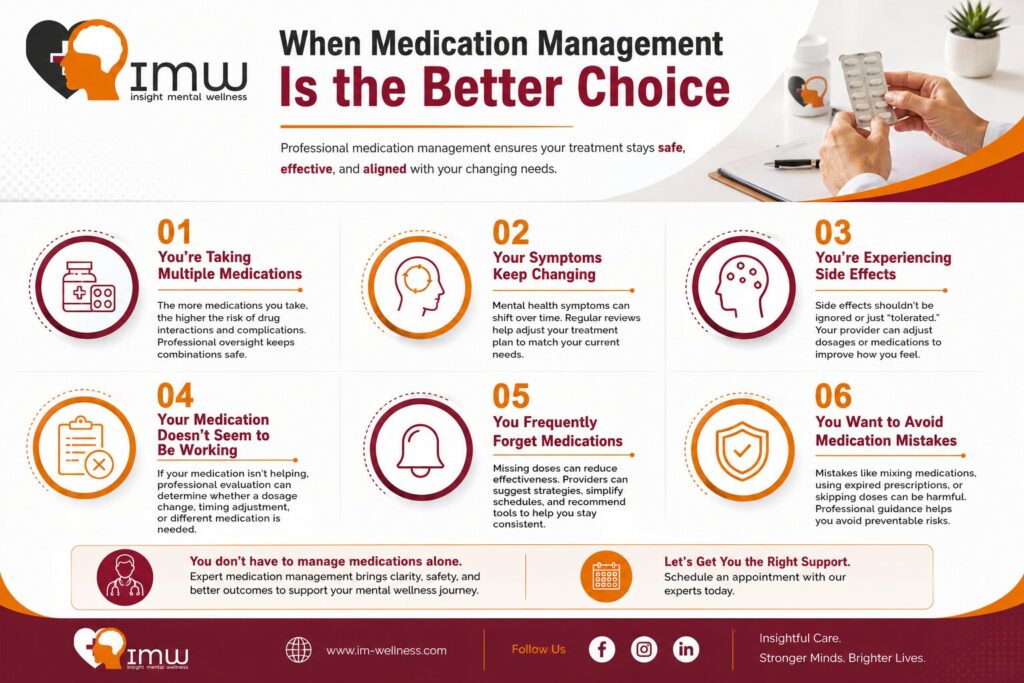
1. You’re Taking Multiple Medications
The more medications you take, the greater the possibility of drug interactions.
Psychiatric medications may interact with:
- Blood pressure medications
- Diabetes medications
- Pain medications
- Sleep aids
- Allergy medications
- Herbal supplements
Medication management helps ensure these combinations remain safe over time.
2. Your Symptoms Keep Changing
Mental health conditions rarely stay exactly the same.
Depression symptoms may improve while anxiety worsens. ADHD medications may need adjustments after lifestyle changes. Bipolar disorder often requires ongoing medication optimization during different mood phases.
Rather than waiting until symptoms become severe, regular medication reviews help identify changes early.
If you’d like to learn more about long-term treatment planning, explore our guide on Bipolar Disorder Medication Management.
3. You’re Experiencing Side Effects
Side effects shouldn’t simply be tolerated.
Some common psychiatric medication side effects include:
- Weight changes
- Sleep disturbances
- Dry mouth
- Fatigue
- Sexual dysfunction
- Nausea
- Headaches
- Dizziness
A medication management provider can determine whether side effects are temporary, require dosage changes, or indicate the need for another medication.
Managing medications shouldn’t feel like guesswork. If you’re experiencing side effects, changing symptoms, or taking multiple prescriptions, professional medication reviews can help improve safety and treatment effectiveness. Learn more about our personalized Medication Management services or schedule an appointment for expert Medication Management in Dallas.
4. Your Medication Doesn’t Seem to Be Working
Many psychiatric medications require weeks before reaching full effectiveness.
Changing medications too early—or giving up without professional guidance—can interrupt recovery.
Medication management helps determine whether:
- More time is needed
- The dosage should change
- Another medication may work better
- Additional therapies should be added
5. You Frequently Forget Medications
Missed doses reduce treatment effectiveness.
Providers can recommend strategies such as:
- Simplified medication schedules
- Extended-release medications
- Reminder systems
- Pill organizers
- Medication synchronization
Small adjustments often improve long-term consistency.
6. You Want to Avoid Medication Mistakes
Many preventable medication errors occur outside healthcare settings.
Examples include:
- Taking expired medications
- Mixing prescriptions incorrectly
- Taking medications at inconsistent times
- Sharing medications
- Using leftover prescriptions
These issues are discussed further in our guide to Common Medication Mistakes and how to prevent them.
Benefits of Professional Medication Management
Professional medication management offers advantages beyond simply receiving prescriptions.
Benefits include:
- Better symptom control
- Reduced medication risks
- Earlier identification of problems
- Improved medication adherence
- Individualized treatment adjustments
- Regular monitoring for effectiveness
- Safer long-term care
For a more detailed discussion, read our article on the Benefits of Medication Management and how ongoing monitoring supports better mental health outcomes.
Can You Safely Self-Manage Any Medications?
In some situations, yes.
Self-management may be reasonable when:
- Medication is prescribed for a short-term condition.
- Instructions are straightforward.
- No significant side effects occur.
- Few interaction risks exist.
- Regular follow-up remains available if needed.
However, psychiatric medications typically require more frequent monitoring because treatment responses vary significantly from person to person.
Warning Signs You Should Schedule a Medication Review
Consider speaking with a medication management provider if you notice:
- New or worsening symptoms
- Increasing side effects
- Missed doses several times per week
- Difficulty remembering medications
- Multiple healthcare providers prescribing medications
- New supplements or medications added
- Pregnancy or plans to become pregnant
- Significant life changes affecting mental health
Early intervention often prevents more serious complications.
Real-World Example
Imagine someone begins treatment for depression and initially feels much better.
After several months, they decide to stop taking the medication because they “feel normal.”
Within weeks, symptoms gradually return, but restarting the medication doesn’t produce the same improvement as quickly.
With regular medication management appointments, a provider could have discussed whether tapering was appropriate, monitored for returning symptoms, and adjusted treatment safely.
This highlights why professional oversight often produces better long-term outcomes than independent medication decisions.
For more information on treating mood disorders safely, explore our resource on Depression Medication Management.
Key Takeaways
✔ Medication management is more than prescription refills.
✔ Long-term psychiatric medications benefit from ongoing monitoring.
✔ Professional oversight reduces medication errors and drug interactions.
✔ Side effects should always be discussed with a qualified provider.
✔ Regular medication reviews help maintain treatment effectiveness as your needs change.
FAQs:
Is medication management only for people with severe mental illness?
No. Medication management benefits anyone taking psychiatric medications, including those with anxiety, depression, ADHD, PTSD, bipolar disorder, or other ongoing mental health conditions.
How often should medication management appointments occur?
Appointment frequency depends on your condition and treatment stage. New medications may require more frequent visits, while stable patients often schedule follow-ups every few months.
Can I stop psychiatric medication on my own?
Stopping medication without medical guidance can increase the risk of withdrawal symptoms or symptom recurrence. Always discuss medication changes with your healthcare provider.
What happens during a medication management appointment?
Your provider reviews your symptoms, medication effectiveness, side effects, treatment goals, and any necessary adjustments to your medications.
Does medication management include therapy?
Medication management focuses on medications, although providers may recommend therapy or other treatments as part of a comprehensive mental health care plan.
Who benefits most from medication management?
Individuals taking multiple medications, experiencing side effects, managing chronic mental health conditions, or requiring long-term psychiatric treatment often benefit the most.
Conclusion
Managing medications successfully involves more than remembering to take a pill every day. As your health, symptoms, and lifestyle evolve, your treatment plan may need to evolve as well. Professional medication management provides the ongoing evaluation needed to ensure your medications continue working safely and effectively while reducing the risk of complications.
If you’re unsure whether your current medications are still the best fit, a medication review can provide clarity, answer your questions, and support informed treatment decisions.
At Insight Mental Wellness, we provide personalized Medication Management in Dallas to help you get the most from your treatment while minimizing risks and side effects. Whether you’re starting a new medication or need ongoing support, our experienced psychiatric providers are here to guide you every step of the way. Schedule your appointment today and take the next step toward safer, more effective mental health care.