Many people successfully manage ADHD without medication by making consistent lifestyle changes and using evidence-based behavioral strategies. While medication can be highly effective for some individuals, it’s not the only treatment option. Developing healthy routines, improving sleep, staying physically active, and learning practical organizational skills can significantly reduce ADHD symptoms and improve daily life.
Why Lifestyle Changes Can Help
Attention-Deficit/Hyperactivity Disorder (ADHD) affects executive functioning, which includes skills like planning, organizing, focusing, managing time, and controlling impulses. Instead of changing brain chemistry directly, non-medication approaches strengthen daily habits and create external systems that make these challenges easier to manage.
For many people, combining several strategies provides the best results. The key is consistency rather than perfection.
Effective Ways to Manage ADHD Without Medication
Several lifestyle changes have been shown to support attention, focus, and emotional regulation, including:
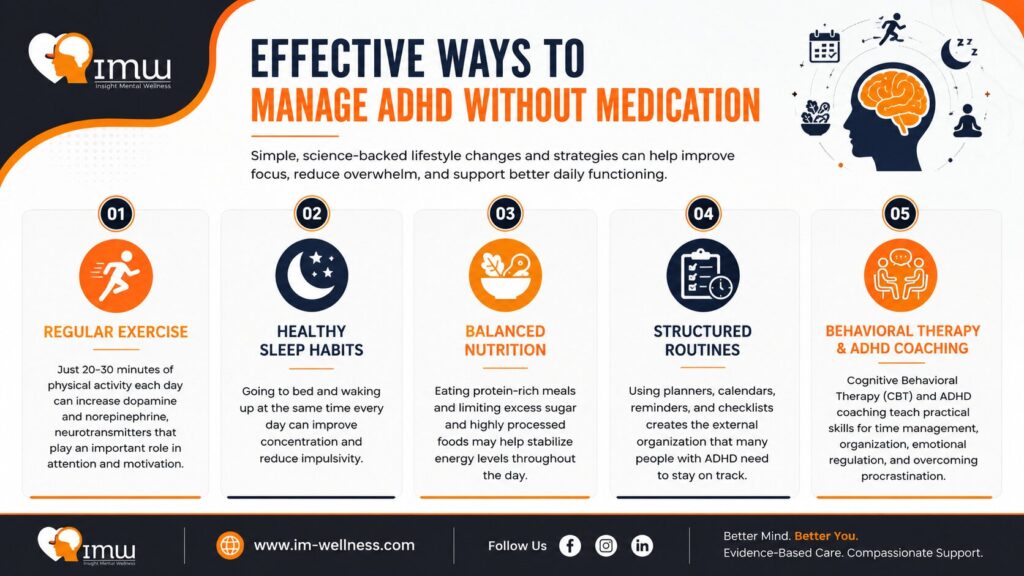
- Regular exercise: Just 20–30 minutes of physical activity each day can increase dopamine and norepinephrine, neurotransmitters that play an important role in attention and motivation.
- Healthy sleep habits: Going to bed and waking up at the same time every day can improve concentration and reduce impulsivity.
- Balanced nutrition: Eating protein-rich meals and limiting excess sugar and highly processed foods may help stabilize energy levels throughout the day.
- Structured routines: Using planners, calendars, reminders, and checklists creates the external organization that many people with ADHD need to stay on track.
- Behavioral therapy and ADHD coaching: Cognitive Behavioral Therapy (CBT) and ADHD coaching teach practical skills for time management, organization, emotional regulation, and overcoming procrastination.
Practical Example
Imagine someone who struggles to begin work projects because they feel overwhelmed. Instead of trying to complete everything at once, they use the Pomodoro Technique, working for 20–25 minutes followed by a 5-minute break. They also maintain a color-coded calendar and daily checklist to prioritize tasks. These simple systems reduce distractions and make large projects feel more manageable.
When Lifestyle Changes May Not Be Enough
Although many people experience noticeable improvement with behavioral strategies, lifestyle changes alone may not completely control ADHD symptoms. If inattention, impulsivity, or hyperactivity continues to affect your work performance, education, relationships, or everyday responsibilities, it may be time to seek a professional evaluation.
A mental health provider can determine whether additional treatment options, including medication, therapy, or a combination of both, would be beneficial based on your individual needs.
Key Takeaway
Managing ADHD without medication is possible for many individuals through consistent routines, regular exercise, quality sleep, healthy nutrition, and behavioral therapy. However, every person’s experience with ADHD is different, and the most effective treatment plan is often personalized.
If you’re looking for ADHD medication management in Dallas, Insight Mental Wellness provides personalized, evidence-based care tailored to your unique needs. Whether you’re exploring non-medication strategies, considering ADHD medication, or need ongoing medication management and monitoring, the team works with you to develop a comprehensive treatment plan that supports long-term focus, productivity, and overall mental well-being.