Access to timely, affordable mental health care is no longer a “nice to have”—it’s essential. Yet for many individuals and families, cost, long wait times, and lack of information create real barriers. That’s where the Mental Health Access Program (MHAP) comes in.
MHAP is designed to bridge the gap between people and the mental health support services they need, offering structured, affordable, and accessible pathways to care. In this guide, we’ll break down the top benefits of MHAP, explain how it works in real life, and show who benefits the most—so you can decide if it’s the right mental health assistance program for you or your organization.
Understanding the Mental Health Access Program (MHAP)
What Is MHAP?
The Mental Health Access Program (MHAP) is a coordinated mental health assistance program that improves access to care through affordability, early intervention, and simplified navigation of services. It often works alongside public mental health programs and community providers to ensure individuals receive appropriate care without unnecessary delays or financial strain.
At its core, MHAP focuses on:
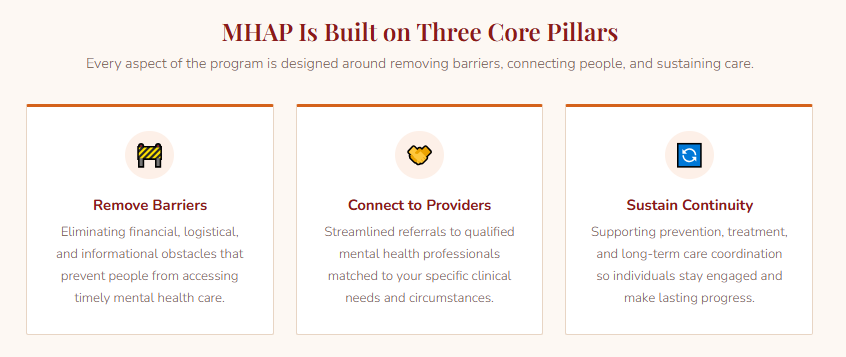
- Removing barriers to mental health access
- Connecting people to qualified providers
- Supporting prevention, treatment, and continuity of care
Who Is MHAP Designed For?
MHAP supports a wide range of individuals and groups, including:
- Individuals without adequate insurance coverage
- Families seeking affordable mental health services
- Employees covered under employer-sponsored mental health support services
- Students, caregivers, and underserved populations
Top Benefits of the Mental Health Access Program (MHAP)
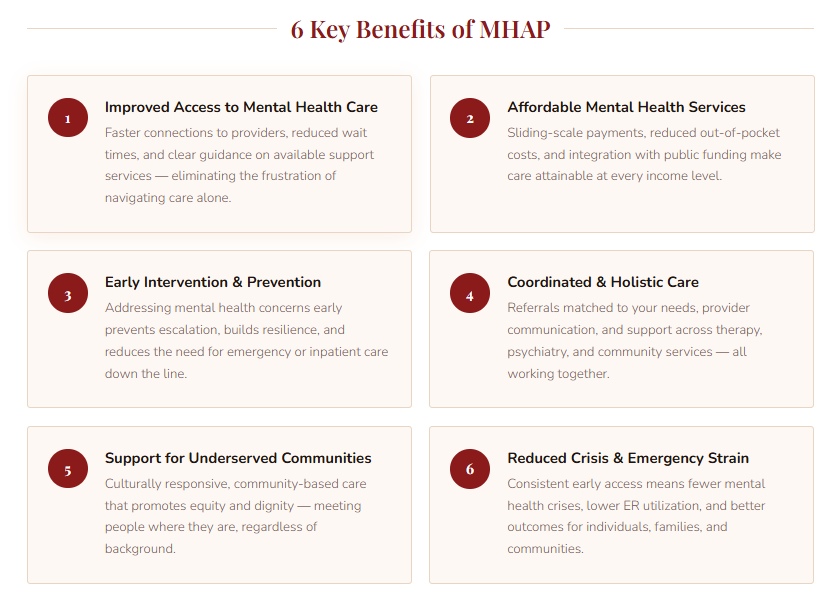
1. Improved Access to Mental Health Care
One of the most significant benefits of MHAP is easier mental health access. Many people struggle to find providers who are accepting new patients or offering timely appointments. MHAP helps reduce these challenges by streamlining referrals and care coordination.
How this helps you:
- Faster connection to mental health professionals
- Reduced wait times for appointments
- Clear guidance on available mental health support services
2. Affordable Mental Health Services
Cost is one of the biggest reasons people delay or avoid care. MHAP prioritizes affordable mental health services, making support more attainable for individuals at different income levels.
Common affordability features include:
- Sliding-scale payment options
- Reduced out-of-pocket costs
- Integration with public mental health programs and community funding
This approach ensures mental health care is not limited only to those who can afford high private fees.
3. Early Intervention and Preventive Support
MHAP emphasizes early intervention, which is proven to improve outcomes and reduce long-term costs. Addressing mental health concerns early can prevent symptoms from escalating into crises.
Benefits of early support include:
- Better long-term mental health outcomes
- Reduced need for emergency or inpatient care
- Stronger coping skills and resilience
This proactive model sets MHAP apart from systems that only respond during emergencies.
4. Coordinated and Holistic Care
Navigating mental health systems can be overwhelming. MHAP simplifies the process by offering coordinated care, ensuring services are aligned and continuous.
What coordinated care looks like:
- Referrals matched to your specific needs
- Communication between providers when appropriate
- Support across different levels of care (therapy, psychiatry, community services)
This structure reduces fragmentation and helps individuals stay engaged in treatment.
5. Support for Diverse and Underserved Communities
Many mental health access challenges disproportionately affect underserved populations. MHAP works to close these gaps by supporting culturally responsive and community-based care.
Key advantages:
- Greater equity in mental health access
- Support services tailored to diverse backgrounds
- Strong alignment with public mental health programs
By meeting people where they are, MHAP promotes dignity and inclusivity in care.
6. Reduced Strain on Emergency and Crisis Services
When people can access support earlier and more consistently, communities see fewer mental health crises. MHAP helps reduce reliance on emergency rooms and crisis-only interventions.
System-wide benefits include:
- Lower emergency care utilization
- Better outcomes for individuals and families
- More sustainable mental health support services overall
How MHAP Compares to Traditional Mental Health Care
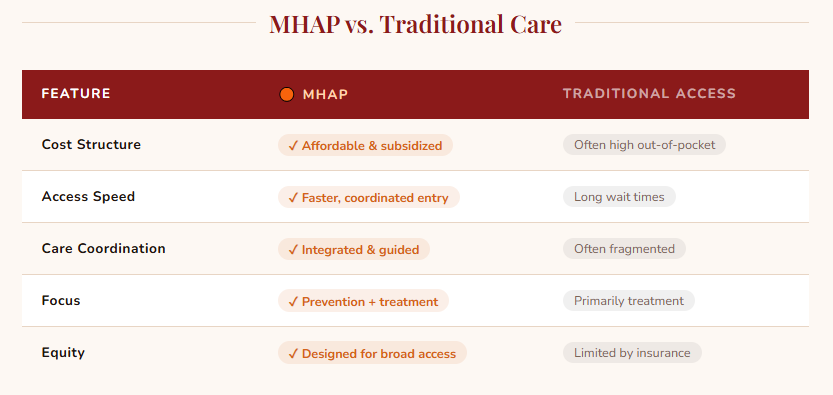
| Feature | MHAP | Traditional Access |
|---|---|---|
| Cost Structure | Affordable, often subsidized | Often high out-of-pocket costs |
| Access Speed | Faster, coordinated entry | Long wait times |
| Care Coordination | Integrated and guided | Often fragmented |
| Focus | Prevention + treatment | Primarily treatment |
| Equity | Designed for broad access | Often limited by insurance |
Who Benefits Most from MHAP?
MHAP is especially helpful for:
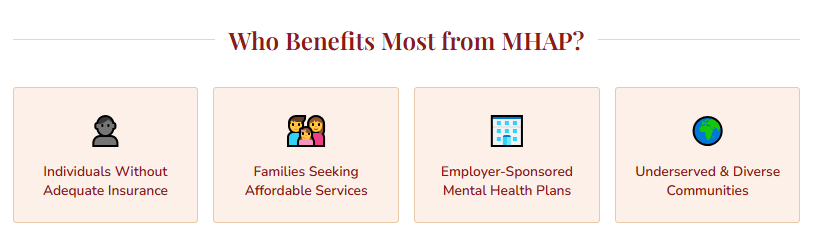
- Individuals seeking affordable mental health services
- People navigating mental health care for the first time
- Families managing ongoing mental health needs
- Organizations looking to expand mental health support services
Whether you need short-term support or long-term care coordination, MHAP adapts to different needs.
FAQs:
1. What does MHAP stand for?
MHAP stands for Mental Health Access Program, a mental health assistance program focused on improving access, affordability, and coordination of care.
2. Is MHAP only for people without insurance?
No. MHAP can support individuals with limited, partial, or inadequate coverage, as well as those who need help navigating available mental health support services.
3. How does MHAP make mental health care more affordable?
MHAP often partners with public mental health programs, community providers, and funding sources to reduce costs and offer affordable mental health services.
4. What types of services are included in MHAP?
Services may include therapy referrals, psychiatric care coordination, preventive mental health support, and connections to community resources.
5. Is MHAP suitable for long-term mental health needs?
Yes. MHAP supports both short-term intervention and long-term care coordination, depending on individual needs.
6. How do I know if MHAP is right for me?
If cost, access, or system complexity has made it difficult to get help, MHAP may provide a more accessible pathway to care.
Final Thoughts:
The Mental Health Access Program (MHAP) addresses some of the most pressing challenges in today’s mental health landscape—cost, access, and coordination. By prioritizing affordability, early intervention, and inclusive mental health support services, MHAP empowers individuals and communities to seek help sooner and more effectively.