IV therapy is generally administered by placing a small catheter into a vein, connecting the catheter to an IV solution, and allowing prescribed fluids, nutrients, vitamins, electrolytes, or medications to enter the bloodstream under professional supervision. The process typically includes an assessment, IV insertion, controlled infusion, patient monitoring, catheter removal, and basic aftercare.
If you are researching how IV therapy is administered, understanding each step can make an IV therapy appointment feel more predictable and help you know what questions to ask a healthcare professional.
How Is IV Therapy Administered?
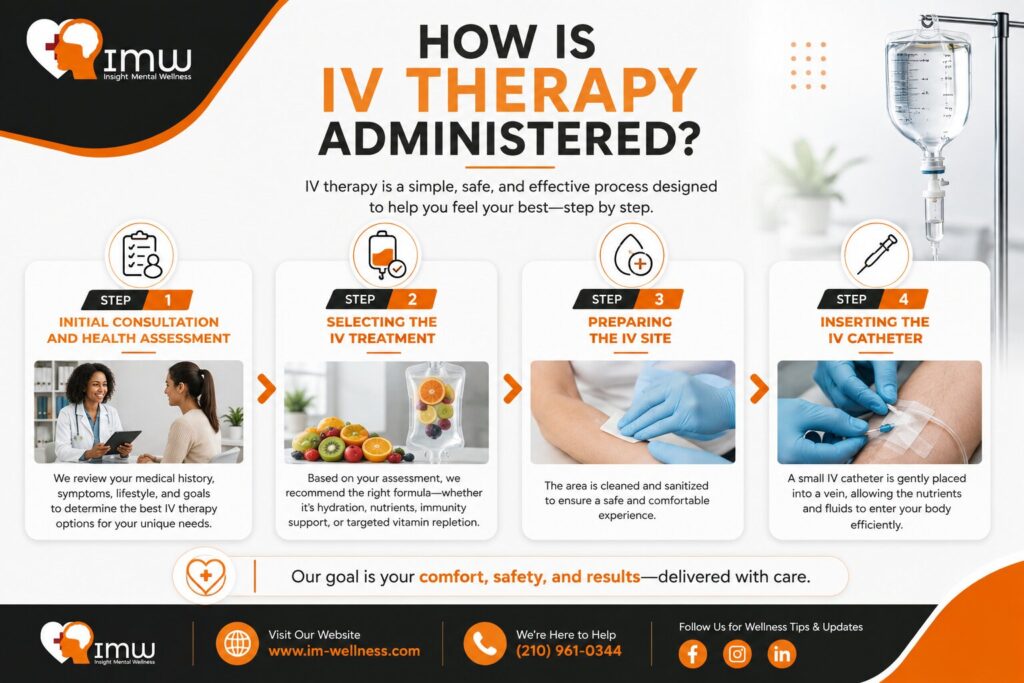
Although the exact IV therapy process varies according to the treatment and the patient’s health needs, a typical administration process includes:
- Initial consultation and health assessment
- Selection of the IV treatment
- Preparation of the IV site
- Insertion of the IV catheter
- Connection of the IV infusion
- Monitoring during treatment
- Completion and IV removal
- Aftercare and follow-up
IV therapy is a form of intravenous therapy, meaning that fluid or another substance is delivered directly into a vein through an IV line. This route allows the substance to enter the bloodstream directly.
Step 1: Initial Consultation and Health Assessment
Before an IV treatment begins, a qualified healthcare professional should determine whether the treatment is appropriate for you.
During an initial assessment, you may be asked about:
- Your medical history
- Current symptoms or wellness goals
- Prescription and over-the-counter medications
- Vitamins and supplements you take
- Known allergies or previous reactions
- Relevant medical conditions
- Previous experiences with IV treatment
The provider may also consider factors such as your hydration status and general health when determining the appropriate treatment.
Not every person needs laboratory testing before IV therapy. Whether testing is appropriate depends on the individual’s situation, the treatment being considered, and the clinician’s judgment.
This assessment is an important part of IV therapy safety because intravenous fluids and other substances are not appropriate for everyone.
Step 2: Selecting the IV Treatment
Once the provider determines that IV therapy is appropriate, the specific treatment can be selected.
Depending on the clinical or wellness purpose, an IV infusion may contain ingredients such as:
- IV fluids
- Saline
- Electrolytes
- Vitamins
- Nutrients
- Other clinician-selected substances
The contents of an IV infusion should be based on the treatment plan rather than a one-size-fits-all formula.
It is also important to understand that the ingredients and purpose of IV therapy can differ substantially between treatments. Patients should ask what is included in an IV solution, why each ingredient is being administered, and whether there are potential interactions with their medications or medical conditions.
Step 3: Preparing the IV Site
After the treatment has been selected, the healthcare professional identifies an appropriate vein for IV access.
For many peripheral IVs, veins in the arm or hand may be considered. The patient’s veins, treatment requirements, and other clinical factors can affect site selection.
The area is cleaned with an antiseptic before the IV is inserted. Proper preparation and sterile technique help reduce the risk of infection associated with inserting a device through the skin.
The patient is usually positioned comfortably so the arm can remain relatively still during IV administration.
Step 4: Inserting the IV Catheter
One of the most important parts of understanding how IV therapy is administered is knowing the difference between the needle and the catheter.
A small needle is used to access the vein. Once the vein is accessed, a flexible plastic catheter is positioned in the vein while the needle is removed. The catheter then remains in place for the duration of the infusion.
The catheter is connected to IV tubing, creating the IV line through which the solution can be delivered.
Does IV insertion hurt?
IV insertion can cause a brief pinch, pressure, or stinging sensation as the needle enters the skin and vein. Some people feel very little, while others may find the insertion uncomfortable.
There is no way to guarantee that IV insertion will be completely painless because individual experiences vary.
If you experience significant pain during or after insertion, tell the healthcare professional rather than trying to tolerate it silently.
Step 5: Connecting the IV Infusion
After IV access has been established, the catheter is connected to tubing attached to the IV infusion bag or other prescribed delivery system.
The IV solution then flows through the tubing and into the vein.
This is the central part of the IV infusion process. Unlike drinking a fluid, an intravenous solution is delivered directly into the bloodstream through the vein. Medications and fluids can also be administered intravenously when clinically indicated.
The IV drip rate is controlled according to the treatment plan and patient circumstances. The amount of fluid and the rate of administration can vary.
For that reason, there is no single IV drip process that applies to every patient or every type of IV therapy.
Step 6: Monitoring During the Infusion
During an IV therapy session, the healthcare professional may monitor you and the IV site throughout treatment.
Patients should communicate promptly if they experience symptoms such as:
- Pain at the IV site
- Burning or stinging
- Swelling
- Redness
- Dizziness
- Shortness of breath
- Feeling unusually unwell
These symptoms do not necessarily mean that a serious complication is occurring, but they are important to report.
For example, fluid can sometimes leak into the tissue around the vein if the catheter becomes displaced. Other possible IV-related complications include bruising, vein irritation, infection, and fluid overload in susceptible patients.
Monitoring allows the healthcare professional to evaluate the IV site and respond appropriately if a problem develops.
Step 7: Completing the IV Treatment
Once the prescribed infusion has been completed, the IV tubing is disconnected and the catheter is removed.
The insertion site may be covered with gauze, adhesive dressing, or another appropriate covering.
Patients may experience a small amount of bleeding or tenderness at the site immediately after IV removal. Following the provider’s instructions for caring for the site can help minimize problems.
Step 8: Aftercare
After IV therapy, aftercare depends on the treatment received and the individual’s circumstances.
General instructions may include:
- Follow the healthcare professional’s recommendations.
- Drink fluids if hydration is recommended for you.
- Keep an eye on the IV insertion site.
- Report unusual or persistent symptoms.
- Follow any treatment-specific activity instructions.
There is not one universal set of post-treatment restrictions for every IV therapy session. Your provider should explain any precautions that apply to your specific treatment.
What Does IV Therapy Feel Like?
For many patients, the most noticeable part of IV therapy is the initial IV insertion.
You may feel:
- A brief pinch when the needle enters
- Mild pressure around the IV site
- A cool sensation as some fluids enter the vein
- Mild awareness of the catheter or tubing
- Little or no sensation during the remainder of the infusion
Some people can sit comfortably, read, use their phone, talk, or relax while the infusion is administered.
The experience can vary based on the type of IV treatment, infusion rate, individual sensitivity, and whether the IV site remains comfortable.
If you notice increasing pain, swelling, burning, dizziness, shortness of breath, or another concerning symptom, tell the healthcare professional immediately.
How Long Does IV Therapy Take?
There is no universal answer to how long IV therapy takes.
The total IV therapy appointment can vary depending on:
- Type of IV treatment
- Amount of fluid being administered
- Infusion rate
- Patient needs
- Clinic procedures
- Time required for the initial assessment
- Time needed to insert and remove the IV
The infusion itself may therefore take a different amount of time from one treatment to another. Ask the clinic about the expected appointment length before scheduling if you need to plan around work, transportation, or other commitments.
Is IV Therapy Safe?
IV therapy can be administered safely when appropriate patients are selected, the correct treatment is used, proper IV insertion and infection-control practices are followed, and patients are appropriately monitored.
However, IV therapy is not completely risk-free.
Potential complications associated with IV access or intravenous fluids can include:
- Bruising
- Mild pain or discomfort
- Swelling
- Infiltration, where fluid enters tissue surrounding the vein
- Vein irritation or phlebitis
- Infection
- Allergic or other reactions to substances administered
- Fluid overload in susceptible patients
The risks can depend on the IV treatment, the patient’s health, and the substances being administered. Cleveland Clinic notes that excessive IV fluid administration can cause problems such as fluid overload, while IV insertion can also be associated with complications including infection, hematoma, infiltration, and phlebitis.
This is why professional assessment and monitoring matter.
Who May Need Extra Caution With IV Therapy?
IV therapy may not be appropriate for everyone.
Before receiving treatment, tell your healthcare professional about relevant:
- Medical conditions
- Prescription medications
- Over-the-counter medications
- Supplements
- Allergies
- Pregnancy or possible pregnancy
- Kidney problems
- Heart conditions
- Previous reactions to IV treatments or medications
Certain health conditions can affect how the body handles fluids or particular medications and nutrients. For example, people susceptible to fluid overload may require special consideration before receiving intravenous fluids.
A healthcare professional can determine whether a particular IV treatment is appropriate based on your individual circumstances.
What Should You Know Before an IV Therapy Appointment?
Preparation requirements can vary by clinic and treatment.
Before your appointment, ask:
- Do I need to eat or drink beforehand?
- Should I continue taking my usual medications?
- Should I avoid any supplements?
- What ingredients will be included in the IV?
- How long is the appointment expected to take?
- What should I do if I feel unwell during the infusion?
- Are there any specific aftercare instructions?
Bring an accurate list of your medications and supplements and provide complete information about relevant allergies and medical conditions.
What Happens After IV Therapy?
After the IV is removed, the healthcare professional will generally check the insertion site and provide any necessary instructions.
You should understand what symptoms are expected and which ones should be reported.
Persistent or worsening redness, swelling, significant pain, drainage, dizziness, breathing difficulty, or other concerning symptoms should be discussed with a healthcare professional promptly.
Your provider can also explain whether you can return to your usual activities and whether additional treatment is recommended.
IV Therapy in Dallas, TX
Patients researching IV therapy in Dallas should look beyond the treatment name and consider how the service is administered, who evaluates the patient, what substances are used, and how patients are monitored.
Insight Mental Wellness currently lists IV Therapy among its services and has a Dallas-area location in Bedford, Texas. Its website describes a care model that includes patient assessment and individualized treatment planning.
Because the website does not provide enough publicly available detail to verify specific IV ingredients, treatment durations, or IV protocols, those details should be confirmed directly with the clinic rather than assumed.
For patients considering IV therapy in Dallas, TX, the most useful first step is to discuss your health history, medications, goals, and whether a particular IV treatment is appropriate for you.
Frequently Asked Questions
How is IV therapy administered?
IV therapy is generally administered by inserting a small catheter into a vein, connecting it to IV tubing and a prescribed solution, and allowing the solution to enter the bloodstream at a controlled rate under professional supervision.
What happens during an IV therapy session?
A typical session includes an assessment, IV site preparation, catheter insertion, connection of the IV infusion, monitoring during treatment, and removal of the IV when the prescribed infusion is complete.
How is an IV catheter inserted?
A healthcare professional uses a small needle to access a vein. A flexible catheter is then advanced into the vein, and the needle is removed while the catheter remains in place for the infusion.
Does IV therapy hurt?
IV insertion can cause a brief pinch or pressure. Some patients experience mild discomfort, while others notice very little. Tell your provider if you experience significant or increasing pain.
How long does IV therapy take?
The duration varies based on the type and volume of the IV solution, infusion rate, patient needs, and clinic procedures. Ask the provider for an estimated appointment time before treatment.
What does IV therapy feel like?
Patients may feel a brief sensation during IV insertion and sometimes a cool or unusual sensation during the infusion. Many people can relax comfortably while the IV is administered.
Can you eat or drink before IV therapy?
Whether you should eat or drink before treatment depends on the specific IV therapy and clinic instructions. Ask your healthcare professional before your appointment rather than assuming fasting is required.
What happens after IV therapy?
After the infusion is completed, the IV is removed and the insertion site is covered. Your provider may give specific instructions about hydration, activity, and monitoring the IV site.
Is IV therapy safe?
IV therapy can be administered safely when appropriately selected and professionally performed, but it is not risk-free. Possible complications include bruising, infiltration, infection, vein irritation, reactions to administered substances, and fluid-related complications.
Key Takeaways
- IV therapy is administered through a vein using a small catheter connected to an IV solution.
- The process usually starts with an assessment to determine whether the treatment is appropriate.
- The IV infusion rate and solution can vary based on the treatment plan and patient needs.
- Patients should communicate symptoms such as pain, swelling, burning, dizziness, or shortness of breath during treatment.
- IV therapy has potential risks, so professional assessment, appropriate technique, and monitoring are important.
- Treatment plans are individualized, and there is no universal IV therapy formula, duration, or frequency for every patient.
Considering IV Therapy in Dallas?
If you are searching for IV therapy in Dallas, start by asking questions about the treatment, ingredients, safety considerations, and clinical oversight.
Insight Mental Wellness lists IV Therapy as one of its services and provides care in the Dallas area. If you are considering treatment, contact the clinic to discuss your needs and determine whether IV therapy is appropriate for you.