IV therapy delivers vitamins, minerals, or medications directly into the bloodstream through a vein, while IM, or intramuscular, injections deliver them into a muscle for gradual absorption into the body. Both methods bypass the digestive system, but they differ in speed, duration, and how well they fit into a broader wellness or mental health treatment plan. Understanding IV therapy vs. IM injections can help you decide which approach makes sense for your goals, whether you are managing fatigue, supporting mood and energy, or working with your care team on a broader wellness plan. At Insight Mental Wellness, IV therapy in Dallas is offered as part of a physician-guided approach to mental and physical wellbeing, not a standalone quick fix.
What Is IV Therapy?
IV therapy involves inserting a small catheter into a vein, typically in the arm, so that fluids, vitamins, minerals, or medications can flow directly into the bloodstream. Because the digestive system is bypassed entirely, nutrients reach circulation at concentrations that oral supplements generally cannot match. A typical IV therapy session runs 30 to 60 minutes, depending on the formula and volume being infused.
IV therapy is commonly used for hydration, nutrient repletion, and general wellness support. Blends can be adjusted based on a patient’s needs, and the slower infusion rate allows a clinician to monitor how the body responds throughout the session. Because it delivers a larger fluid volume at a controlled pace, IV therapy tends to be the better option when hydration itself, not just nutrient delivery, is part of the goal.
The formula used during an IV session can vary widely depending on what a patient’s provider identifies as appropriate. Some sessions focus primarily on rehydration with electrolytes, while others incorporate a broader mix of B vitamins, vitamin C, or minerals like magnesium and zinc. Because the entire formula enters the bloodstream at once, providers generally start with a conservative, well-established blend rather than a highly customized one, particularly for a patient’s first visit.
What Is an IM Injection?
An IM injection delivers a smaller, concentrated dose of medication or nutrients directly into muscle tissue, most often in the arm, hip, or thigh. Muscle tissue has a rich blood supply, so absorption happens faster than with oral supplements, though generally more gradually than with IV therapy. The injection itself is quick, usually completed in under five minutes, with onset of effect typically within 10 to 20 minutes.
Because IM injections release their contents into the bloodstream steadily over time, they’re often chosen when a longer-lasting, more gradual effect is preferred over an immediate, high-volume infusion. Common examples include vitamin B12 injections, certain hormone therapies, and some medications that are formulated specifically for intramuscular administration.
Because the volume of an IM injection is small compared to an IV infusion, it’s a practical option for patients who want ongoing support without committing to a longer clinic visit each time. Many patients on a maintenance schedule, such as regular B12 injections, find that the brief appointment fits more easily into a busy week than a full IV session would.
Common Types of IV Therapy and IM Injections
While the specific formulas offered vary by provider, most clinics organize their IV and IM options around a few general goals:
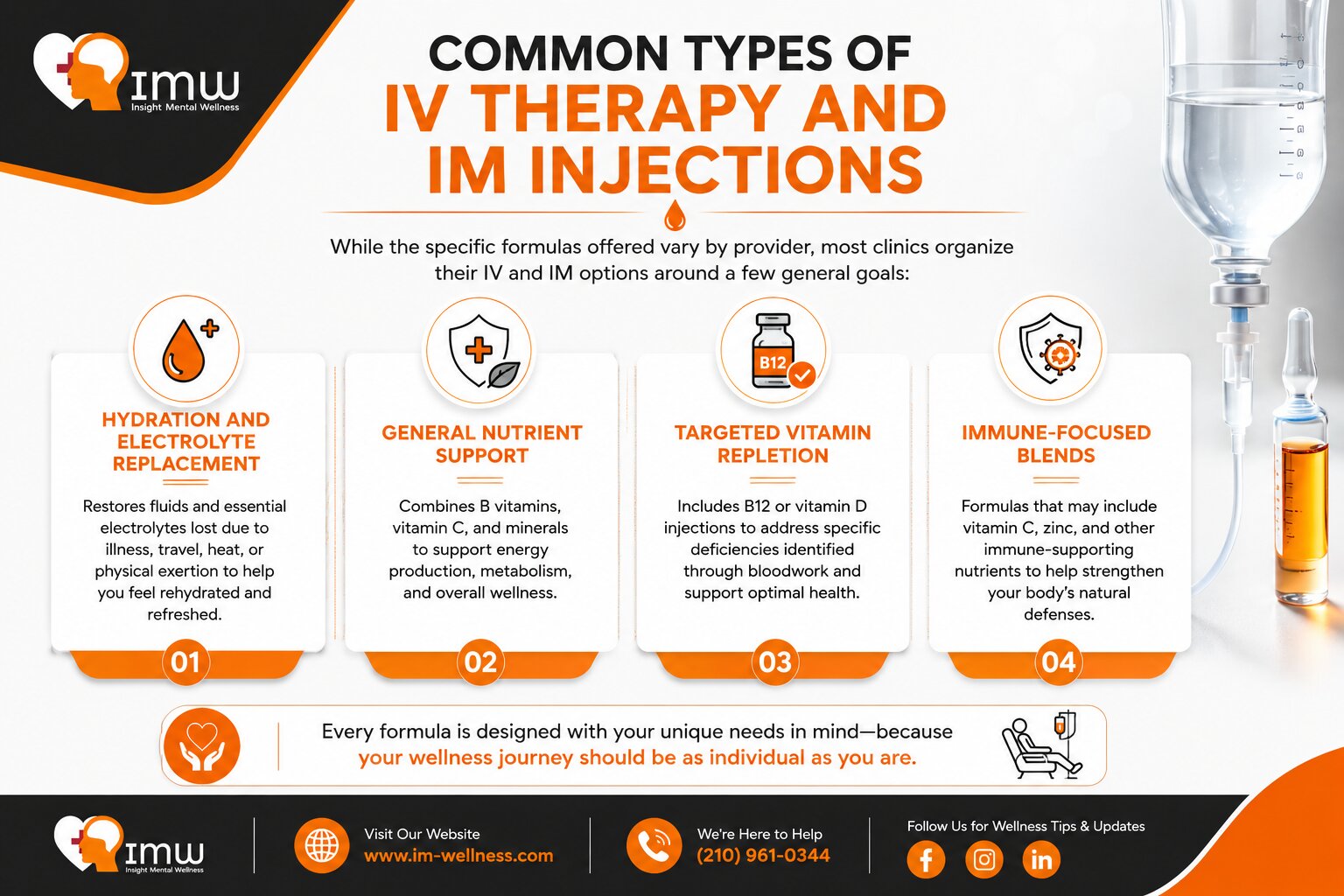
- Hydration and electrolyte replacement, often used after illness, travel, or physical exertion
- General nutrient support, combining B vitamins, vitamin C, and minerals for overall wellness
- Targeted vitamin repletion, such as B12 or vitamin D injections, when bloodwork identifies a specific deficiency
- Immune-focused blends, which may include vitamin C, zinc, and other immune-supporting nutrients
Your provider will recommend a specific formula based on your evaluation and goals rather than a general menu selection, particularly if you’re also managing a mental health condition or taking other medications.
IV Therapy vs. IM Injections: Key Differences
The table below summarizes how the two methods compare across the factors that matter most when choosing between them.
|
Factor |
IV Therapy |
IM Injection |
| Administration site | Vein (via small catheter) | Muscle tissue (arm, hip, or thigh) |
| Absorption speed | Immediate — direct bloodstream entry | Faster than oral, slower than IV; onset ~10–20 min |
| Typical session length | 30–60 minutes | Under 5 minutes |
| Duration of effect | Effects generally felt sooner, may taper faster | More gradual release over hours |
| Dosage volume | Larger fluid/nutrient volume possible | Smaller, concentrated dose |
| Typical use cases | Hydration, larger nutrient blends, general wellness support | Targeted vitamin repletion (e.g., B12), maintenance dosing |
| Comfort/convenience | Longer visit, seated infusion | Quick visit, brief needle stick |
How Fast Do IV Therapy and IM Injections Work?
IV therapy typically produces noticeable effects within minutes, since nutrients enter the bloodstream directly, with full sessions generally lasting 30 to 60 minutes. IM injections take slightly longer to take effect, often 10 to 20 minutes, but release their contents more gradually over hours, and the injection itself is completed in under five minutes.
This difference in absorption speed and duration is often the deciding factor for patients weighing the two options. Someone who needs same-day, noticeable support might lean toward IV therapy, while someone looking for a quick visit with steadier, longer-lasting nutrient levels might prefer an IM injection.
Which Option Is Right for You?
There is no single right answer. The best choice depends on your goals, schedule, and what your care team recommends after reviewing your health history. In general:
- Consider IV therapy if you want a larger volume of fluids or nutrients delivered at once, you’re addressing dehydration alongside nutrient needs, or you have time for a 30 to 60 minute clinic visit.
- Consider an IM injection if you want a fast, low-time-commitment visit, you’re looking for a steadier release of a specific nutrient or medication over time, or you’re maintaining a treatment your provider has already established.
- Some patients use both at different times, depending on what a given week or season calls for, always guided by their provider’s recommendation rather than a fixed schedule.
A consultation with a licensed provider is the most reliable way to determine which approach, or combination, fits your specific situation.
IV Therapy, IM Injections, and Mental Health: What to Know
Most articles comparing IV therapy and IM injections focus on athletic recovery or general wellness, but for patients managing a mental health condition, a few additional considerations matter. Nutrient status can play a role in how someone experiences energy, focus, and mood; deficiencies in nutrients like B12, vitamin D, or magnesium are sometimes identified during routine bloodwork, and correcting a documented deficiency is different from using IV or IM therapy as a general mood intervention.
Just as important is your medication history. If you take psychiatric medications, your provider needs a complete picture of what you’re on before recommending any IV or IM formula, since certain nutrient combinations and medications can interact. This is a core reason IV and IM therapy at a mental wellness practice is coordinated through the same team managing your psychiatric care, rather than treated as a separate, unrelated service.
For patients already working with a psychiatrist or therapist, integrating IV or IM therapy into that existing care plan, rather than seeking it out separately from an unrelated provider, means your full medication and treatment history is already on file. That coordination can make it easier to identify whether fatigue, low mood, or difficulty concentrating might be connected to a nutrient gap worth addressing, versus a symptom that calls for a different kind of intervention entirely.
Is IV Therapy or an IM Injection Safe for Everyone?
Both IV therapy and IM injections are generally well tolerated when administered by a trained clinician after a proper evaluation, but neither is automatically appropriate for every patient. A provider will typically review your medical history, current medications, allergies, and any relevant lab work before recommending a specific formula or injection.
Common, generally mild considerations include temporary soreness or bruising at the injection or IV site, and in rare cases, a reaction to a specific ingredient. Patients with certain medical conditions, difficult vein access, or specific medication interactions may need a modified approach or may not be candidates for a particular formula. This is why an initial evaluation, rather than a walk-in menu of options, is the appropriate starting point.
It’s also worth being upfront with your provider about any supplements you’re already taking, not just prescription medications. Combining supplements with an IV or IM formula that contains overlapping ingredients isn’t necessarily unsafe. Still, your provider needs the full picture to make an informed recommendation and avoid unnecessary duplication.
What to Expect at Your Visit in Dallas
For patients in Dallas exploring IV therapy or IM injections, the process typically starts with a brief evaluation of your health history, current medications, and goals. From there, your provider recommends an appropriate option, whether that’s IV therapy, an IM injection, or, in some cases, neither, if your goals are better addressed another way. Sessions take place in a clinical setting with a trained provider monitoring you throughout.
Because Insight Mental Wellness treats IV therapy and IM injections as part of a coordinated care plan rather than a standalone add-on, Dallas patients already receiving mental health treatment here don’t need to repeat their full history with a separate provider. Your care team already has the relevant context, which can make the process more straightforward from the first visit.
If you’re weighing IV therapy vs. IM injections and want guidance specific to your health history, especially if you’re also managing a mental health condition, scheduling a consultation is the most direct way to get a personalized recommendation.
FAQs:
Q: What is the difference between IV therapy and IM injections?
A: IV therapy delivers fluids or nutrients directly into a vein for immediate absorption into the bloodstream, while IM injections deliver a smaller dose into muscle tissue for more gradual absorption over time.
Q: Which is faster, IV therapy or an IM injection?
A: IV therapy generally produces effects sooner because nutrients enter the bloodstream directly, though IM injections still act faster than oral supplements, typically within 10 to 20 minutes.
Q: Is IV therapy or an IM injection safe if I take psychiatric medication?
A: It can be, but your provider needs your complete medication history first, since some nutrient combinations may interact with certain medications. This is best discussed during a consultation with your care team.
Q: How often can I get IV therapy or IM injections?
A: Frequency depends on the specific therapy and your individual health goals, and is best determined by your provider rather than a fixed general schedule.
Q: Does insurance cover IV therapy or IM injections?
A: Coverage varies by plan and by the specific treatment; checking directly with your insurance provider is recommended before scheduling.