IV therapy is a treatment that delivers fluids, vitamins, and minerals directly into the bloodstream through a small intravenous line, bypassing the digestive system for faster absorption. If you’re considering IV therapy in Dallas for the first time, understanding what actually happens during a session can make the decision, and the appointment itself, much less intimidating.
At Insight Mental Wellness, we see a lot of first-time patients who have questions but aren’t sure where to start. This guide walks through the basics: how IV therapy works, what a typical visit looks like, and what to ask before you book.
What Is IV Therapy, Exactly?
IV (intravenous) therapy involves a trained provider inserting a small, thin catheter into a vein, usually in the arm or hand, and administering a customized blend of fluids, electrolytes, vitamins, or minerals over the course of 30 to 60 minutes. Because the mixture goes directly into the bloodstream, it doesn’t have to pass through the stomach and digestive tract the way oral supplements do.
That’s the core mechanical difference between IV therapy and, say, taking a vitamin pill or drinking an electrolyte beverage: absorption happens immediately and completely, rather than gradually and partially.
How Does an IV Therapy Session Actually Work?
Here’s what a typical first visit generally includes:
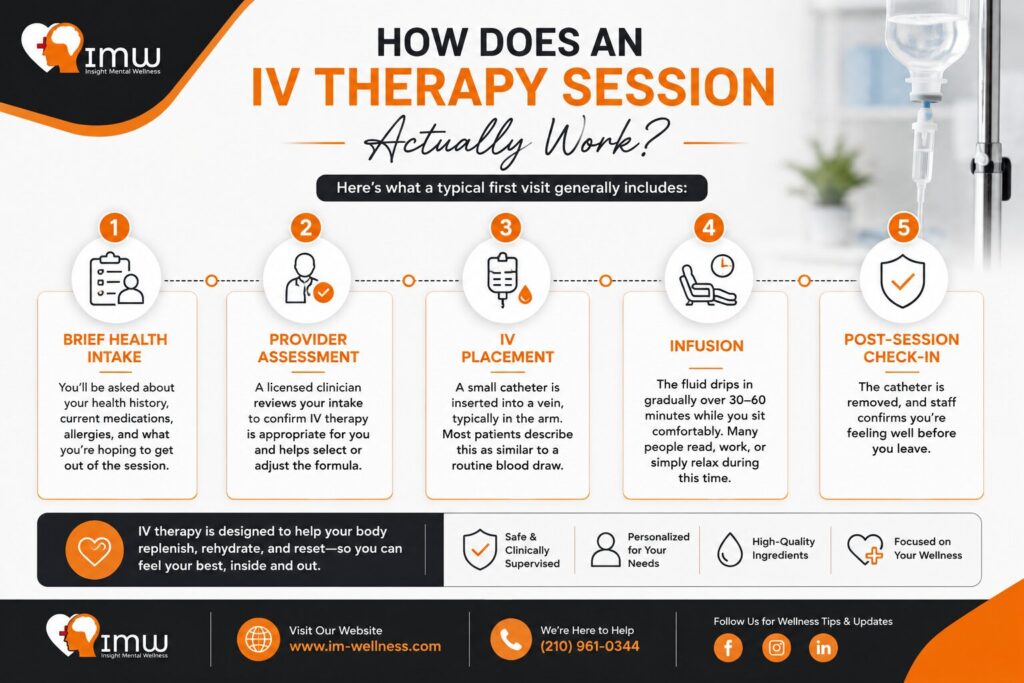
- Brief health intake. You’ll be asked about your health history, current medications, allergies, and what you’re hoping to get out of the session.
- Provider assessment. A licensed clinician reviews your intake to confirm IV therapy is appropriate for you and helps select or adjust the formula.
- IV placement. A small catheter is inserted into a vein, typically in the arm. Most patients describe this as similar to a routine blood draw.
- Infusion. The fluid drips in gradually over 30–60 minutes while you sit comfortably. Many people read, work, or simply relax during this time.
- Post-session check-in. The catheter is removed, and staff confirms you’re feeling well before you leave.
Who Is IV Therapy For and Who Should Check With a Doctor First?
IV therapy is generally considered appropriate for healthy adults seeking hydration support, nutrient replenishment, or general wellness maintenance. It is not a substitute for emergency medical care, and it isn’t right for everyone.
You should talk with a physician before scheduling IV therapy if you:
- Have kidney disease or a history of heart or circulatory conditions
- Are pregnant or breastfeeding
- Have a bleeding disorder or are on blood thinners
- Have known allergies to specific vitamins, minerals, or additives used in IV formulas
A reputable provider will ask about these factors during intake, if a clinic skips this step entirely, that’s worth noting.
What Should You Ask Before Booking IV Therapy in Dallas?
Dallas has a growing number of IV therapy options, from mobile services to clinic-based providers. A few questions worth asking before you choose one:
- Who is administering the IV? Look for licensed medical professionals (RNs, nurse practitioners, or physicians), not just certified technicians.
- What’s in the formula, and can it be customized? You should be able to get a clear, plain-language explanation of ingredients — not just a marketing name for the drip.
- Is there a health screening before treatment? A responsible provider evaluates your health history before administering anything.
- What happens if I have a reaction? Ask what protocols are in place and whether a clinician is on-site during your infusion.
Does IV Therapy Feel Different From What You’d Expect?
Most first-time patients are surprised by how uneventful the process feels. The needle insertion is brief, and once the IV is running, most people don’t feel much of anything from the infusion itself, some describe a cool sensation near the injection site. Mild bruising or tenderness at the site afterward is common and typically resolves within a few days.
A Few Realistic Expectations
IV therapy can be a useful complement to a broader wellness routine, particularly around hydration and nutrient support, but it isn’t a guaranteed fix for any specific condition, and results vary by individual. If you’re using IV therapy alongside mental health treatment, for example, to support energy or reduce stress-related fatigue, it’s worth discussing your full treatment picture with your care team so everything is coordinated.
FAQs
Does IV therapy hurt?
Most patients feel only a brief pinch when the IV is inserted, similar to a standard blood draw. The infusion itself is typically painless.
How long does a first IV therapy appointment take?
Plan for about 45–75 minutes total, including intake, the infusion (usually 30–60 minutes), and a short post-session check.
Do I need to prepare for my first IV therapy visit?
Staying hydrated beforehand and eating a light meal can make the process more comfortable, but most clinics don’t require special preparation.
Is IV therapy safe?
When administered by licensed medical professionals following a proper health screening, IV therapy is generally considered safe for healthy adults. Risks are low but not zero, which is why a health history review matters.
How often can I get IV therapy?
This depends on individual health goals and should be determined with a provider — there’s no universal schedule that fits everyone.
Clinical Review Flags
Before publishing, have a licensed clinician confirm or adjust the following:
- The contraindication list (kidney disease, pregnancy, blood thinners, allergies), confirm this matches your clinic’s actual intake protocol and isn’t over- or under-inclusive.
- The “45–75 minutes” and “30–60 minutes” session-length estimates, replace with your clinic’s actual average if different.
- The FAQ answer on safety, confirm the phrasing aligns with how your clinical team wants to characterize risk.
- Any implied connection between IV therapy and mental health support (the closing section), make sure this doesn’t overstate a clinical relationship that hasn’t been established for your specific formulas.