Finding the right medication management clinic can significantly influence your mental health journey. Whether you’re beginning treatment for depression, anxiety, ADHD, bipolar disorder, PTSD, or another condition, choosing a provider who delivers personalized, evidence-based care is just as important as selecting the right medication itself.
A quality clinic doesn’t simply prescribe medication. It partners with you to monitor progress, manage side effects, adjust treatment when needed, and support your long-term wellness goals.
If you’re searching for Medication Management in Dallas, this guide explains exactly what to look for, which questions to ask, and how to recognize a clinic that prioritizes safe, patient-centered psychiatric care.
What Is a Medication Management Clinic?
A medication management clinic specializes in evaluating, prescribing, monitoring, and adjusting medications used to treat mental health conditions.
Unlike a one-time prescription visit, medication management is an ongoing process that includes:
- Comprehensive psychiatric evaluations
- Personalized treatment planning
- Medication selection
- Regular follow-up appointments
- Monitoring effectiveness
- Managing side effects
- Reviewing medication interactions
- Adjusting treatment as your needs change
The goal is to ensure your medication remains both effective and safe throughout your treatment.
Why Choosing the Right Clinic Matters
Mental health medications often require careful adjustments over time. Every person’s biology, lifestyle, symptoms, and treatment goals are different.
Choosing an experienced clinic can help:
- Improve symptom control
- Reduce unnecessary medication changes
- Catch side effects early
- Prevent medication interactions
- Improve treatment adherence
- Build long-term trust with your provider
A clinic that takes time to understand your unique situation is far more likely to help you achieve lasting results.
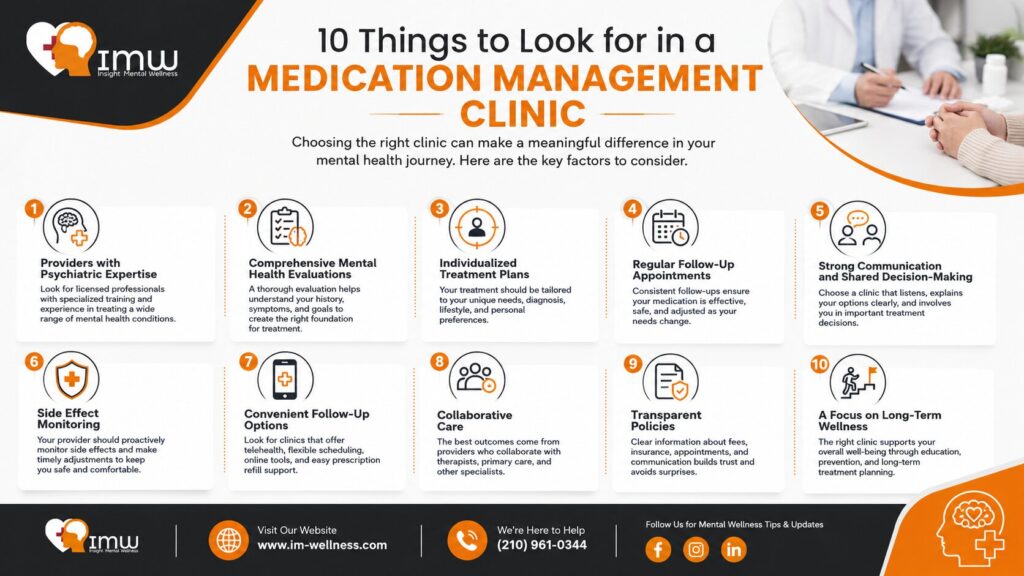
10 Things to Look for in a Medication Management Clinic
1. Providers with Psychiatric Expertise
Not every healthcare provider specializes in psychiatric medications.
Look for clinics staffed by professionals experienced in treating mental health conditions such as:
- Depression
- Anxiety disorders
- ADHD
- Bipolar disorder
- PTSD
- OCD
- Schizophrenia
Experienced psychiatric providers understand medication options, dosage adjustments, potential interactions, and evidence-based treatment guidelines.
2. Comprehensive Mental Health Evaluations
A trustworthy clinic avoids rushing into prescriptions.
Instead, providers should evaluate:
- Current symptoms
- Medical history
- Previous medications
- Family mental health history
- Existing health conditions
- Lifestyle factors
- Sleep
- Stress levels
- Substance use when relevant
A thorough assessment creates the foundation for personalized care.
3. Individualized Treatment Plans
There is no universal medication that works for everyone.
Your provider should tailor recommendations based on:
- Diagnosis
- Symptom severity
- Treatment goals
- Age
- Existing medications
- Medical conditions
- Personal preferences
Personalized treatment often leads to better outcomes and fewer unnecessary medication changes.
4. Regular Follow-Up Appointments
Medication management doesn’t end after the first prescription.
High-quality clinics schedule regular follow-ups to evaluate:
- Symptom improvement
- Side effects
- Medication effectiveness
- Sleep
- Mood changes
- Lifestyle changes
Frequent monitoring allows providers to make timely adjustments before small concerns become larger problems.
✔ Quick Checklist Before Choosing a Clinic
- Psychiatric specialists
- Thorough evaluations
- Personalized treatment plans
- Ongoing medication monitoring
- Clear communication
- Convenient scheduling
- Telehealth options
- Insurance acceptance
- Positive patient experiences
- Collaborative care approach
Looking for Personalized Medication Management?
If you’re searching for compassionate, evidence-based Medication Management in Dallas, Insight Mental Wellness provides individualized psychiatric care designed around your needs. Our experienced providers carefully monitor your treatment, answer your questions, and adjust medications when appropriate to help you achieve the best possible outcomes.
5. Strong Communication and Shared Decision-Making
Good providers explain:
- Why a medication is recommended
- Expected benefits
- Possible side effects
- Alternative treatment options
- What improvements to expect
- When to contact the clinic
Patients should feel comfortable asking questions without feeling rushed.
Shared decision-making builds confidence and improves treatment success.
6. Side Effect Monitoring
One commonly overlooked sign of a quality clinic is how carefully providers monitor medication side effects.
Instead of waiting for problems to occur, experienced clinicians proactively ask about:
- Sleep changes
- Appetite
- Energy
- Weight changes
- Mood fluctuations
- Sexual side effects
- Headaches
- Gastrointestinal symptoms
If you’re interested in learning more, read our guide on Medication Management side Effects to better understand what to expect during treatment.
7. Convenient Follow-Up Options
Consistency is easier when appointments fit your schedule.
Many patients benefit from clinics offering:
- Telepsychiatry visits
- Online scheduling
- Flexible appointment times
- Secure messaging
- Prescription refill support
These conveniences help reduce missed appointments and maintain continuity of care.
8. Collaborative Care
Mental health treatment often works best when providers communicate with:
- Therapists
- Primary care physicians
- Specialists
- Family members (when appropriate)
This collaborative approach supports more comprehensive treatment.
9. Transparent Policies
Before choosing a clinic, ask about:
| Question | Why It Matters |
|---|---|
| How often are follow-ups scheduled? | Helps set expectations |
| Who handles prescription refills? | Prevents treatment interruptions |
| Are telehealth appointments available? | Improves convenience |
| Which insurance plans are accepted? | Reduces unexpected costs |
| How are emergencies handled? | Ensures timely support |
Transparency builds trust and helps patients make informed decisions.
10. A Focus on Long-Term Wellness
The best clinics don’t simply refill prescriptions.
They also support:
- Lifestyle improvements
- Therapy referrals
- Sleep health
- Stress management
- Treatment education
- Preventive care
Medication is often just one part of a comprehensive mental health plan.
Red Flags to Watch For
Consider looking elsewhere if a clinic:
- Prescribes medication without a comprehensive evaluation
- Rarely schedules follow-up visits
- Doesn’t discuss side effects
- Rushes appointments
- Doesn’t answer questions clearly
- Frequently changes medications without explanation
- Provides little ongoing support
Questions to Ask During Your First Appointment
Before committing to a clinic, consider asking:
- How do you determine which medication is appropriate?
- How often will we review my treatment?
- What happens if my medication isn’t working?
- How do you monitor side effects?
- Can appointments be completed through telehealth?
- How long does medication management typically continue?
These questions can help you understand whether the clinic emphasizes personalized, long-term care.
How Medication Management Supports Better Outcomes
Research consistently shows that ongoing medication monitoring helps improve treatment success by allowing providers to:
- Identify ineffective medications early
- Adjust dosages safely
- Reduce unwanted side effects
- Improve medication adherence
- Support long-term symptom stability
Patients who maintain regular follow-up appointments often experience more consistent improvements than those who only receive occasional prescriptions.
Key Takeaways
✔ Choose providers with psychiatric expertise.
✔ Look for comprehensive evaluations instead of quick prescriptions.
✔ Personalized treatment plans lead to better outcomes.
✔ Regular medication reviews are essential.
✔ Side effect monitoring improves medication safety.
✔ Communication and shared decision-making build trust.
✔ Telehealth and convenient scheduling can improve consistency.
✔ Long-term support matters more than one-time prescriptions.
Choosing the right medication management clinic is about more than finding someone who can prescribe medication. It’s about partnering with a team that listens, monitors your progress, and adjusts your treatment as your needs evolve.
At Insight Mental Wellness, we provide compassionate, personalized Medication Management in Dallas for adults seeking evidence-based psychiatric care. Our providers focus on careful evaluations, ongoing medication monitoring, and individualized treatment plans designed to support your long-term mental wellness.
Whether you’re starting treatment for the first time or looking for a provider who takes a more personalized approach, our team is here to help.
FAQs
How often should I see a medication management provider?
Most patients have more frequent visits when starting a new medication. Once symptoms are stable, follow-up appointments may occur every one to three months, depending on your treatment plan.
Can medication management be done through telehealth?
Yes. Many psychiatric medication management appointments can be completed virtually, although some situations may require in-person evaluations.
What should I bring to my first medication management appointment?
Bring a list of your current medications, previous psychiatric medications, medical history, insurance information, and any questions you’d like to discuss with your provider.
How do I know if my medication needs to be adjusted?
Changes in symptoms, new side effects, difficulty functioning, or significant life changes may indicate it’s time to review your treatment plan with your provider.
Is medication management only for people with severe mental illness?
No. Medication management can benefit individuals with a wide range of conditions, including anxiety, depression, ADHD, bipolar disorder, PTSD, OCD, and other mental health concerns.
What makes a good medication management clinic?
A high-quality clinic provides comprehensive evaluations, personalized treatment plans, regular follow-up visits, clear communication, proactive side effect monitoring, and collaborative, patient-centered care focused on long-term mental wellness.