Taking medication correctly is one of the most important steps in managing both physical and mental health conditions. Yet medication errors happen every day, not only in hospitals, but also at home. Missing doses, taking the wrong amount, mixing medications without guidance, or stopping treatment too soon can reduce effectiveness, increase side effects, and sometimes lead to serious health complications.
Whether you’re taking medication for depression, anxiety, ADHD, bipolar disorder, high blood pressure, diabetes, or another chronic condition, understanding common medication mistakes can help you stay safe and get the best possible results from your treatment plan.
This guide explains the most common medication mistakes people make, why they occur, and practical strategies to prevent them. You’ll also learn when it’s time to speak with your healthcare provider and how ongoing medication reviews can improve your long-term health.
Quick Answer: What Are Common Medication Mistakes?
Common medication mistakes include:
- Missing or skipping doses
- Taking the wrong dosage
- Stopping medication without medical advice
- Mixing medications, supplements, or alcohol without checking for interactions
- Taking medications at the wrong time
- Using expired medications
- Sharing prescription medications
- Ignoring side effects instead of reporting them
Most medication mistakes are preventable with clear instructions, regular follow-up appointments, and good medication management habits.
Unsure if your medications are working as they should? At Insight Mental Wellness, our personalized medication management helps you stay on track, minimize side effects, and achieve better mental health outcomes.
Why Medication Safety Matters
Prescription medications are carefully selected based on your diagnosis, medical history, age, current medications, allergies, and lifestyle. Even small changes in how you take your medication can affect how well it works.
Medication safety is especially important for people managing:
- Depression
- Anxiety disorders
- Bipolar disorder
- ADHD
- Schizophrenia
- Chronic pain
- Diabetes
- Heart disease
- High blood pressure
- Thyroid disorders
For psychiatric medications, consistency is particularly important because many medications require steady levels in the body before they provide full therapeutic benefits.
10 Common Medication Mistakes and How to Avoid Them
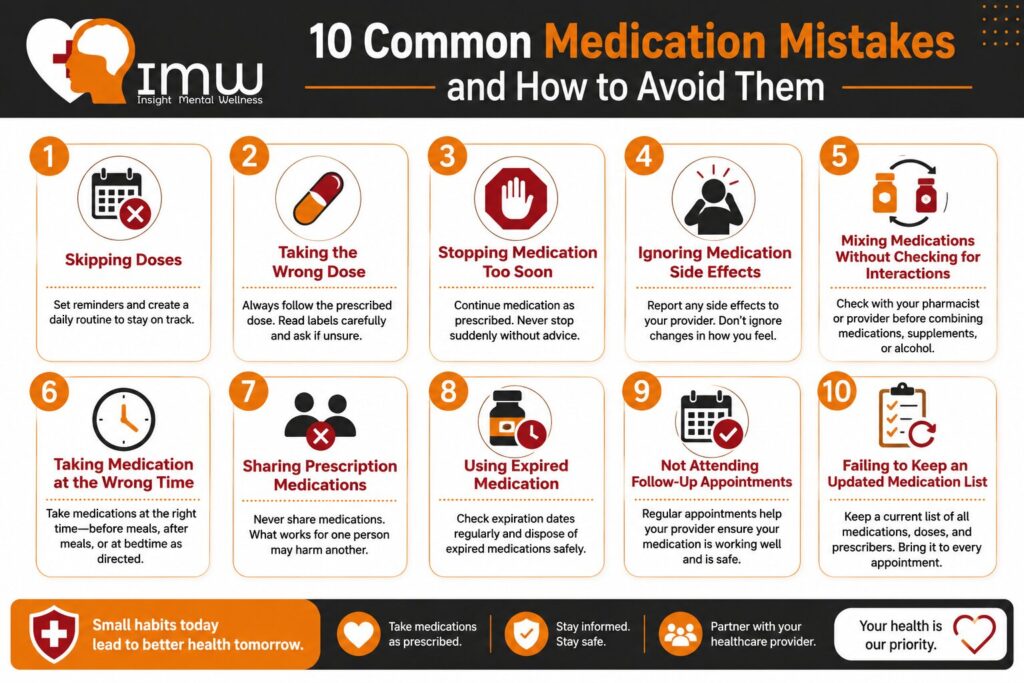
1. Skipping Doses
Skipping doses is one of the most common medication mistakes. Some people simply forget, while others intentionally skip medication because they feel better or worry about side effects.
Why It Can Be a Problem
Missing doses may:
- Reduce treatment effectiveness
- Cause symptoms to return
- Trigger withdrawal symptoms with certain medications
- Delay recovery
- Increase the risk of relapse
For example, antidepressants often take several weeks to reach full effectiveness. Frequently missing doses may interrupt progress and make treatment less effective.
How to Avoid It
- Set daily medication reminders.
- Use a weekly pill organizer.
- Link medication with a regular routine, such as brushing your teeth or eating breakfast.
- Keep medications in a safe, visible location (away from children and pets).
2. Taking the Wrong Dose
Taking more medication than prescribed does not make it work faster. Likewise, taking less medication may reduce its effectiveness.
Incorrect dosing may happen because of:
- Misreading instructions
- Confusing similar medication bottles
- Forgetting whether a dose was already taken
- Splitting tablets that should not be divided
How to Avoid It
- Read prescription labels carefully.
- Use the measuring device provided for liquid medications.
- Keep an updated medication list.
- Ask your pharmacist if you have questions about dosing instructions.
3. Stopping Medication Too Soon
Many people discontinue medication once they begin feeling better. While this may seem reasonable, stopping treatment too early can increase the likelihood of symptoms returning.
This is especially common with medications prescribed for:
- Depression
- Anxiety
- Bipolar disorder
- ADHD
- Blood pressure
- Diabetes
Some medications also require gradual tapering to avoid withdrawal symptoms.
How to Avoid It
Always consult your healthcare provider before stopping or reducing any prescription medication.
If you’re experiencing unwanted side effects or feel the medication is no longer helping, discuss alternative options rather than stopping treatment on your own.
4. Ignoring Medication Side Effects
Every medication has potential side effects, but not every side effect requires stopping treatment.
Some mild side effects improve as your body adjusts, while others require medical attention.
Examples include:
- Dry mouth
- Mild nausea
- Headache
- Sleep changes
- Dizziness
More serious symptoms, such as severe allergic reactions, difficulty breathing, chest pain, or suicidal thoughts—require immediate medical care.
How to Avoid It
Keep a simple symptom journal that records:
- When symptoms began
- Their severity
- How long do they last
- Whether they improve after taking medication
This information helps your healthcare provider determine whether adjustments are needed.
5. Mixing Medications Without Checking for Interactions
Prescription medications can interact with:
- Over-the-counter medications
- Herbal supplements
- Vitamins
- Alcohol
- Certain foods
For example:
| Combination | Potential Concern |
|---|---|
| Antidepressants + Alcohol | Increased drowsiness and impaired judgment |
| Blood thinners + NSAIDs | Higher bleeding risk |
| Certain antibiotics + Antacids | Reduced medication absorption |
| Stimulants + Excess caffeine | Increased heart rate and anxiety |
Even natural supplements can interact with prescription medications.
How to Avoid It
Before starting any new medication or supplement, inform your healthcare provider or pharmacist about everything you’re currently taking.
6. Taking Medication at the Wrong Time
Some medications work best:
- In the morning
- Before meals
- After meals
- At bedtime
- At evenly spaced intervals
Taking medication at inconsistent times may affect blood levels and reduce effectiveness.
How to Avoid It
Create a daily schedule and use alarms or smartphone apps to stay on track.
7. Sharing Prescription Medications
Prescription medications are tailored to an individual’s health history, diagnosis, and treatment needs.
Even if someone has similar symptoms, sharing medication can:
- Delay proper diagnosis
- Cause harmful side effects
- Increase the risk of allergic reactions
- Lead to dangerous drug interactions
How to Avoid It
Never take medication prescribed for someone else or share your own prescription medication.
8. Using Expired Medication
Medications lose potency over time, and some may become unsafe after their expiration date.
Improper storage, such as keeping medications in hot, humid bathrooms, can also reduce effectiveness.
How to Avoid It
- Check expiration dates regularly.
- Store medications according to label instructions.
- Dispose of expired medications safely through approved take-back programs or local pharmacy guidance.
9. Not Attending Follow-Up Appointments
Medication needs can change over time. Regular follow-up visits allow your healthcare provider to:
- Evaluate effectiveness
- Monitor side effects
- Adjust dosages
- Review new medications
- Improve overall treatment outcomes
For individuals receiving Medication Management in Dallas, routine follow-up appointments help ensure medications remain safe, effective, and aligned with changing health needs.
10. Failing to Keep an Updated Medication List
Many people take multiple prescriptions, vitamins, and supplements, but don’t keep an accurate record.
An updated medication list is especially important during:
- Emergency room visits
- Specialist appointments
- Hospital admissions
- Pharmacy consultations
Include:
- Medication name
- Dosage
- Frequency
- Reason for taking it
- Prescribing provider
- Allergies
Keeping this information readily available can prevent medication errors and improve care coordination.
Don’t let medication mistakes slow your progress. Insight Mental Wellness provides expert medication management to help ensure your treatment is safe, effective, and tailored to your unique needs.
Signs Your Medication Plan May Need Review
Sometimes the issue isn’t that you’re taking medication incorrectly; it’s that your treatment plan needs adjustment.
Consider scheduling a medication review if you experience:
- Symptoms returning despite treatment
- Persistent side effects
- Difficulty remembering doses
- New medical conditions
- Pregnancy or family planning
- Starting another prescription medication
- Significant lifestyle changes
Regular medication reviews help ensure your treatment continues to meet your health goals.
How to Build Better Medication Habits
Developing a consistent medication routine doesn’t have to be complicated. Small daily habits can significantly reduce the risk of missed doses and improve treatment outcomes over time.
Create a Medication Routine That Works for You
Try incorporating these strategies into your daily life:
- Take your medication at the same time every day.
- Use a pill organizer labeled by day of the week.
- Set recurring reminders on your phone or smartwatch.
- Keep a medication calendar or journal.
- Refill prescriptions before they run out.
- Schedule regular follow-up appointments with your healthcare provider.
- Ask a trusted family member or caregiver for support if needed.
The goal isn’t perfection, it’s consistency. If you accidentally miss a dose, follow your healthcare provider’s instructions or the guidance provided with your prescription. Never double a dose unless you’ve been specifically instructed to do so.
Medication Mistakes vs. Best Practices
| Common Mistake | Potential Risk | Better Approach |
|---|---|---|
| Skipping doses | Reduced effectiveness, symptom relapse | Set reminders and establish a daily routine |
| Taking the wrong dose | Increased side effects or reduced benefit | Read labels carefully and use the prescribed amount |
| Stopping medication suddenly | Withdrawal symptoms or recurrence of illness | Consult your healthcare provider before making changes |
| Mixing medications without guidance | Drug interactions and adverse effects | Review all medications and supplements with your provider |
| Ignoring side effects | Delayed treatment adjustments | Report new or worsening symptoms promptly |
| Using expired medication | Reduced effectiveness or safety concerns | Check expiration dates and dispose of expired medications properly |
| Sharing prescriptions | Incorrect treatment and possible harm | Only take medications prescribed specifically for you |
| Missing follow-up appointments | Outdated treatment plan | Attend routine medication review visits |
Special Considerations for Mental Health Medications
Psychiatric medications require close monitoring because every individual responds differently. Finding the right medication and dosage may take time, and adjustments are often a normal part of treatment.
If you’re taking medication for conditions such as depression, anxiety, bipolar disorder, ADHD, or other mental health concerns, keep these points in mind:
- Many medications require several weeks before their full benefits become noticeable.
- Side effects often improve during the first few weeks of treatment.
- Stopping medication suddenly can cause withdrawal symptoms or increase the risk of relapse.
- Honest communication with your provider helps ensure your treatment remains safe and effective.
Regular medication reviews allow your healthcare provider to evaluate your progress, address concerns, and make evidence-based adjustments when necessary.
When Should You Contact Your Healthcare Provider?
While mild side effects may improve as your body adjusts, certain situations warrant medical advice sooner rather than later.
Contact your healthcare provider if you:
- Frequently miss doses or struggle to follow your medication schedule.
- Notice your symptoms are returning or worsening.
- Experience new or bothersome side effects.
- Start taking a new prescription, vitamin, or herbal supplement.
- Become pregnant or are planning a pregnancy.
- Have difficulty swallowing medication or taking it as prescribed.
- Have concerns about the cost or availability of your medication.
Seek emergency medical attention immediately if you experience severe allergic reactions, difficulty breathing, chest pain, loss of consciousness, or thoughts of harming yourself or others.
Medication Safety Checklist
Use this checklist to help reduce the risk of medication errors:
☐ Take medications exactly as prescribed.
☐ Never skip or double doses without medical guidance.
☐ Read prescription labels every time.
☐ Store medications according to instructions.
☐ Keep an updated medication list.
☐ Tell every healthcare provider about all medications, vitamins, and supplements you take.
☐ Monitor for new side effects and report concerns promptly.
☐ Refill prescriptions before they run out.
☐ Attend scheduled follow-up appointments.
☐ Dispose of expired medications safely.
Benefits of Good Medication Management
Following your treatment plan consistently offers benefits beyond symptom control.
Effective medication management can help:
- Improve treatment effectiveness.
- Reduce medication errors.
- Lower the risk of preventable side effects.
- Improve symptom stability.
- Reduce hospitalizations and emergency visits.
- Support long-term health outcomes.
- Increase confidence in managing your health.
For individuals seeking personalized support, professional Medication Management in Dallas can help ensure medications are reviewed regularly, adjusted when needed, and tailored to your evolving healthcare needs.
Key Takeaways
- Medication mistakes are common but often preventable.
- Taking medication exactly as prescribed improves safety and treatment success.
- Never stop or adjust medication without speaking to your healthcare provider.
- Drug interactions can occur with prescription medications, over-the-counter products, supplements, and alcohol.
- Regular medication reviews help ensure your treatment continues to meet your needs.
- Consistent communication with your healthcare provider is one of the best ways to prevent medication-related problems.
FAQs
What is the most common medication mistake?
The most common medication mistake is missing or skipping doses. This can reduce the effectiveness of treatment, delay recovery, and increase the risk of symptoms returning, especially for chronic conditions and mental health disorders.
Is it okay to stop taking medication when I feel better?
Not without consulting your healthcare provider. Many medications, particularly antidepressants and other psychiatric medications, should be reduced gradually to avoid withdrawal symptoms and prevent relapse.
What should I do if I miss a dose?
Follow the instructions provided with your medication or contact your healthcare provider or pharmacist for guidance. In most cases, you should not take a double dose unless specifically instructed to do so.
Can vitamins or herbal supplements interact with prescription medications?
Yes. Supplements, vitamins, and even certain foods can interact with prescription medications, potentially affecting how they work or increasing the risk of side effects. Always inform your healthcare provider about everything you take.
Why are medication follow-up appointments important?
Follow-up appointments allow your provider to monitor your progress, assess side effects, adjust dosages if needed, and ensure your treatment remains safe and effective over time.
How can I remember to take my medication every day?
Many people find success by using phone reminders, pill organizers, medication tracking apps, or linking medication with a daily routine such as breakfast or brushing their teeth.
Conclusion
Medication is most effective when it’s taken consistently, safely, and as part of a personalized treatment plan. While occasional mistakes can happen, understanding the most common medication errors and knowing how to prevent them can make a meaningful difference in your health and well-being.
Simple habits such as following your prescribed schedule, keeping an updated medication list, attending follow-up appointments, and communicating openly with your healthcare provider can reduce risks and help you get the greatest benefit from your treatment.
Take the Next Step Toward Safer, More Effective Medication Management
Managing medications doesn’t have to be overwhelming. Whether you’re starting a new prescription, experiencing side effects, or wondering if your current treatment is still the right fit, professional guidance can make a meaningful difference.
At Insight Mental Wellness, we provide personalized Medication Management in Dallas to help individuals safely manage medications for depression, anxiety, bipolar disorder, ADHD, and other mental health conditions. Our experienced psychiatric providers work closely with you to monitor your progress, adjust medications when needed, and create a treatment plan that supports your long-term well-being.
If you’re ready to feel more confident about your treatment, schedule an appointment with Insight Mental Wellness today and receive compassionate, evidence-based care tailored to your unique needs.