Starting psychiatric medication can feel overwhelming, especially if you’re unsure what happens during a medication management appointment. Many patients wonder whether they’ll spend the entire visit discussing medications, how long appointments last, or what information they should bring.
The good news is that medication management appointments are designed to be collaborative, supportive, and personalized. Whether you’re beginning treatment for depression, anxiety, ADHD, bipolar disorder, PTSD, or another mental health condition, these visits help ensure your medications are safe, effective, and aligned with your treatment goals.
In this guide, we’ll explain exactly what to expect during a medication management appointment, how providers evaluate treatment progress, and how regular follow-up visits contribute to long-term mental wellness.
What Is Medication Management?
Medication management is an ongoing process in which a qualified psychiatric provider evaluates, prescribes, monitors, and adjusts medications used to treat mental health conditions.
The goal is not simply to prescribe medication. Effective medication management involves:
- Assessing symptoms and treatment response
- Monitoring medication effectiveness
- Identifying and managing side effects
- Adjusting dosages when needed
- Preventing medication interactions
- Supporting treatment adherence
- Coordinating care with therapy and other healthcare services
Medication management plays an important role in comprehensive mental health treatment and helps ensure that medications continue to support recovery and overall well-being.
Quick Answer
A medication management appointment typically includes a review of your symptoms, medication effectiveness, side effects, treatment goals, health history, and any necessary adjustments to your medication plan.
Read More: What Is Medication Management
Why Medication Management Matters
Mental health medications can be highly effective, but they often require monitoring and occasional adjustments. Every individual responds differently to treatment.
Several factors influence medication effectiveness, including:
- Age
- Genetics
- Medical conditions
- Lifestyle habits
- Stress levels
- Sleep quality
- Other medications or supplements
Regular medication management appointments help ensure that treatment remains safe and effective over time.
If you’re unsure whether your current medication is working as intended, a medication management appointment can help identify what’s effective, address side effects, and determine whether any adjustments are needed. Insight Mental Wellness provides personalized Medication Management in Dallas to support your long-term mental health.
What Happens During a Medication Management Appointment?
While every provider follows their own approach, most medication management visits follow a similar structure.
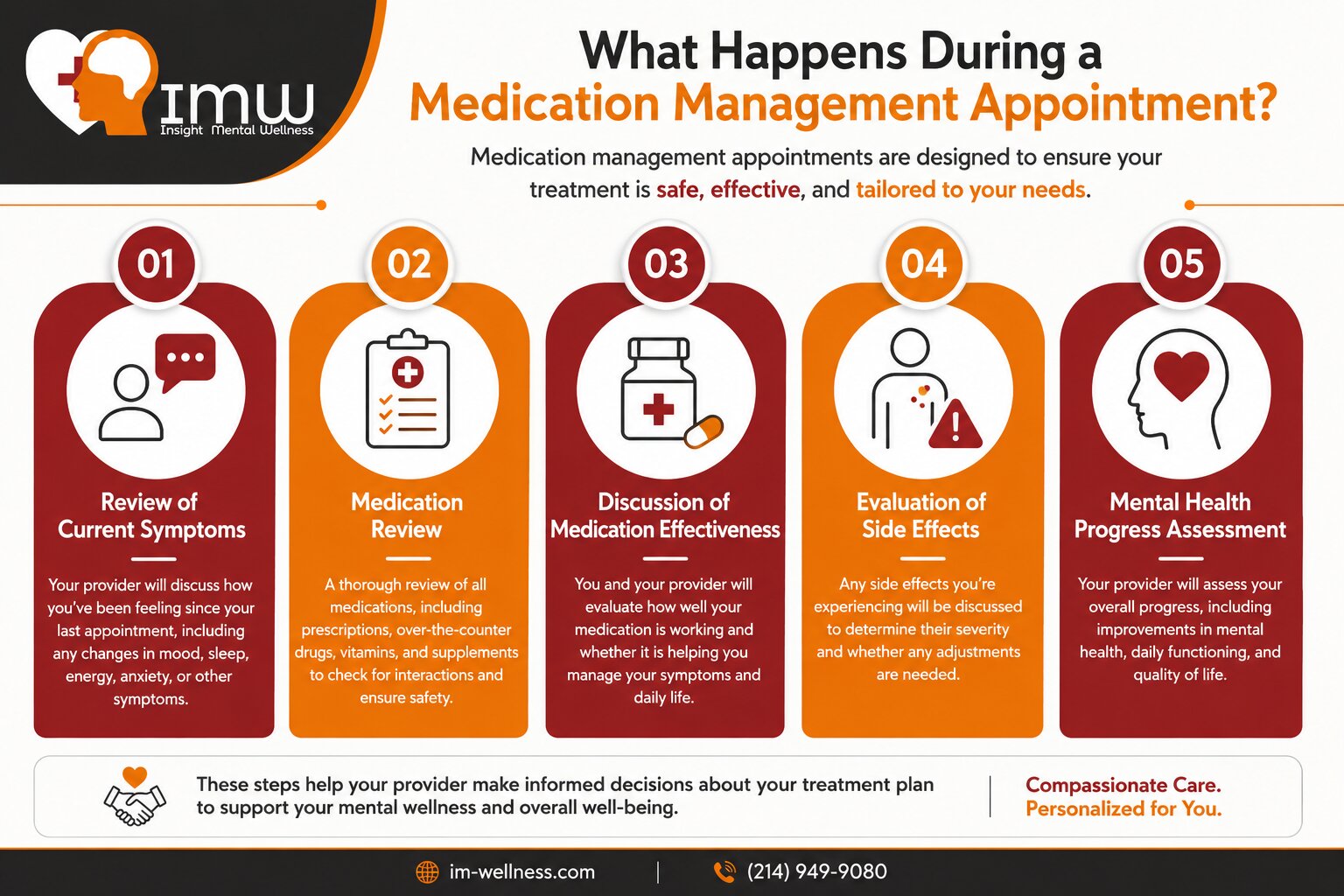
1. Review of Current Symptoms
Your provider will begin by discussing how you’ve been feeling since your last appointment.
Common questions may include:
- Have your symptoms improved?
- Are you experiencing new symptoms?
- How is your mood?
- How is your sleep?
- Are you experiencing anxiety or panic attacks?
- How is your concentration and focus?
- Have you noticed changes in energy levels?
This conversation helps your provider determine whether your current treatment plan is working.
Example
A patient taking medication for anxiety may report:
- Fewer panic attacks
- Improved sleep
- Reduced excessive worry
These improvements help indicate that the medication may be effective.
2. Medication Review
Your provider will review all medications you are currently taking.
This may include:
- Psychiatric medications
- Prescription medications from other providers
- Over-the-counter medications
- Vitamins
- Herbal supplements
This review helps identify possible medication interactions and ensures safe treatment.
Important Tip
Always bring an updated medication list to your appointment, even if you think a medication isn’t related to your mental health treatment.
3. Discussion of Medication Effectiveness
Not all medications work immediately.
Some psychiatric medications may require several weeks before significant improvements occur.
Your provider may ask:
- Have symptoms become more manageable?
- Are daily activities easier?
- Are you noticing emotional improvements?
- Have work or school performance changed?
- Has your quality of life improved?
These discussions help determine whether the current medication remains appropriate.
4. Evaluation of Side Effects
Monitoring side effects is one of the most important aspects of medication management.
Common side effects may include:
- Nausea
- Headaches
- Dizziness
- Fatigue
- Sleep disturbances
- Increased anxiety during medication initiation
- Appetite changes
- Weight changes
Some side effects improve over time, while others may require dosage adjustments or medication changes.
Be Honest About Side Effects
Many patients avoid mentioning side effects because they worry their medication will be discontinued.
In reality, providers need accurate information to help optimize treatment safely.
5. Mental Health Progress Assessment
Beyond symptom reduction, providers evaluate overall functioning.
They may discuss:
- Relationships
- Work performance
- Academic success
- Social interactions
- Daily routines
- Stress management
Improvement in these areas often indicates meaningful treatment progress.
What Questions Should You Ask During Your Appointment?
Medication management appointments are a two-way conversation.
Consider asking:
- How long will this medication take to work?
- What side effects should I watch for?
- What should I do if I miss a dose?
- Are there foods or substances I should avoid?
- How will we measure progress?
- How often should follow-up visits occur?
- Are there alternative treatment options available?
Asking questions helps you become an active participant in your treatment plan.
You don’t have to navigate medication changes alone. Insight Mental Wellness offers compassionate Medication Management in Dallas, providing ongoing guidance, medication monitoring, and individualized treatment plans.
What to Bring to Your Medication Management Appointment
Being prepared can help maximize your appointment.
Appointment Checklist
Bring:
✓ Current medication list
✓ Insurance information
✓ Medical history
✓ List of symptoms
✓ Questions for your provider
✓ Previous psychiatric records if available
✓ Notes about side effects or concerns
Some patients find it helpful to keep a symptom journal between appointments.
First Appointment vs Follow-Up Appointment
| First Appointment | Follow-Up Appointment |
|---|---|
| Comprehensive psychiatric evaluation | Review treatment progress |
| Detailed medical history | Monitor medication effectiveness |
| Discussion of diagnosis | Assess symptom changes |
| Initial treatment recommendations | Medication adjustments if needed |
| Medication selection | Continued monitoring |
| Longer appointment length | Typically shorter appointments |
The first appointment often involves significantly more information gathering than future visits.
How Often Are Medication Management Appointments Needed?
Appointment frequency varies depending on individual needs.
Many patients are seen:
- Every 2–4 weeks when starting medication
- Every 1–3 months once stable
- More frequently if adjustments are needed
Regular monitoring helps providers respond quickly to concerns and maintain treatment effectiveness.
Telepsychiatry vs In-Person Medication Management
Today, many patients receive medication management through telepsychiatry services.
Telepsychiatry Benefits
- Increased convenience
- Reduced travel time
- Greater access to specialists
- Flexible scheduling
- Improved continuity of care
For many individuals seeking Medication Management in Dallas, telepsychiatry offers a convenient way to receive ongoing psychiatric care while maintaining regular communication with their provider.
Both in-person and virtual appointments can provide high-quality medication monitoring when conducted by qualified professionals.
Benefits of Ongoing Medication Management
Regular medication management appointments provide several advantages.
Improved Treatment Outcomes
Consistent monitoring helps ensure medications remain effective.
Better Side Effect Management
Providers can identify and address concerns before they become significant problems.
Enhanced Medication Adherence
Patients who regularly meet with providers often feel more confident about their treatment plans.
Personalized Care
Medication plans evolve based on individual needs, goals, and treatment responses.
Greater Safety
Routine monitoring reduces the risk of adverse effects and medication interactions.
Common Mistakes to Avoid
Patients can improve appointment outcomes by avoiding these common mistakes:
- Skipping appointments
- Stopping medication without medical guidance
- Forgetting to report side effects
- Not mentioning supplements
- Missing doses without informing providers
- Avoiding difficult conversations about symptoms
Honest communication leads to better treatment decisions.
When Should You Contact Your Provider Between Appointments?
You should contact your provider if you experience:
- Severe side effects
- Worsening symptoms
- Significant mood changes
- New symptoms
- Medication concerns
- Difficulty adhering to treatment
Early communication can help prevent complications and support better outcomes.
Key Takeaways
Medication Management Appointment Essentials
- Medication management involves ongoing monitoring and treatment adjustments.
- Providers assess symptoms, side effects, treatment progress, and overall functioning.
- Honest communication helps improve treatment outcomes.
- Follow-up appointments support medication safety and effectiveness.
- Telepsychiatry offers a convenient option for many patients.
- Consistent monitoring can lead to better symptom control and improved quality of life.
FAQs
How long does a medication management appointment take?
Initial appointments often last 45 to 60 minutes, while follow-up visits typically range from 15 to 30 minutes depending on treatment needs.
What happens during a medication management appointment?
Providers review symptoms, monitor medication effectiveness, assess side effects, discuss treatment goals, and make adjustments when necessary.
Do I need therapy if I take psychiatric medication?
Medication and therapy often work well together. Many patients benefit from combining medication management with counseling or psychotherapy.
How often should I attend medication management appointments?
Frequency depends on your condition, treatment stage, and medication stability. New patients generally require more frequent follow-ups.
Can medications be adjusted during an appointment?
Yes. Providers may increase, decrease, switch, or discontinue medications based on treatment response and side effects.
Is virtual medication management effective?
For many patients, telepsychiatry provides effective access to psychiatric care, medication monitoring, and follow-up support. Individuals seeking Medication Management in Dallas may benefit from virtual appointments that offer flexibility while maintaining continuity of care.
Final Thoughts
Understanding what to expect during a medication management appointment can make the treatment process feel less intimidating and more empowering. These visits are about more than prescriptions; they are opportunities to evaluate progress, address concerns, and ensure your treatment plan continues to support your mental health goals.
If you’re preparing for your first appointment, arrive with questions, be honest about your experiences, and remember that medication management is a collaborative process focused on helping you achieve the best possible outcomes.
Looking for trusted Medication Management in Dallas? Insight Mental Wellness provides personalized medication evaluations, ongoing monitoring, and compassionate psychiatric care to help you achieve your mental health goals. Schedule an appointment today and take the next step toward feeling your best.