Managing a mental health condition often involves more than simply taking a prescription. Finding the right medication, dosage, and treatment plan can take time, especially since every person responds differently. If you’re experiencing ongoing symptoms, bothersome side effects, or uncertainty about your medications, professional medication management can help you achieve safer and more effective treatment.
Medication management is not only for people starting a new prescription. It is an ongoing process of evaluating how medications affect your symptoms, physical health, and overall quality of life. Regular follow-up with a qualified psychiatric provider helps ensure your treatment continues to meet your changing needs.
In this guide, you’ll learn the most common signs that indicate you may benefit from professional medication management, what to expect during appointments, and how personalized care can improve long-term mental wellness.
What Is Professional Medication Management?
Professional medication management is a collaborative healthcare service in which a licensed psychiatric provider evaluates, prescribes, monitors, and adjusts medications used to treat mental health conditions.
Rather than simply writing prescriptions, providers continuously assess whether your medication is:
- Effectively reducing symptoms
- Producing manageable side effects
- Safe alongside other medications
- Appropriate for your current health status
- Supporting your long-term treatment goals
Medication management commonly supports individuals living with:
- Depression
- Anxiety disorders
- Bipolar disorder
- ADHD
- PTSD
- Obsessive-compulsive disorder (OCD)
- Panic disorder
- Mood disorders
Regular follow-up appointments allow providers to monitor progress and make evidence-based adjustments when necessary.
Quick Answer: Professional medication management helps ensure psychiatric medications remain safe, effective, and personalized through ongoing evaluation, monitoring, and treatment adjustments.
Read More: What Is Medication Management
Why Medication Management Matters
Psychiatric medications are highly individualized. The medication that works well for one person may be ineffective—or cause unwanted side effects—for another.
Several factors influence how medications work, including:
- Age
- Medical history
- Genetics
- Lifestyle
- Other medications
- Hormonal changes
- Stress levels
- Sleep patterns
Without regular monitoring, medications may become less effective over time or require dosage adjustments to match changes in your health or symptoms.
Professional medication management provides ongoing support to optimize treatment while reducing unnecessary risks.
Not sure if your current medication is still the right fit? A professional medication review can help identify opportunities to improve symptom control while minimizing side effects. Schedule a consultation with Insight Mental Wellness to discuss your treatment options.
10 Signs You May Need Professional Medication Management
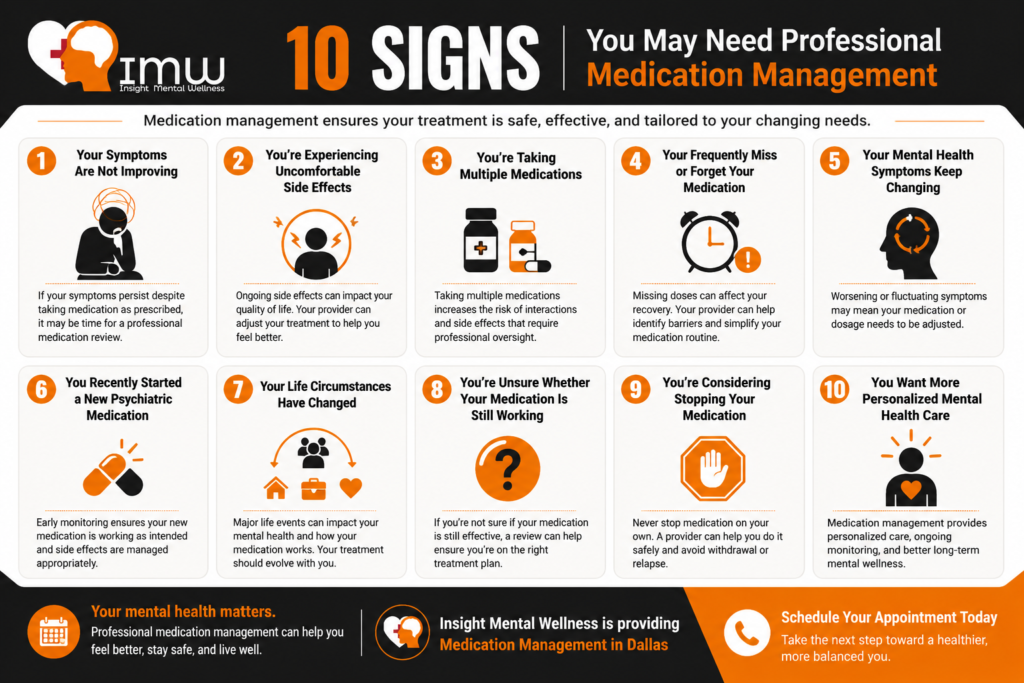
1. Your Symptoms Are Not Improving
One of the clearest signs that you may benefit from medication management is when your symptoms continue despite taking medication as prescribed.
You may notice:
- Persistent sadness
- Constant worry
- Mood instability
- Difficulty concentrating
- Panic attacks
- Ongoing sleep problems
- Lack of motivation
Sometimes medications require dosage adjustments, additional therapies, or an entirely different medication. A psychiatric provider can determine whether your current treatment remains appropriate.
2. You’re Experiencing Uncomfortable Side Effects
Every medication carries the potential for side effects. While mild side effects often improve over time, persistent or severe reactions should never be ignored.
Common psychiatric medication side effects include:
- Fatigue
- Weight changes
- Dry mouth
- Dizziness
- Sexual dysfunction
- Nausea
- Increased anxiety
- Insomnia
- Tremors
- Headaches
Medication management helps distinguish between temporary adjustment effects and side effects that require treatment changes.
Never stop taking psychiatric medication without medical guidance, as sudden discontinuation may worsen symptoms or lead to withdrawal effects.
3. You’re Taking Multiple Medications
Many individuals manage more than one health condition at a time. As prescriptions increase, so does the possibility of drug interactions.
Medication management becomes especially important if you take medications for:
- Mental health conditions
- High blood pressure
- Diabetes
- Chronic pain
- Thyroid disorders
- Sleep disorders
Your provider reviews every medication—including vitamins and supplements—to identify potential interactions and improve overall medication safety.
4. You Frequently Miss or Forget Your Medication
Missing doses occasionally happens, but repeated inconsistency can reduce treatment effectiveness.
Signs this may be affecting your health include:
- Symptoms returning unexpectedly
- Mood fluctuations
- Withdrawal symptoms
- Increased anxiety
- Difficulty maintaining daily routines
Medication management appointments provide an opportunity to discuss barriers such as complicated schedules, side effects, cost concerns, or difficulty remembering doses. Your provider can recommend practical strategies to improve medication adherence.
5. Your Mental Health Symptoms Keep Changing
Mental health conditions often evolve over time.
You may notice:
- New symptoms developing
- Anxiety becoming more severe
- Depression returning
- Increased irritability
- Mood swings
- Difficulty sleeping
- Reduced concentration
Regular medication reviews allow your provider to adjust treatment based on your current symptoms rather than relying on an outdated medication plan.
6. You Recently Started a New Psychiatric Medication
The first several weeks after beginning a new medication are often the most important.
Your provider will monitor:
- Symptom improvement
- Side effects
- Medication tolerance
- Sleep quality
- Appetite
- Mood changes
- Overall functioning
Close follow-up helps determine whether the medication is working as intended and whether adjustments are needed before problems become more significant.
7. Your Life Circumstances Have Changed
Major life events can influence how well psychiatric medications work.
Examples include:
- Pregnancy or postpartum changes
- Starting college
- Retirement
- High-stress employment
- Divorce
- Loss of a loved one
- Chronic illness
- Significant weight changes
Professional medication management ensures your treatment continues to align with your current health needs and lifestyle.
8. You’re Unsure Whether Your Medication Is Still Working
Some people continue taking the same medication for years without reassessing its effectiveness.
Ask yourself:
- Are my symptoms truly controlled?
- Have I simply adapted to ongoing symptoms?
- Am I experiencing more bad days than good?
- Has my quality of life improved?
Routine medication evaluations help answer these questions objectively and identify opportunities to optimize treatment.
9. You’re Considering Stopping Your Medication
Many individuals think about discontinuing medication because they feel better or are frustrated by side effects.
However, stopping psychiatric medications abruptly may lead to:
- Withdrawal symptoms
- Return of depression or anxiety
- Mood instability
- Sleep disturbances
- Increased risk of relapse
A medication management provider can develop a safe tapering plan if discontinuation is appropriate, minimizing potential complications.
10. You Want More Personalized Mental Health Care
Medication management is not simply about prescriptions; it is about creating a treatment plan tailored to your unique needs.
Personalized care includes:
- Regular symptom assessments
- Medication adjustments when needed
- Monitoring physical and emotional well-being
- Reviewing treatment goals
- Coordinating care with therapists or primary care providers
- Supporting long-term mental wellness
This collaborative approach helps ensure your treatment evolves alongside your health and life circumstances.
Comparison: Managing Medications on Your Own vs. Professional Medication Management
| Self-Managing Medications | Professional Medication Management |
|---|---|
| Limited monitoring of effectiveness | Regular evaluation of symptom improvement |
| May overlook side effects | Early identification and management of side effects |
| Higher risk of medication interactions | Comprehensive review of all medications and supplements |
| Changes made without medical guidance | Evidence-based dosage and medication adjustments |
| Less personalized care | Individualized treatment plans with ongoing follow-up |
What to Expect During a Medication Management Appointment
A typical appointment includes:
- Reviewing your current symptoms
- Discussing any side effects
- Evaluating medication effectiveness
- Reviewing other prescriptions and supplements
- Addressing concerns or questions
- Making treatment adjustments if necessary
- Planning follow-up care
Managing mental health medications doesn’t have to be overwhelming. If you’re experiencing persistent symptoms or troublesome side effects, Insight Mental Wellness offers personalized Medication Management in Dallas to help you find a treatment plan that works for you.
Benefits of Professional Medication Management
Medication management offers much more than prescription refills. It provides ongoing clinical oversight that helps ensure your treatment remains effective as your symptoms and health change over time.
Some of the most significant benefits include:
Improved Symptom Control
Regular evaluations help determine whether your medications are providing the desired results. If symptoms persist, your provider can adjust the dosage or recommend alternative treatment options before problems become more severe.
Fewer Medication Side Effects
Many people assume unpleasant side effects are something they simply have to live with. In reality, adjusting the dosage, changing the medication, or modifying the treatment plan may significantly reduce unwanted effects while maintaining symptom relief.
Safer Medication Use
Medication management helps identify:
- Drug interactions
- Duplicate medications
- Incorrect dosages
- Long-term medication risks
- Potential allergic reactions
This is especially important for individuals taking multiple prescriptions or managing chronic health conditions alongside mental health concerns.
Better Treatment Adherence
When patients understand why they’re taking a medication and feel supported by their provider, they’re more likely to follow their treatment plan consistently. Better adherence often leads to improved outcomes and a lower risk of relapse.
Personalized Mental Health Care
No two individuals experience mental health conditions in exactly the same way. Medication management focuses on your unique symptoms, lifestyle, medical history, and treatment goals, allowing your care plan to evolve as your needs change.
Common Misconceptions About Medication Management
Many people delay seeking professional medication management because of common myths or misunderstandings.
| Myth | Reality |
|---|---|
| Medication management is only for severe mental illness. | It benefits individuals with mild, moderate, or complex mental health conditions. |
| Once medication is prescribed, no follow-up is needed. | Regular monitoring helps ensure medications remain safe and effective. |
| Side effects are unavoidable. | Many side effects can be reduced by adjusting the medication or dosage. |
| Medication management only involves writing prescriptions. | It includes education, monitoring, treatment planning, and ongoing evaluation. |
| If I feel better, I can stop taking my medication. | Always consult your provider before making any medication changes to reduce the risk of relapse or withdrawal symptoms. |
Practical Checklist: Is It Time to Schedule a Medication Review?
You may benefit from professional medication management if you answer “Yes” to one or more of the following questions:
✔ My symptoms haven’t improved after several weeks of treatment.
✔ My medication seems less effective than it used to be.
✔ I’m experiencing uncomfortable side effects.
✔ I often forget to take my medication.
✔ I’m taking multiple prescription medications.
✔ My mental health symptoms have changed recently.
✔ I’ve experienced major life changes that may affect my treatment.
✔ I’m thinking about stopping my medication.
✔ I have questions about how my medication works.
✔ I want a more personalized treatment plan.
If any of these situations sound familiar, scheduling a medication review can help ensure your treatment remains aligned with your current needs.
Tips for Getting the Most Out of Medication Management
Preparing for your appointments can help your provider make informed decisions about your care.
Before your visit:
- Keep a list of all medications, vitamins, and supplements.
- Track any side effects you’ve noticed.
- Write down changes in mood, sleep, appetite, or energy.
- Note any missed doses or challenges with taking your medication.
- Prepare questions about your treatment goals or concerns.
Open communication allows your provider to make adjustments based on a complete picture of your health.
When Should You Seek Professional Help?
While occasional mood changes or medication questions are common, it’s important to seek professional guidance if you notice:
- Worsening depression or anxiety
- Significant mood swings
- New or worsening side effects
- Difficulty functioning at work, school, or home
- Thoughts of stopping medication without medical advice
- Frequent symptom relapses despite treatment
Early intervention often leads to better long-term outcomes and can prevent symptoms from becoming more difficult to manage.
Key Takeaways
- Medication management is an ongoing process—not a one-time prescription.
- Regular follow-up appointments help ensure medications remain safe and effective.
- Side effects, changing symptoms, and multiple medications are common reasons to seek professional medication management.
- Personalized treatment plans improve symptom control and support long-term mental wellness.
- Never stop or adjust psychiatric medication without consulting your healthcare provider.
FAQs
1. How often should I have medication management appointments?
The frequency depends on your condition and treatment stage. People starting a new medication may have follow-up visits every few weeks, while those with stable symptoms may only need appointments every few months.
2. Can medication management help if my medication isn’t working?
Yes. A psychiatric provider can evaluate whether your current medication, dosage, or overall treatment plan should be adjusted to better manage your symptoms.
3. Is medication management only for psychiatric medications?
While this article focuses on mental health treatment, medication management can also benefit individuals taking medications for other chronic health conditions by improving safety and reducing the risk of drug interactions.
4. What happens if I’m experiencing medication side effects?
Your provider will assess the severity of your symptoms and may recommend adjusting the dosage, switching medications, or implementing strategies to reduce side effects while maintaining treatment effectiveness.
5. Do I need medication management if I feel better?
Yes. Feeling better often means your treatment is working. Continuing regular follow-up appointments helps ensure your medication remains appropriate and reduces the risk of relapse.
6. How do I know if I need medication management?
If your symptoms persist, your medication causes side effects, you’ve experienced significant life changes, or you’re unsure whether your treatment is still effective, a medication management evaluation can provide valuable guidance.
Conclusion
Mental health treatment is most effective when it evolves alongside your needs. Professional medication management offers ongoing support, helping ensure your medications continue to provide the right balance of effectiveness, safety, and symptom control.
Whether you’re beginning treatment, managing multiple medications, or experiencing changes in your mental health, regular medication reviews can play an important role in achieving lasting wellness. Small adjustments made at the right time can have a meaningful impact on your quality of life.
Get Expert Treatment in Dallas
Take control of your mental health with personalized, professional support. If you’re looking for Medication Management in Dallas, Insight Mental Wellness provides compassionate, evidence-based care tailored to your unique needs. Our experienced psychiatric providers work closely with you to monitor your progress, adjust medications when needed, and help you achieve lasting mental wellness. Schedule an appointment today and take the next step toward feeling your best.