Anxiety disorders affect millions of Americans and are among the most common mental health conditions treated today. While traditional treatments such as therapy, antidepressants, and lifestyle changes help many people, others continue to experience persistent symptoms despite multiple treatment attempts.
This has led growing numbers of patients and mental health professionals to explore innovative treatment options, including SPRAVATO in Dallas. Originally approved for treatment-resistant depression, SPRAVATO® (esketamine) has attracted attention for its potential impact on anxiety symptoms, especially when anxiety occurs alongside depression.
But what does the research actually say?
This guide examines the current evidence behind SPRAVATO for anxiety, its potential benefits, limitations, safety considerations, and what Dallas patients should know before considering treatment.
What Is SPRAVATO?
SPRAVATO® is a prescription nasal spray containing esketamine, a derivative of ketamine. Unlike traditional antidepressants that primarily affect serotonin, dopamine, or norepinephrine, SPRAVATO works on the brain’s glutamate system.
This different mechanism of action may help stimulate new neural connections and improve communication between brain cells.
The U.S. Food and Drug Administration (FDA) has approved SPRAVATO for:
- Treatment-resistant depression (TRD)
- Major depressive disorder with acute suicidal thoughts or behaviors
While anxiety disorders are not currently FDA-approved indications, researchers continue studying ketamine and esketamine’s effects on anxiety-related symptoms.
Read More: What is SPRAVATO?
Quick Answer: Does SPRAVATO Work for Anxiety?
Current research suggests that SPRAVATO may help reduce anxiety symptoms in some individuals, particularly those who have depression and anxiety occurring together.
However:
- SPRAVATO is not currently FDA-approved solely for anxiety disorders.
- Most research focuses on depression patients who also experience significant anxiety symptoms.
- Results vary from person to person.
- More large-scale clinical trials are needed.
The strongest evidence currently supports SPRAVATO’s use in treatment-resistant depression, with anxiety improvement often occurring as an additional benefit.
Understanding the Connection Between Depression and Anxiety
One reason SPRAVATO has generated interest in anxiety treatment is that depression and anxiety frequently occur together.
Research shows that many individuals diagnosed with major depressive disorder also experience:
- Generalized anxiety disorder (GAD)
- Panic disorder
- Social anxiety disorder
- Chronic stress-related symptoms
Because these conditions share overlapping brain pathways, treatments that improve depression may also reduce anxiety symptoms.
For some patients, anxiety decreases as depressive symptoms improve.
How SPRAVATO May Affect Anxiety Symptoms
Researchers believe several mechanisms may explain why SPRAVATO may help certain anxiety symptoms.
1. Glutamate Regulation
SPRAVATO influences glutamate, the brain’s most abundant excitatory neurotransmitter.
Glutamate plays a critical role in:
- Learning
- Memory
- Emotional processing
- Stress response
Disruptions in glutamate signaling have been linked to both depression and anxiety disorders.
2. Neuroplasticity Enhancement
Studies suggest esketamine may promote neuroplasticity—the brain’s ability to adapt and form new neural connections.
Improved neuroplasticity may help individuals:
- Develop healthier thought patterns
- Reduce emotional rigidity
- Improve stress resilience
- Enhance recovery from chronic mental health symptoms
3. Rapid Symptom Relief
Traditional antidepressants may take several weeks before noticeable improvements occur.
SPRAVATO may produce benefits more rapidly for some patients, which can be particularly meaningful for individuals experiencing severe emotional distress.
What Research Says About SPRAVATO and Anxiety
Evidence in Depression With Anxiety
Several clinical studies involving patients with treatment-resistant depression have found that individuals with significant anxiety symptoms often experienced improvements after receiving esketamine treatment.
Researchers observed:
- Reduced anxious distress
- Improved mood
- Better overall functioning
- Decreased emotional overwhelm
These findings suggest that anxiety symptoms may respond alongside depressive symptoms.
Generalized Anxiety Disorder Research
Research specifically examining SPRAVATO for generalized anxiety disorder remains limited.
Current evidence includes:
- Small-scale studies
- Ketamine-based research
- Observational findings
- Emerging clinical investigations
While early results appear promising, experts generally agree that more robust clinical trials are necessary before SPRAVATO can be considered a standard treatment for primary anxiety disorders.
Anxiety Related to Treatment-Resistant Depression
The strongest evidence currently exists for individuals who have:
- Treatment-resistant depression
- Significant anxiety symptoms
- Multiple unsuccessful treatment attempts
In these cases, anxiety reduction may be an important secondary benefit of SPRAVATO treatment.
Who May Be a Candidate for SPRAVATO in Dallas?
A comprehensive psychiatric evaluation is necessary to determine whether SPRAVATO is appropriate.
Potential candidates often include individuals who:
- Have treatment-resistant depression
- Have tried multiple antidepressants without adequate improvement
- Experience depression accompanied by significant anxiety
- Are under the care of a qualified psychiatric provider
- Meet medical and safety requirements
Patients with anxiety alone may require additional assessment since SPRAVATO is not currently approved specifically for anxiety disorders.
SPRAVATO vs Traditional Anxiety Treatments
| Treatment | Primary Use | Onset of Effect | FDA Approved for Anxiety? |
|---|---|---|---|
| Cognitive Behavioral Therapy (CBT) | Anxiety Disorders | Weeks to Months | Yes (standard treatment) |
| SSRIs/SNRIs | Depression & Anxiety | 4–8 Weeks | Yes |
| Benzodiazepines | Acute Anxiety Relief | Hours | Yes |
| SPRAVATO | Treatment-Resistant Depression | Potentially Faster | No |
| Lifestyle Interventions | Anxiety Management | Variable | Recommended |
SPRAVATO is generally considered when conventional approaches have not provided sufficient relief.
Benefits Being Explored in Anxiety Research
Researchers continue evaluating several potential benefits associated with esketamine treatment.
Possible Benefits
- Reduction in anxious distress
- Improvement in depressive symptoms
- Enhanced emotional regulation
- Better daily functioning
- Potentially faster symptom improvement for some patients
It is important to remember that outcomes vary, and benefits observed in research may not occur for every individual.
SPRAVATO Side Effects: What Patients Should Know
Understanding potential SPRAVATO side effects is an important part of informed decision-making.
Common side effects may include:
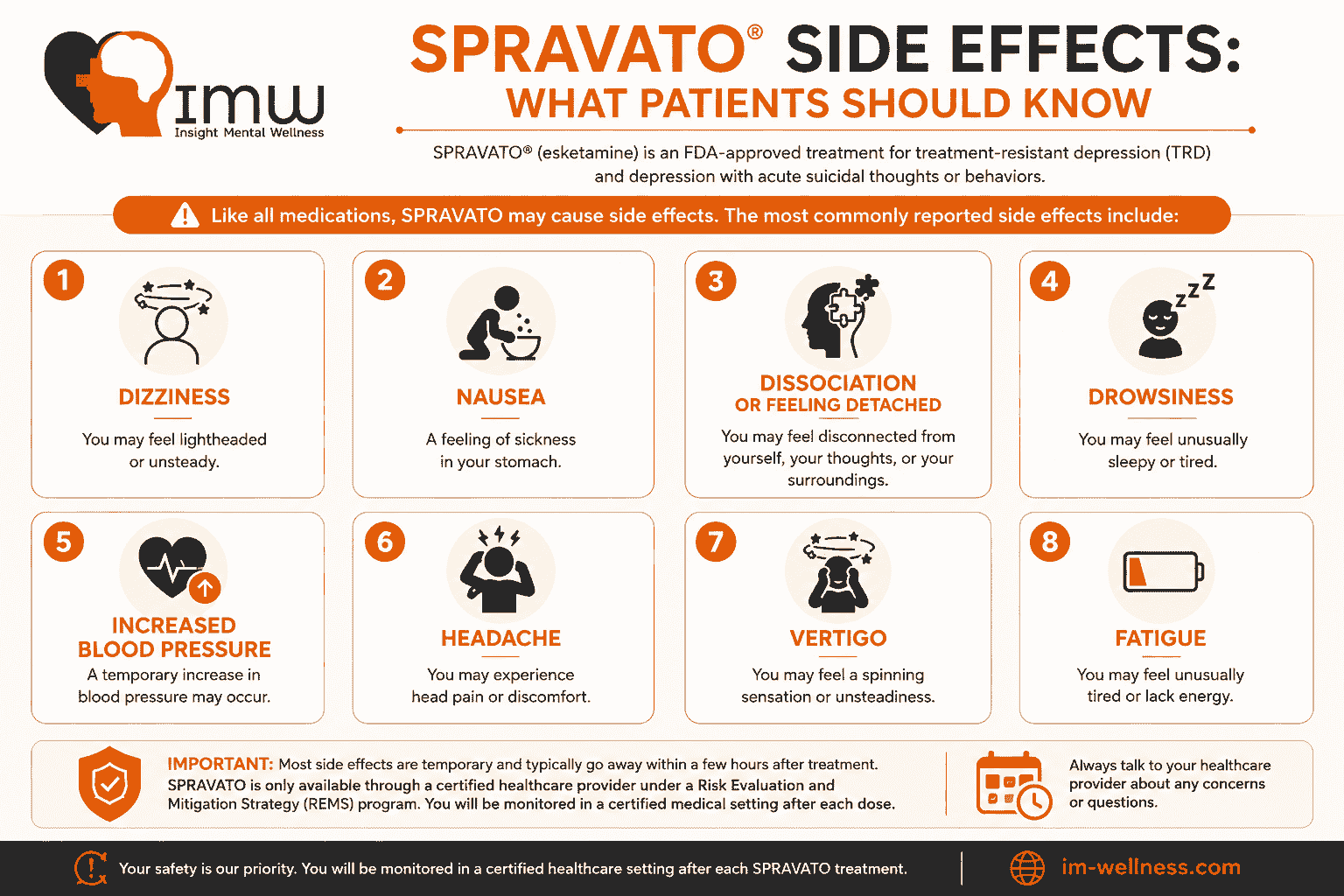
- Dizziness
- Nausea
- Dissociation or feeling detached
- Drowsiness
- Increased blood pressure
- Headache
- Vertigo
- Fatigue
Most side effects occur shortly after administration and typically resolve within several hours.
Because of these effects, patients are monitored during treatment sessions at certified facilities.
Safety Considerations
SPRAVATO treatment requires:
- Administration in a certified healthcare setting
- Observation after dosing
- Transportation arrangements after appointments
- Ongoing psychiatric monitoring
Patients should discuss their full medical history with a qualified provider before beginning treatment.
Questions to Ask Before Starting SPRAVATO
If you are exploring SPRAVATO in Dallas, consider asking your provider:
- Am I a candidate based on my diagnosis?
- What treatment options have I already tried?
- How might SPRAVATO fit into my overall care plan?
- What side effects should I expect?
- How will progress be measured?
- What alternative treatments are available?
These discussions can help create realistic expectations and support informed decisions.
Key Takeaways
- SPRAVATO is FDA-approved for treatment-resistant depression, not anxiety disorders alone.
- Research suggests SPRAVATO may reduce anxiety symptoms in some individuals, particularly when anxiety occurs alongside depression.
- The strongest evidence supports its use in treatment-resistant depression with anxious distress.
- More clinical research is needed before SPRAVATO becomes a standard treatment for primary anxiety disorders.
- Understanding potential SPRAVATO side effects and safety requirements is essential before beginning treatment.
Frequently Asked Questions
Is SPRAVATO approved for anxiety?
No. SPRAVATO is currently FDA-approved for treatment-resistant depression and major depressive disorder with acute suicidal thoughts or behaviors. Anxiety disorders are not currently approved indications.
Can SPRAVATO help generalized anxiety disorder?
Research is ongoing. Some studies suggest ketamine-based treatments may reduce anxiety symptoms, but more evidence is needed to establish effectiveness specifically for generalized anxiety disorder.
How quickly does SPRAVATO work?
Some patients report symptom improvement faster than traditional antidepressants, although individual responses vary significantly.
What are the most common SPRAVATO side effects?
Common SPRAVATO side effects include dizziness, nausea, dissociation, drowsiness, headache, fatigue, and temporary increases in blood pressure.
Can anxiety improve when depression improves?
Yes. Depression and anxiety frequently occur together. In some individuals, treating depression may also reduce anxiety symptoms.
Where can I learn whether SPRAVATO is right for me?
A comprehensive psychiatric evaluation with a qualified mental health professional is the best way to determine whether SPRAVATO may be appropriate based on your diagnosis, symptoms, and treatment history.
Conclusion
Interest in SPRAVATO continues to grow as researchers explore its effects beyond treatment-resistant depression. Current evidence suggests that some individuals with depression and significant anxiety symptoms may experience meaningful improvement, but SPRAVATO is not yet considered a standard treatment for anxiety disorders alone.