Attention-Deficit/Hyperactivity Disorder (ADHD) doesn’t end with childhood, and effective treatment requires more than just writing a prescription. ADHD medication management is an ongoing, personalized process that balances symptom control, side effects, and real-life functioning for both adults and teens. This guide explains how thoughtful, evidence-based medication management works, what to expect, and how to get the best outcomes.
Understanding ADHD Medication Management
ADHD medication management refers to the structured process of evaluating, prescribing, monitoring, and adjusting medications to treat ADHD symptoms safely and effectively.
It typically includes:
- A comprehensive diagnostic evaluation
- Individualized psychiatric treatment planning
- Careful medication selection
- Ongoing psychiatric medication monitoring
- Regular follow-ups to assess effectiveness and side effects
ADHD in Adults vs. Teens: Why Management Differs
While ADHD symptoms may overlap, medication strategies often differ between adults and adolescents.
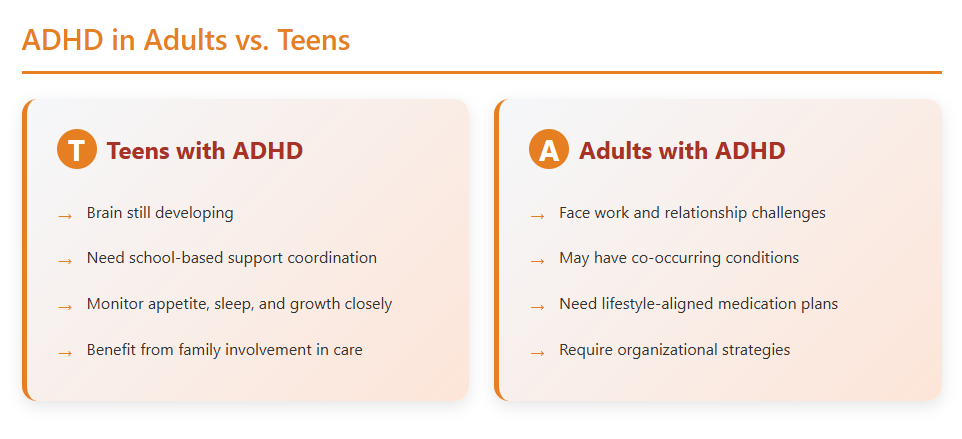
Teens with ADHD
- Still experiencing brain development
- May need school-based support coordination
- Require close monitoring for appetite, sleep, and growth
- Often benefit from family involvement in care
Adults with ADHD
- Face work, relationship, and organizational challenges
- May have co-occurring anxiety, depression, or substance use disorders
- Need medication plans aligned with career and lifestyle demands
A qualified psychiatric medication management provider tailors treatment to these developmental and life-stage differences.
Types of ADHD Medications Commonly Prescribed
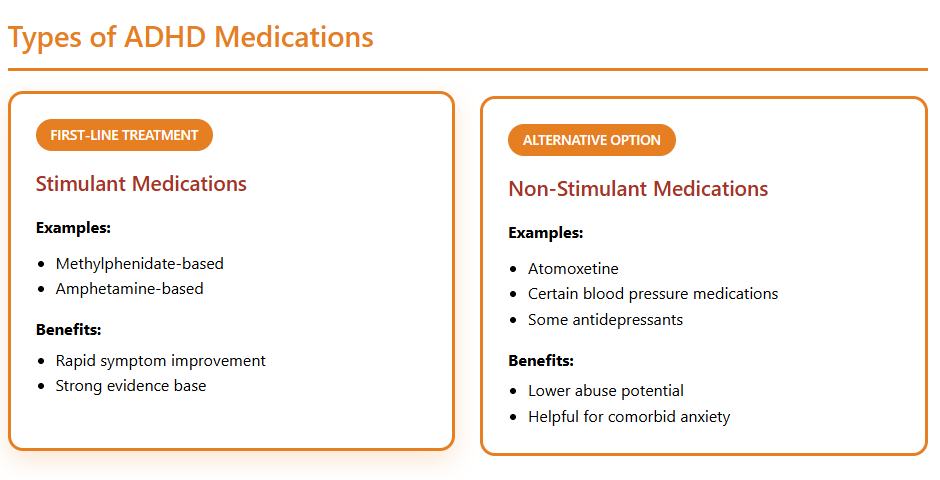
Stimulant Medications
Often considered first-line treatment.
Examples:
- Methylphenidate-based medications
- Amphetamine-based medications
Benefits:
- Rapid symptom improvement
- Strong evidence base
Considerations:
- Require careful dosing
- Need monitoring for cardiovascular effects, sleep, and appetite
Non-Stimulant Medications
Used when stimulants are ineffective or not tolerated.
Examples:
- Atomoxetine
- Certain blood pressure or antidepressant medications
Benefits:
- Lower abuse potential
- Helpful for comorbid anxiety
Choosing the right option is a key role of a medication management psychiatrist, guided by medical history and treatment goals.
The ADHD Medication Management Process
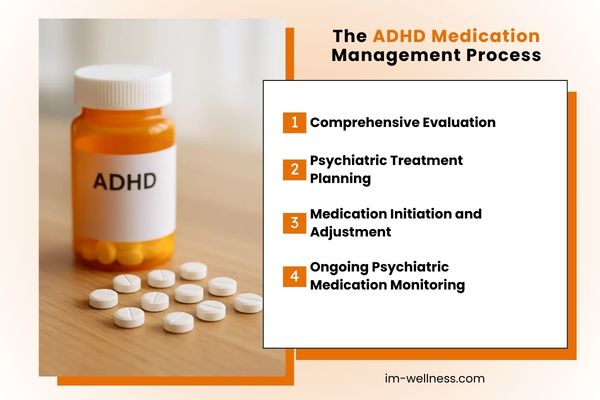
1. Comprehensive Evaluation
- Clinical interview
- Symptom history across settings
- Screening for co-occurring mental health conditions
2. Psychiatric Treatment Planning
A personalized plan considers:
- Symptom severity
- Age and development
- Medical history
- Lifestyle and daily demands
3. Medication Initiation and Adjustment
- Start with the lowest effective dose
- Gradual titration based on response
4. Ongoing Psychiatric Medication Monitoring
Regular follow-ups assess:
- Symptom improvement
- Functional gains (school, work, relationships)
- Psychiatric medication side effects
Managing and Monitoring Medication Side Effects
Common ADHD medication side effects may include:
- Decreased appetite
- Sleep disturbances
- Headaches
- Mood changes
- Increased heart rate or blood pressure
Effective psychiatric medication monitoring focuses on early detection and adjustment—preventing small issues from becoming barriers to treatment success.
Medication Management as Part of Whole-Person Care
Medication works best when integrated with:
- Behavioral therapy
- Coaching or skills training
- Academic or workplace accommodations
Strong mental health prescription management ensures medications support—not replace—broader coping strategies and skill development.
How to Choose the Right Provider
When selecting a provider for ADHD medication management, look for:
- Experience with both teens and adults
- Willingness to provide ongoing follow-up
- Clear communication about benefits and risks
- Collaborative decision-making
A trusted psychiatric medication management provider prioritizes safety, transparency, and long-term outcomes—not quick fixes.
FAQs
1. How often should ADHD medications be reviewed?
Most providers recommend follow-ups every 4–12 weeks during adjustments, then periodically once stable.
2. Can ADHD medication be changed over time?
Yes. Medication needs often change with age, stress levels, or life circumstances.
3. Are ADHD medications safe for long-term use?
When properly monitored by a qualified provider, many ADHD medications are considered safe for long-term treatment.
4. What if side effects outweigh benefits?
Your provider can adjust the dose, switch medications, or explore non-medication strategies.
5. Can teens take ADHD medication only during the school year?
This depends on individual needs and should be discussed as part of psychiatric treatment planning.
Key Takeaways
- ADHD medication management is an ongoing, personalized process
- Adults and teens require different monitoring strategies
- Regular follow-ups reduce risks and improve outcomes
- Medication works best as part of a comprehensive care plan
Take the Next Step
If you’re seeking thoughtful, ongoing ADHD medication management in San Antonio, Insight Mental Wellness provides comprehensive psychiatric medication management services for both adults and teens. Their care focuses on individualized psychiatric treatment planning, careful medication adjustments, and consistent monitoring to ensure treatment remains effective and well-tolerated over time.
Whether you’re starting ADHD medication for the first time or need support optimizing your current treatment, their team offers a collaborative, patient-centered approach to mental health prescription management.
Schedule a consultation with Insight Mental Wellness to explore ADHD medication management tailored to your needs in San Antonio, TX.